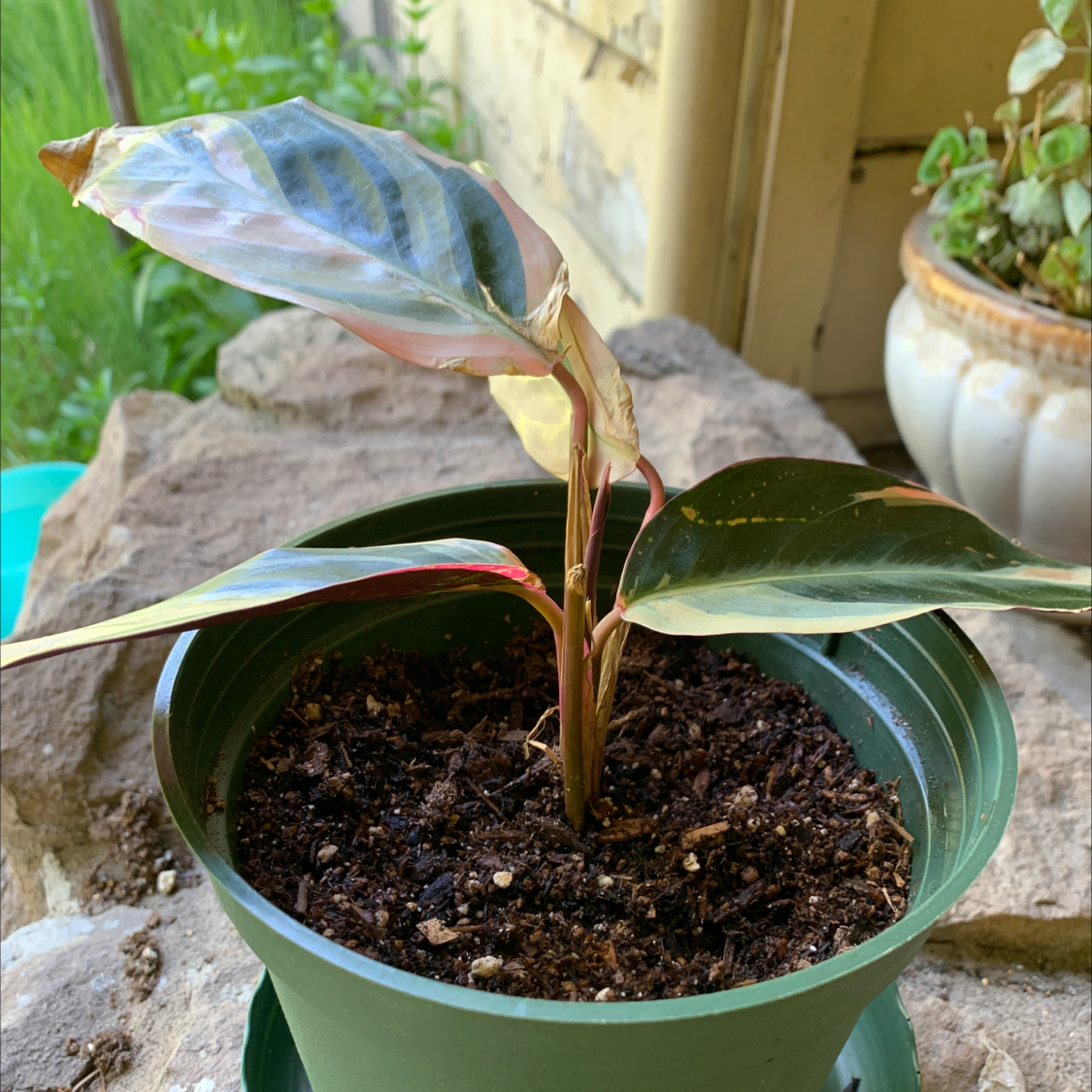
Triostar Stromanthe does best in a glazed ceramic or plastic pot that keeps the soil consistently moist. Choose a pot 1-2 inches wider than the root ball with drainage holes. This humidity lover has sensitive roots, so even moisture is key.
What Size Pot Does a Triostar Stromanthe Need?
Triostar Stromanthe has a clumping growth habit with a moderately dense root system. Choose a pot that's 1-2 inches wider than the current root ball. The roots like to fill their space but don't want to swim in excess soil.
When the plant starts producing new shoots that crowd the pot rim, it's time to size up. A pot that's too large holds extra moisture around roots that haven't arrived yet, and Triostar's roots are rot-sensitive.
A standard round pot works well. Avoid very deep pots since the roots tend to stay in the upper half of the soil column.
Young plant (under 8")4–6" pot
Growing plant (8–14" tall)6–8" pot
Established clump (14–24" tall)8–10" pot
Mature clump (2+ ft tall)10–12" pot
What Material Pot Is Best for Triostar Stromanthe?
Triostar Stromanthe is a moisture-dependent tropical that wilts dramatically when its soil dries out. Its roots need consistent dampness without sitting in water, so the pot material should retain moisture between waterings rather than wick it away.
The root system is moderately fine and sensitive to both drought and soggy conditions. A pot that keeps things evenly moist, paired with a well-draining mix, is the sweet spot.
Dries fastest → Slowest
FabricTOO FAST
Dries out much too fast for this humidity-loving plant, causing crispy leaf edges.
Best for Triostar Stromanthe
Unglazed Ceramic
Workable if you stay on top of watering, but dries faster than this plant prefers.
Wood
Holds a decent balance of moisture and airflow for Triostar's roots.
Glazed Ceramic
A great match, holding soil moisture evenly between waterings.
Plastic
Excellent for Triostar since it locks in the moisture this plant craves.
Metal
Fine for indoor use and retains moisture well for this tropical houseplant.
Triostar Stromanthe loves moisture and humidity, so pots that retain water are your best bet. Glazed ceramic, plastic, and metal all keep the soil evenly moist, which is exactly what this tropical plant craves.
Avoid fabric pots. They dry out much too fast for Triostar, which can cause the crispy brown leaf edges this plant is already prone to. Unglazed ceramic and wood work if you water consistently, but moisture-retaining materials will be more forgiving.
Stay on top of plant care
Get seasonal reminders for watering and fertilizing — personalized for your plants.
Yes, drainage holes are essential. Triostar Stromanthe needs consistently moist soil, but its roots are sensitive to standing water. Without drainage, the fine roots suffocate and rot quickly.
Use a pot with at least one drainage hole and a saucer underneath. Empty the saucer after watering so the plant isn't sitting in a puddle.
When Should I Repot My Triostar Stromanthe?
Repot Triostar Stromanthe every 1-2 years in spring or early summer. This plant grows at a moderate pace, so it doesn't outgrow pots as fast as some tropicals.
When repotting, be gentle with the roots. They're finer than they look and don't appreciate rough handling. Settle the plant into fresh, well-draining potting mix at the same depth it was growing before.
If the clump has gotten large, this is a good time to divide it. Separate sections with at least 3-4 stems each and pot them individually.
Signs It's Time to Repot
Roots visible through drainage holes
New shoots pushing against the pot rim
Soil dries out unusually fast between waterings
Leaf edges browning despite consistent humidity
Plant becomes top-heavy and tips over easily
When Can I Plant My Triostar Stromanthe in the Ground?
Triostar Stromanthe is hardy in zones 10a through 11b. In south Florida or similar frost-free climates, it makes a beautiful shade garden plant with its pink, white, and green foliage.
In most of the U.S., this plant is best kept in a container. You can move it outdoors to a shaded patio in summer, but bring it inside when nighttime temperatures dip below 55°F. Frost will damage the foliage immediately and can kill the roots.
Got More Questions?
Can I keep Triostar Stromanthe in a pot without drainage holes?
It's not recommended. This plant's roots are sensitive to soggy conditions despite loving moisture. Without drainage, root rot sets in quickly. Use a nursery pot inside a decorative cachepot instead.
How do I know if my Triostar's pot is too big?
If the soil stays wet for more than a week after watering, the pot is likely too large. The excess soil holds moisture that roots haven't reached, creating the perfect setup for rot.
Why are the leaf edges browning even though I water regularly?
Browning edges are usually a humidity issue, not a pot issue. However, a pot that dries too fast (like unglazed terracotta in a dry room) can contribute. Try a glazed or plastic pot to hold moisture longer.
Should I use a self-watering pot for Triostar Stromanthe?
Self-watering pots can work well for Triostar since it loves consistent moisture. Just make sure the reservoir doesn't keep the soil waterlogged. Check the moisture level occasionally to calibrate.
Can I divide my Triostar Stromanthe when repotting?
Yes. Spring is the best time. Separate clumps with at least 3-4 stems and healthy roots. Pot each division in a snug pot and keep the soil moist while it establishes.
Stay on top of plant care
Get seasonal reminders for watering and fertilizing — personalized for your plants.
Kiersten Rankel holds an M.S. in Ecology & Evolutionary Biology from Tulane University. A certified Louisiana Master Naturalist, she has over a decade of experience in science communication, with research spanning corals, cypress trees, marsh grasses, and more. At Greg, she curates species data and verifies care recommendations against botanical research.
See Kiersten Rankel's full background on LinkedIn.
Editorial Process
Container guidance verified against Stromanthe thalia growth data from Greg's botanical database, cross-referenced with USDA hardiness zone data and published horticultural research.