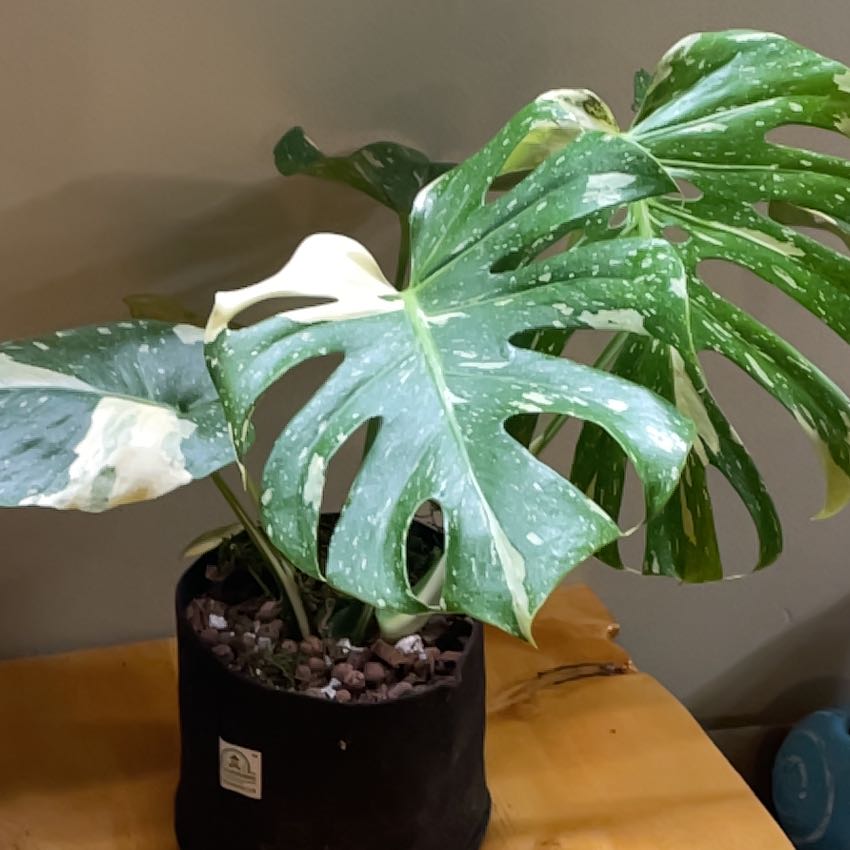
Thai Constellation Monstera does best in a sturdy pot with drainage holes, made of any material from unglazed ceramic to plastic. Choose a pot 2-3 inches wider than the root ball. These plants grow large, so plan ahead with a pot that can support a moss pole or trellis.
What Size Pot Does a Thai Constellation Monstera Need?
Thai Constellation Monstera is a vigorous climber that can reach 10 feet indoors with proper support. Its root system is substantial, with thick aerial roots in addition to the underground ones. Choose a pot 2-3 inches wider than the current root ball.
A pot that is too small will slow growth and cause the plant to become unstable, especially as it climbs a moss pole. But a pot that is way too large holds excess moisture that the roots cannot use. Size up incrementally as the plant grows.
Because this plant gets heavy as it matures, think about the pot's base width too. A broad, stable pot prevents tipping as the top-heavy foliage fills out.
Young plant (under 1 ft)6–8" pot
Established plant (1–3 ft)8–12" pot
Mature climber (3–6 ft)12–16" pot
Large specimen (6+ ft)16–20" pot or planter
What Material Pot Is Best for Thai Constellation Monstera?
Thai Constellation Monstera has thick, fleshy roots that need a balance of moisture and air. The roots are not as rot-prone as some tropicals, but they do best when the soil dries slightly between waterings. A pot that holds some moisture while still allowing the top layer to dry gives this plant what it needs.
As the plant matures and gets heavy, pot weight becomes a practical concern. A heavier pot adds stability for a tall climbing specimen, but a lighter pot is easier to move and reposition.
Dries fastest → Slowest
Best for Thai Constellation Monstera
Fabric
Great airflow for roots, but dries fast. You will need to water more often, especially in warm rooms.
Unglazed Ceramic
Good breathability and adds weight to stabilize a tall plant. A solid choice all around.
Wood
Natural look with decent breathability. A large wood planter works well for mature specimens.
Glazed Ceramic
Holds moisture well and looks elegant. Heavy enough to keep a climbing Monstera upright.
Plastic
The most common choice for Monstera. Light, affordable, and works perfectly with a chunky soil mix.
Metal
Fine for indoor use. Adds a modern look. Just ensure it has drainage holes.
Thai Constellation Monstera is flexible about pot materials. Plastic is the most common choice because it is light, affordable, and pairs perfectly with a chunky soil mix. Glazed ceramic adds an elegant look and enough weight to keep a climbing plant upright.
All six materials on the spectrum work for this Monstera. If you go with a breathable option like fabric or unglazed ceramic, just water a bit more often, especially in warm rooms. The key is pairing any pot with well-draining soil and a support pole.
Stay on top of plant care
Get seasonal reminders for watering and fertilizing — personalized for your plants.
Does My Thai Constellation Monstera Need Drainage Holes?
Yes. While Monstera roots are fairly resilient, the thick fleshy root system will rot if it sits in water for extended periods. Drainage holes let you water thoroughly, which flushes salts from the soil and ensures the entire root ball gets wet, without worrying about standing water.
This is especially important because Thai Constellation is typically grown in a chunky, airy soil mix. Without drainage holes, water pools below the airy mix and creates a soggy layer at the bottom where the deepest roots sit.
When Should I Repot My Thai Constellation Monstera?
Thai Constellation Monstera is a moderately fast grower and typically needs repotting every one to two years. Young plants may fill a pot in a single growing season, while mature specimens slow down once they reach a large container.
Repot in spring as new growth begins. If the plant is on a moss pole, you can often repot without removing the pole by carefully tilting the whole setup and sliding in the new pot around it. Disturb the roots as little as possible.
Use a chunky, well-draining mix. A blend of potting soil, orchid bark, perlite, and a handful of charcoal mimics the airy conditions this plant's roots enjoy in the wild. Avoid dense, heavy potting soil that holds too much water.
Signs It's Time to Repot
Roots growing out of drainage holes or soil surface
Plant becomes unstable on its moss pole
Water runs straight through without being absorbed
New leaves are noticeably smaller than older ones
Aerial roots are prolific, reaching for the soil from high up
When Can I Plant My Thai Constellation Monstera in the Ground?
Thai Constellation Monstera is tropical and can only grow in the ground year-round in zones 10a through 12b. In these zones, plant in a shaded or dappled-light spot with rich, well-draining soil. Give it a tree trunk or structure to climb for the best leaf development.
Outside these zones, this plant is strictly an indoor specimen. It cannot tolerate any frost and prefers temperatures above 55 degrees F. Keep it in a pot near a bright window, and it will reward you with its stunning variegated leaves year-round.
Got More Questions?
Can I use a pot without drainage holes for my Thai Constellation Monstera?
It is not recommended. While Monsteras are not the most rot-prone plant, the chunky soil mix they prefer does not work well in a sealed pot. Water pools at the bottom and the roots cannot breathe. Use a nursery pot inside a decorative cachepot if you want a no-hole look.
How do I know if my Thai Constellation's pot is too big?
If the soil stays wet for more than 10 days after a thorough watering, the pot is too large. The roots cannot absorb the moisture fast enough, and the damp soil invites fungal problems. Size up 2-3 inches at a time.
Does the pot need to be big enough for a moss pole?
Yes, plan for this. A moss pole adds weight and height, so your pot needs a wide enough base to stay stable. Insert the pole before planting so you do not damage roots later. The pot should be heavy enough or wide enough to prevent tipping.
Should I put aerial roots into the soil?
You can gently direct aerial roots into the pot if they reach close to the soil. They will function as additional anchors and help the plant absorb water. Do not force or bend stiff aerial roots, as they can snap.
Is Thai Constellation Monstera more sensitive to overwatering than regular Monstera?
Slightly, because the variegated leaves photosynthesize less efficiently, meaning the plant uses water a bit more slowly. This makes good drainage even more important. Let the top 2 inches of soil dry between waterings.
Stay on top of plant care
Get seasonal reminders for watering and fertilizing — personalized for your plants.
Kiersten Rankel holds an M.S. in Ecology & Evolutionary Biology from Tulane University. A certified Louisiana Master Naturalist, she has over a decade of experience in science communication, with research spanning corals, cypress trees, marsh grasses, and more. At Greg, she curates species data and verifies care recommendations against botanical research.
See Kiersten Rankel's full background on LinkedIn.
Editorial Process
Container guidance verified against Monstera deliciosa 'Thai Constellation' growth data from Greg's botanical database, cross-referenced with USDA hardiness zone data and published horticultural research.