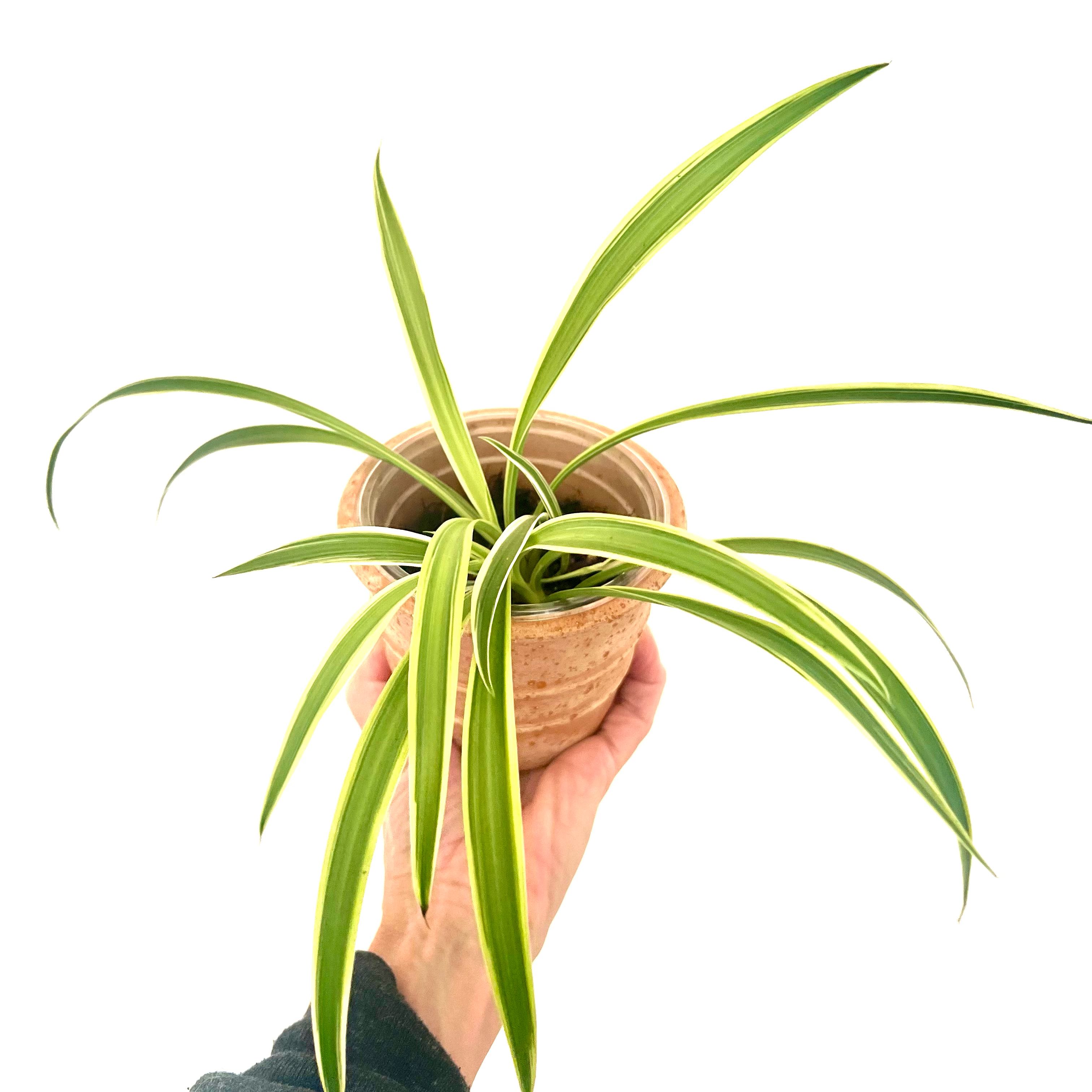
Spider Plants thrive in almost any pot material as long as it has drainage holes. Pick a pot just 1-2 inches wider than the root ball. Their thick, tuberous roots store water, so a pot that drains well and dries out between waterings is ideal.
What Size Pot Does a Spider Plant Need?
Spider Plants have thick, fleshy tuberous roots that store water, so they fill a pot faster than you might expect. Choose a pot about 1-2 inches wider than the current root mass. A pot that is too snug will force roots out of the drainage holes quickly.
Spider Plants actually bloom and produce more babies (spiderettes) when slightly root-bound. Do not rush to upsize unless the roots are visibly stressed. A moderately snug fit encourages flowering.
If you notice the plant pushing itself up and out of the soil, or if water runs straight through without being absorbed, the roots have taken over and it is time for a bigger pot.
Spiderette or small start4–5" pot
Young plant (6–10 inches)6–8" pot
Mature plant (1–2 ft spread)8–10" pot
Large hanging specimen10–12" hanging basket
What Material Pot Is Best for Spider Plant?
Spider Plants are forgiving and adaptable, so almost any pot material works. Their tuberous roots store water internally, which means they tolerate drying out a bit between waterings. The main thing to avoid is a pot that keeps the root zone soggy for days on end.
If you plan to hang your Spider Plant, weight matters. A lighter material like plastic or fabric keeps a hanging basket manageable, especially once the plant fills out with trailing babies.
Dries fastest → Slowest
Best for Spider Plant
Fabric
Lightweight and great for hanging baskets. Water a bit more often since fabric dries quickly.
Unglazed Ceramic
Breathes nicely and dries evenly, a solid all-around choice for tabletop Spider Plants.
Wood
Good breathability with a natural look. Line with plastic if using for a hanging planter to protect the wood.
Glazed Ceramic
Holds moisture a bit longer, which is fine for Spider Plants. Just let the soil dry between waterings.
Plastic
The most popular choice for hanging Spider Plants. Light, affordable, and works perfectly with good drainage.
Metal
Fine for indoor use. If hanging outdoors in sun, the metal can heat up, so keep it in a shaded spot.
Spider Plants are forgiving and grow well in just about any pot material. Plastic is the most popular choice for hanging baskets because it is light and affordable. Fabric works great for hanging too, though it dries out faster.
For tabletop displays, unglazed ceramic and glazed ceramic both work nicely. Spider Plants like to dry out a bit between waterings, so any material with a drainage hole will keep them happy.
Stay on top of plant care
Get seasonal reminders for watering and fertilizing — personalized for your plants.
Yes. Spider Plant roots are thick and fleshy, which makes them vulnerable to rot if they sit in water. Drainage holes let excess moisture escape after each watering.
This is especially important in hanging baskets where you might water heavily to ensure the whole root ball gets wet. Without holes, water pools at the bottom and the tuberous roots break down. A drip tray or saucer underneath catches runoff without trapping water against the roots.
When Should I Repot My Spider Plant?
Spider Plants grow at a moderate pace and typically need repotting every one to two years. Their tuberous roots expand quickly in good conditions, so check the root mass each spring.
Repot in spring or early summer when the plant is actively growing. Gently untangle the thick roots and shake off old soil. If the tuberous roots are tightly wound, loosen them with your fingers before placing in the new pot.
Use a standard well-draining potting mix. Spider Plants are not fussy about soil, but adding a handful of perlite improves drainage and keeps the mix from compacting over time.
Signs It's Time to Repot
Roots pushing the plant up above the soil line
Thick roots growing out of drainage holes
Water runs through the pot without soaking in
Plant stops producing new babies despite good light
Soil dries out within a day or two of watering
When Can I Plant My Spider Plant in the Ground?
Spider Plants can grow in the ground year-round in zones 9a through 11b. Plant in a shaded or partially shaded spot with loose, well-draining soil. They spread through runners and can make an attractive ground cover in frost-free climates.
Outside these zones, Spider Plants are best kept in containers. They make wonderful indoor plants and can spend summers outside in a shaded spot. Bring them back indoors before temperatures drop below 50 degrees F.
Got More Questions?
Can I use a pot without drainage holes for my Spider Plant?
It is not recommended. Spider Plants have thick tuberous roots that rot easily in standing water. Use a pot with drainage, or place a nursery pot inside a decorative cachepot and dump out collected water.
How do I know if my Spider Plant's pot is too big?
If the soil stays wet for more than a week after watering, the pot is probably too large. Spider Plants do fine in a snug pot and actually produce more babies when mildly root-bound.
Should I use a hanging basket or a regular pot?
Either works great. Hanging baskets show off the trailing spiderettes beautifully. If hanging, choose a lightweight material like plastic or fabric so the basket does not get too heavy as the plant grows.
Why are my Spider Plant's roots growing above the soil?
The thick tuberous roots have filled the pot and are pushing upward. This is a clear sign it is time to repot into a container 1-2 inches wider.
Can I plant Spider Plant babies directly into the same pot?
You can, but the pot will get crowded quickly. It is better to root babies in their own small pots, then group them together in a larger planter if you want a full look.
Stay on top of plant care
Get seasonal reminders for watering and fertilizing — personalized for your plants.
Kiersten Rankel holds an M.S. in Ecology & Evolutionary Biology from Tulane University. A certified Louisiana Master Naturalist, she has over a decade of experience in science communication, with research spanning corals, cypress trees, marsh grasses, and more. At Greg, she curates species data and verifies care recommendations against botanical research.
See Kiersten Rankel's full background on LinkedIn.
Editorial Process
Container guidance verified against Chlorophytum comosum growth data from Greg's botanical database, cross-referenced with USDA hardiness zone data and published horticultural research.