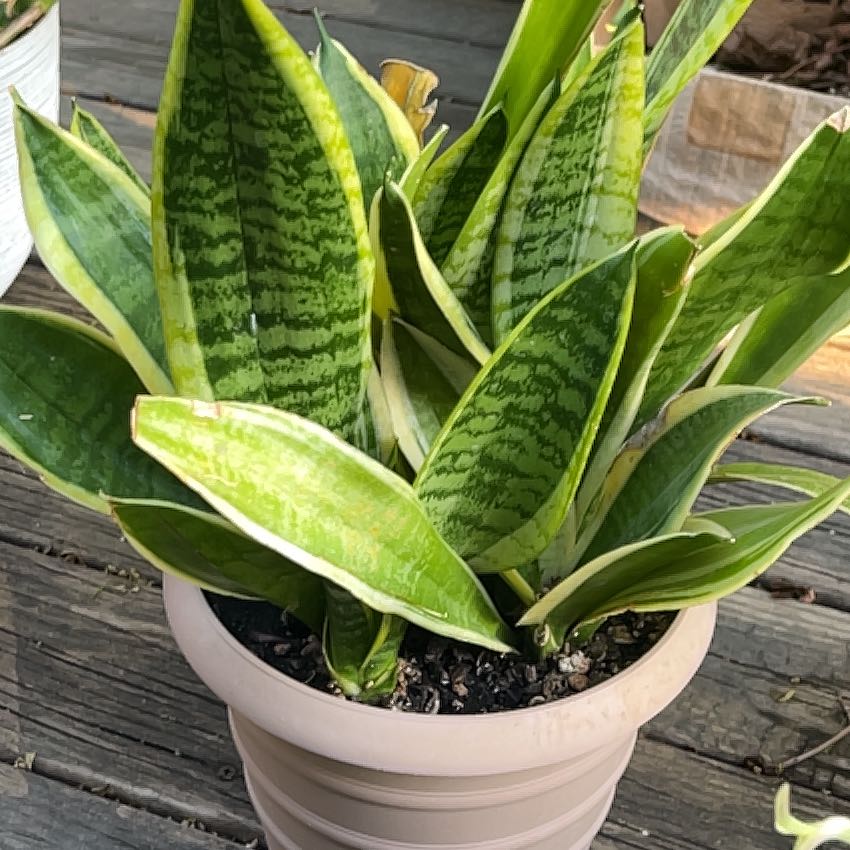
Snake Plants do best in a sturdy, well-draining pot like unglazed ceramic or terracotta. Pick a pot just 1-2 inches wider than the root ball since they prefer snug conditions. Drainage holes are a must because Snake Plants rot easily in wet soil.
What Size Pot Does a Snake Plant Need?
Snake Plants have a shallow, rhizomatous root system that spreads outward rather than down. A wide, shallow pot suits them better than a tall, narrow one. Choose a pot that is only 1-2 inches wider than the current root clump.
Snake Plants actually bloom and produce more pups when slightly root-bound, so resist the urge to jump to a much bigger pot. Excess soil around the roots stays wet too long and leads to rot.
If your Snake Plant starts pushing against the pot walls or cracking a plastic container, it is time to size up. These plants have surprisingly strong rhizomes that can split thin pots.
Single rosette or small pup4–6" pot
Established clump (1–2 ft tall)6–8" pot
Mature clump (2–3 ft tall)8–10" pot
Large multi-rosette colony (3+ ft)10–14" pot
What Material Pot Is Best for Snake Plant?
Snake Plant roots need to dry out quickly between waterings. The rhizomes and fleshy roots store water internally, so any pot that holds extra moisture puts them at risk of rot. A breathable pot material that wicks moisture away from the root zone is ideal.
Weight matters too. Tall Snake Plants can get top-heavy, so a heavier pot like ceramic or stone keeps things stable.
Dries fastest → Slowest
Best for Snake Plant
Fabric
Excellent drainage and airflow, perfect for preventing the soggy conditions Snake Plants hate.
Unglazed Ceramic
The classic choice. Breathes well, dries evenly, and adds weight to keep tall leaves from tipping.
Wood
Good breathability, though check for a liner since prolonged moisture can break down the wood over time.
Glazed Ceramic
Works well if you let the soil dry fully between waterings. The sealed walls slow evaporation slightly.
PlasticTOO SLOW
Retains moisture longer and does not breathe, which increases rot risk for these drought-adapted roots.
Best for Snake Plant
Metal
Fine for indoor use where temperatures are stable. Just ensure the pot has drainage holes.
Snake Plants store water in their thick leaves and are very sensitive to soggy soil. Breathable pots like fabric and unglazed ceramic are ideal because they help the soil dry out between waterings, which is exactly what these drought-adapted roots need.
Avoid plastic pots. They hold moisture too long and do not breathe, which raises the risk of root rot. If you already have a plastic pot, mix in extra perlite and water less frequently. Glazed ceramic, wood, and metal all work fine indoors as long as drainage holes are clear.
Stay on top of plant care
Get seasonal reminders for watering and fertilizing — personalized for your plants.
Yes, drainage holes are non-negotiable. Snake Plants are one of the most rot-prone common houseplants because their thick roots and rhizomes hold water internally. Any extra moisture sitting at the bottom of a sealed pot will cause rot before you notice anything is wrong.
If you love a decorative pot without holes, use it as a cachepot. Place the Snake Plant in a nursery pot inside and remove it to water. Pour out any collected water right away.
When Should I Repot My Snake Plant?
Snake Plants are slow growers and can stay in the same pot for two to three years. They actually prefer being a bit cramped, so only repot when the roots force the issue.
Spring or early summer is the best time to repot. Shake off old soil, inspect the rhizomes for any soft or mushy spots, and trim those away with a clean blade. Let any cuts callus for a day before replanting.
Use a fast-draining mix. A cactus and succulent blend, or regular potting soil mixed 50/50 with perlite, keeps the root zone airy.
Signs It's Time to Repot
Rhizomes pushing against or cracking the pot
Roots filling every inch of the soil surface
Plant becomes extremely top-heavy and tips over
Pups emerging and crowding the pot heavily
Soil dries out within a day of watering
When Can I Plant My Snake Plant in the Ground?
Snake Plants can go in the ground in zones 9a through 11b, where winter temperatures stay above about 20 degrees F. Plant in a well-drained spot with partial shade to full sun. In heavy clay soils, amend with sand or gravel to prevent waterlogging.
Outside these zones, keep your Snake Plant in a container and bring it indoors before the first frost. It makes an excellent indoor plant year-round, so most growers are better off keeping it potted even in warm climates for easy mobility.
Got More Questions?
Can I use a pot without drainage holes for my Snake Plant?
This is risky. Snake Plants are very prone to root rot, and a pot without drainage is the most common way to kill one. If you must, use a cachepot setup with a nursery pot inside and empty standing water after each watering.
How do I know if my Snake Plant's pot is too big?
If the soil stays damp for more than 10 days after watering, the pot is too large. Snake Plants prefer snug pots where the soil dries out within a week. Excess soil holds moisture that the roots cannot use.
Why is my Snake Plant cracking its pot?
Snake Plant rhizomes are powerful. As the underground stems spread, they can exert enough pressure to crack thin plastic or even terracotta. This is a clear sign it is time to repot into something 1-2 inches wider.
Should I use a tall pot or a short pot?
Go with a shorter, wider pot. Snake Plant roots spread horizontally through rhizomes rather than growing deep. A tall pot just adds extra soil at the bottom that stays wet and invites rot.
Can I plant multiple Snake Plants in one pot?
Yes. Grouping several in one wide pot creates a full, dramatic look. Just make sure the pot is not so large that the soil stays wet for too long. Each plant should be snug against its neighbors.
Stay on top of plant care
Get seasonal reminders for watering and fertilizing — personalized for your plants.
Kiersten Rankel holds an M.S. in Ecology & Evolutionary Biology from Tulane University. A certified Louisiana Master Naturalist, she has over a decade of experience in science communication, with research spanning corals, cypress trees, marsh grasses, and more. At Greg, she curates species data and verifies care recommendations against botanical research.
See Kiersten Rankel's full background on LinkedIn.
Editorial Process
Container guidance verified against Dracaena trifasciata growth data from Greg's botanical database, cross-referenced with USDA hardiness zone data and published horticultural research.