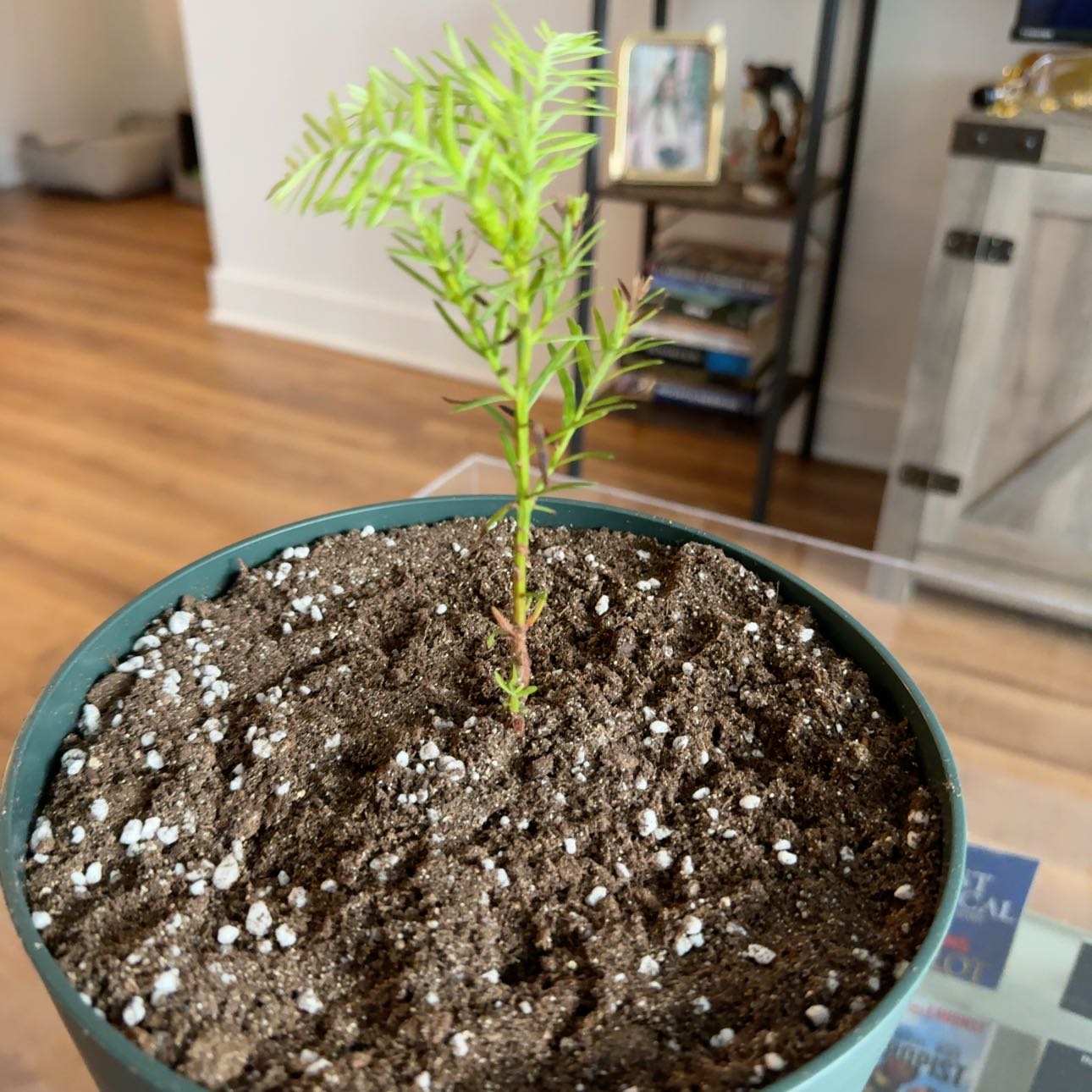
A young Redwood does best in a deep unglazed ceramic or wood pot that lets its taproot stretch downward. Start with a pot at least 12 inches deep and size up as the tree grows. Drainage holes are essential since soggy roots will kill a redwood faster than drought.
What Size Pot Does a Redwood Need?
Redwoods develop a strong taproot and deep lateral roots, so depth matters more than width. Choose a pot that is at least as deep as it is wide, and ideally deeper. A pot that is too shallow will circle the roots and stunt growth.
When sizing up, go 3-4 inches wider and deeper than the current container. Redwoods are vigorous growers, so a slightly larger jump is fine. If you see roots pushing out the bottom or the tree becoming top-heavy, it is time to move up.
A pot that is way too large holds excess moisture around young roots, which invites rot. Match the pot to the current root mass and size up as the tree fills in.
Seedling (under 1 ft)6–8" deep pot
Young tree (1–3 ft)12–16" deep pot
Established tree (3–6 ft)18–24" deep pot
Large specimen (6+ ft)24–30" deep pot or half barrel
What Material Pot Is Best for Redwood?
Redwood roots need steady moisture but cannot sit in standing water. The root system is deep and fibrous, so air exchange along the pot walls helps prevent the anaerobic conditions that cause rot. A pot that breathes while still holding enough moisture between waterings is the sweet spot.
Because redwoods are outdoor trees that often sit in full sun, the pot material also needs to handle temperature swings without cooking the roots on hot days.
Dries fastest → Slowest
Best for Redwood
Fabric
Great airflow for root health, but dries out fast in summer heat, so water more frequently.
Unglazed Ceramic
Ideal balance of breathability and moisture retention for a deep-rooted tree.
Wood
Natural insulation protects roots from temperature extremes, and wood breathes well.
Glazed Ceramic
Holds moisture well, just make sure drainage holes are generous since the pot won't breathe through its walls.
Plastic
Lightweight and affordable, but can overheat in direct sun. Move to a shaded spot on the hottest days.
MetalOVERHEATS
Conducts heat rapidly and can cook roots in direct summer sun, which is where redwoods live.
Potted Redwoods are deep-rooted trees that appreciate steady moisture and good airflow. Unglazed ceramic and wood are excellent choices that balance breathability with moisture retention. Fabric works too, though you will need to water more often in summer heat.
Metal is the one material to skip. Redwoods live in full sun, and metal pots conduct heat quickly, which can damage roots on hot days. Stick with materials that insulate and breathe.
Stay on top of plant care
Get seasonal reminders for watering and fertilizing — personalized for your plants.
Yes, absolutely. Redwoods need consistent moisture but will develop root rot if water pools at the bottom. Their deep root system sits right where water collects in an undrained pot.
Make sure your pot has at least two drainage holes. If you are using a decorative cachepot, place the tree in a nursery pot inside it and empty any collected water within an hour of watering.
When Should I Repot My Redwood?
Redwoods grow quickly, especially when young, and can fill a pot in one to two growing seasons. Plan to repot every one to two years while the tree is young, and every two to three years once it reaches a larger container.
Spring is the best time to repot, just as new growth is starting. Gently loosen any circling roots and trim the taproot slightly if it has coiled at the bottom. This encourages fresh lateral root growth.
Use a well-draining, slightly acidic potting mix. Redwoods prefer a soil pH between 5.5 and 6.5, so an evergreen or conifer-specific blend works well.
Signs It's Time to Repot
Roots growing out of drainage holes
Tree becomes top-heavy and tips over easily
Water runs straight through without soaking in
Growth slows noticeably despite good light and feeding
Roots circling visibly at the soil surface
When Can I Plant My Redwood in the Ground?
Redwoods are hardy in zones 7a through 9b and are meant to live in the ground long-term. If you are in this range, transplant in early spring or fall when temperatures are mild. Choose a spot with room to grow since even modest specimens reach 40-60 feet in a home landscape.
If you live outside zones 7a-9b, you can keep a redwood in a large container and bring it into a cool, bright garage or porch when temperatures drop below 10 degrees F. Container redwoods will never reach their full size, but they can live happily for many years with regular repotting.
Got More Questions?
Can I grow a Redwood in a pot without drainage holes?
No. Redwoods need consistent moisture but are very sensitive to waterlogged soil. Without drainage, the deep roots sit in stagnant water and rot quickly. Always use a pot with holes.
How do I know if my Redwood's pot is too big?
If the soil stays wet for more than a week after watering, the pot is likely too large for the current root mass. The excess soil holds moisture the roots cannot use, creating conditions for rot. Size up gradually.
Can I keep a Redwood indoors?
Redwoods are not suited for indoor life. They need full sun, outdoor air circulation, and a winter chill period. If you want to grow one in a cold climate, keep it outdoors in a container and shelter it in an unheated garage during the coldest months.
Should I use a tall pot or a wide pot for my Redwood?
Go tall. Redwoods develop a deep taproot early on, and a shallow, wide pot will force the roots to circle. A pot that is at least as deep as it is wide gives the root system room to grow naturally.
What potting mix should I use for a container Redwood?
Use a well-draining, slightly acidic mix. A conifer or evergreen blend with bark, perlite, and peat works well. Avoid heavy garden soil, which compacts in a pot and suffocates roots.
Stay on top of plant care
Get seasonal reminders for watering and fertilizing — personalized for your plants.
Kiersten Rankel holds an M.S. in Ecology & Evolutionary Biology from Tulane University. A certified Louisiana Master Naturalist, she has over a decade of experience in science communication, with research spanning corals, cypress trees, marsh grasses, and more. At Greg, she curates species data and verifies care recommendations against botanical research.
See Kiersten Rankel's full background on LinkedIn.
Editorial Process
Container guidance verified against Sequoia sempervirens growth data from Greg's botanical database, cross-referenced with USDA hardiness zone data and published horticultural research.