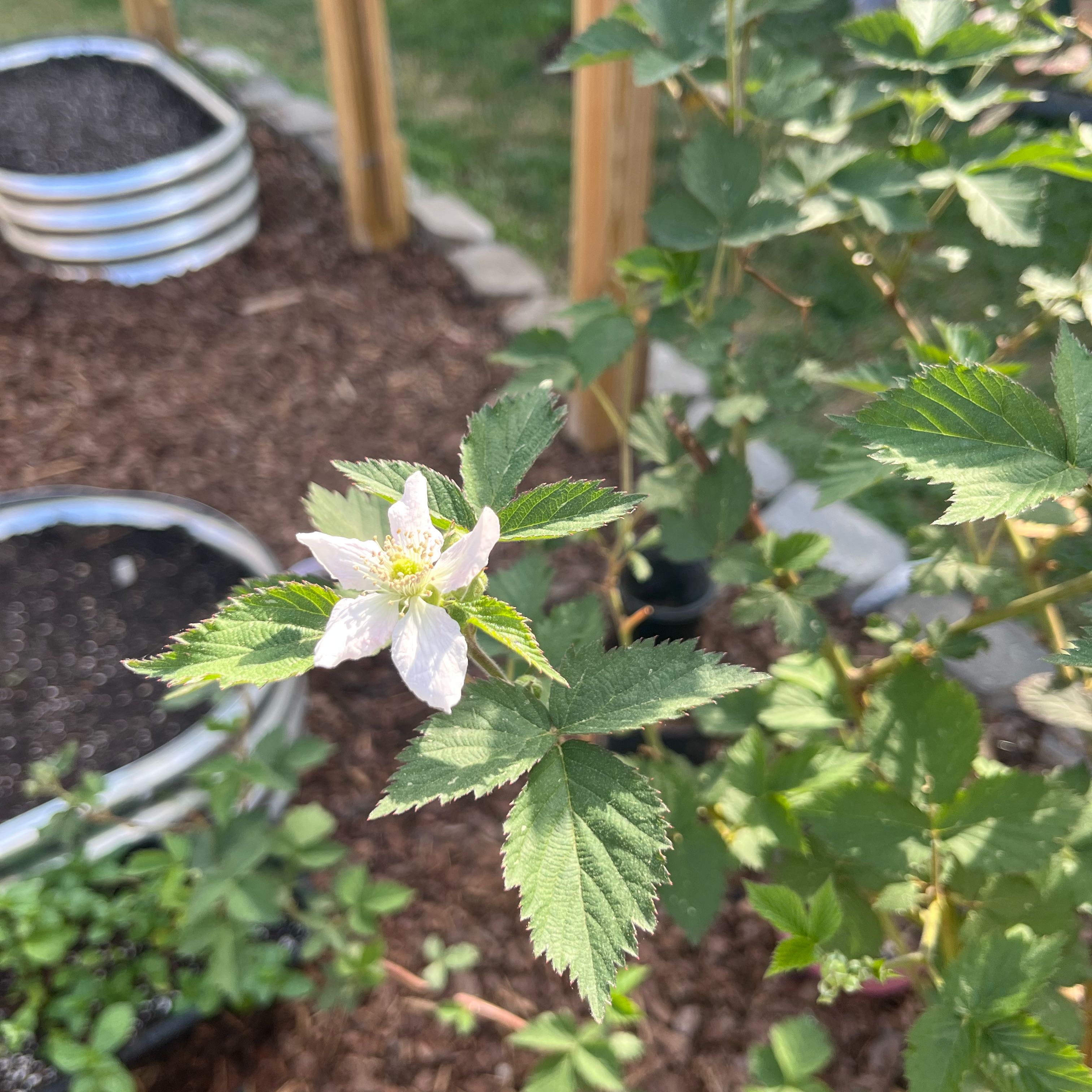
Allegheny Blackberries do best in large fabric or plastic pots, at least 5 gallons for young plants and 10 to 15 gallons for mature ones. Drainage holes are non-negotiable. The roots spread aggressively, so a wide pot keeps them productive.
What Size Pot Does an Allegheny Blackberry Need?
Blackberries have vigorous, spreading root systems that need room to run. Start with at least a 5-gallon container for a single young plant. Anything smaller will dry out too quickly and stunt cane growth.
As the plant matures and sends up new canes each year, move to a 10 to 15 gallon pot. Width matters more than depth for blackberries, since roots spread laterally rather than diving deep.
A container that's too small won't just limit growth. It'll reduce fruit yield significantly because the plant can't support enough canes to produce a good harvest.
Young plant (single cane)5-gallon (12" wide)
Established plant (3–5 canes)10-gallon (16–18" wide)
Mature plant (5+ canes)15-gallon (18–20" wide)
What Material Pot Is Best for Allegheny Blackberry?
Blackberry roots need consistent moisture during the fruiting season but can't tolerate waterlogged soil. The roots are vigorous enough to crack weak containers over time, so durability matters. Good airflow around the root zone also helps prevent the fungal diseases that brambles are susceptible to.
Since this is an outdoor plant that sits in direct sun all day, root temperature is a real concern. Dark-colored containers in full sun can heat the root zone well past what blackberry roots can handle.
Dries fastest → Slowest
Best for Allegheny Blackberry
Fabric
Excellent air pruning prevents root circling, and the breathability keeps roots cool in summer sun.
Unglazed Ceramic
Good airflow, but heavy to move and may crack in winter freezes.
Wood
Great insulation against heat and cold. A half-barrel planter is a classic choice for brambles.
Glazed Ceramic
Works fine but offers less airflow. Make sure drainage holes are large enough for the root mass.
Plastic
Affordable and lightweight. Choose a light color to minimize heat absorption in full sun.
MetalOVERHEATS
Gets dangerously hot in full sun and can cook shallow blackberry roots in summer.
Allegheny Blackberries have shallow, spreading roots that do well in most pot materials. Fabric pots are especially good because they let roots air-prune naturally instead of circling the pot. Wood planters, like a classic half-barrel, are another great option that insulates roots from summer heat and winter cold.
Steer clear of metal pots. Blackberries grow in full sun, and metal heats up fast in direct light. Those shallow roots sit close to the pot walls where the heat is worst.
Stay on top of plant care
Get seasonal reminders for watering and fertilizing — personalized for your plants.
Absolutely. Blackberries need steady moisture, but standing water causes root rot and crown rot fast. Every container must have multiple drainage holes, especially at the size you'll be using.
Elevate the pot on feet or bricks to keep drainage holes clear. During heavy rain, waterlogged containers can drown roots in a single afternoon.
When Should I Repot My Allegheny Blackberry?
Blackberries are vigorous growers, so expect to move to a larger container within the first year or two. After that, you won't need to size up again if you start with a 10 to 15 gallon pot.
Repot in late winter or early spring while the plant is still dormant. This gives roots time to settle before the growing season kicks off.
Every 2 to 3 years, even if you're not sizing up, tip the plant out and refresh the soil. Trim back any dead or circling roots and repot with fresh, compost-rich mix.
Signs It's Time to Repot
Canes are thinner and shorter than previous years
Soil dries out within hours of watering
Fruit production has dropped noticeably
Roots are matted solid at the bottom of the pot
New suckers emerge from drainage holes
When Can I Plant My Allegheny Blackberry in the Ground?
Allegheny Blackberry is native to eastern North America and thrives in USDA zones 4a through 8b. It's fully hardy in the ground across most of the eastern U.S. and southern Canada. Plant in early spring after the last hard freeze, in a sunny spot with well-drained soil.
Keep in mind that blackberry roots spread aggressively. Container growing is actually a smart strategy if you want to prevent them from taking over a garden bed. In-ground plants will need a root barrier or dedicated bed with regular sucker removal.
Got More Questions?
Can I use a pot without drainage holes for my Allegheny Blackberry?
No. Blackberries need well-drained soil to avoid root rot and crown rot. Always use a pot with drainage holes.
How do I know if my pot is too big?
For blackberries, bigger is almost always better. The only sign a pot is too large is if the soil stays constantly wet in areas far from the roots. That's rare with a plant this vigorous.
Can I grow blackberries on a balcony?
Yes, if the balcony gets at least 6 hours of direct sun. Use a 10 to 15 gallon pot and install a small trellis for the canes. The container will also keep the roots from spreading.
Should I prune the roots when repotting?
Yes. Trim back any dead, mushy, or tightly circling roots. Blackberry roots are tough and recover quickly from pruning when done in late winter dormancy.
Do I need to protect the pot in winter?
In zones 4 and 5, wrap the pot with burlap or bubble wrap to insulate the roots. Container-grown roots are more exposed to cold than in-ground roots. Move the pot against a sheltered wall if possible.
Stay on top of plant care
Get seasonal reminders for watering and fertilizing — personalized for your plants.
Kiersten Rankel holds an M.S. in Ecology & Evolutionary Biology from Tulane University. A certified Louisiana Master Naturalist, she has over a decade of experience in science communication, with research spanning corals, cypress trees, marsh grasses, and more. At Greg, she curates species data and verifies care recommendations against botanical research.
See Kiersten Rankel's full background on LinkedIn.
Editorial Process
Container guidance verified against Rubus allegheniensis growth data from Greg's botanical database, cross-referenced with USDA hardiness zone data and published horticultural research.