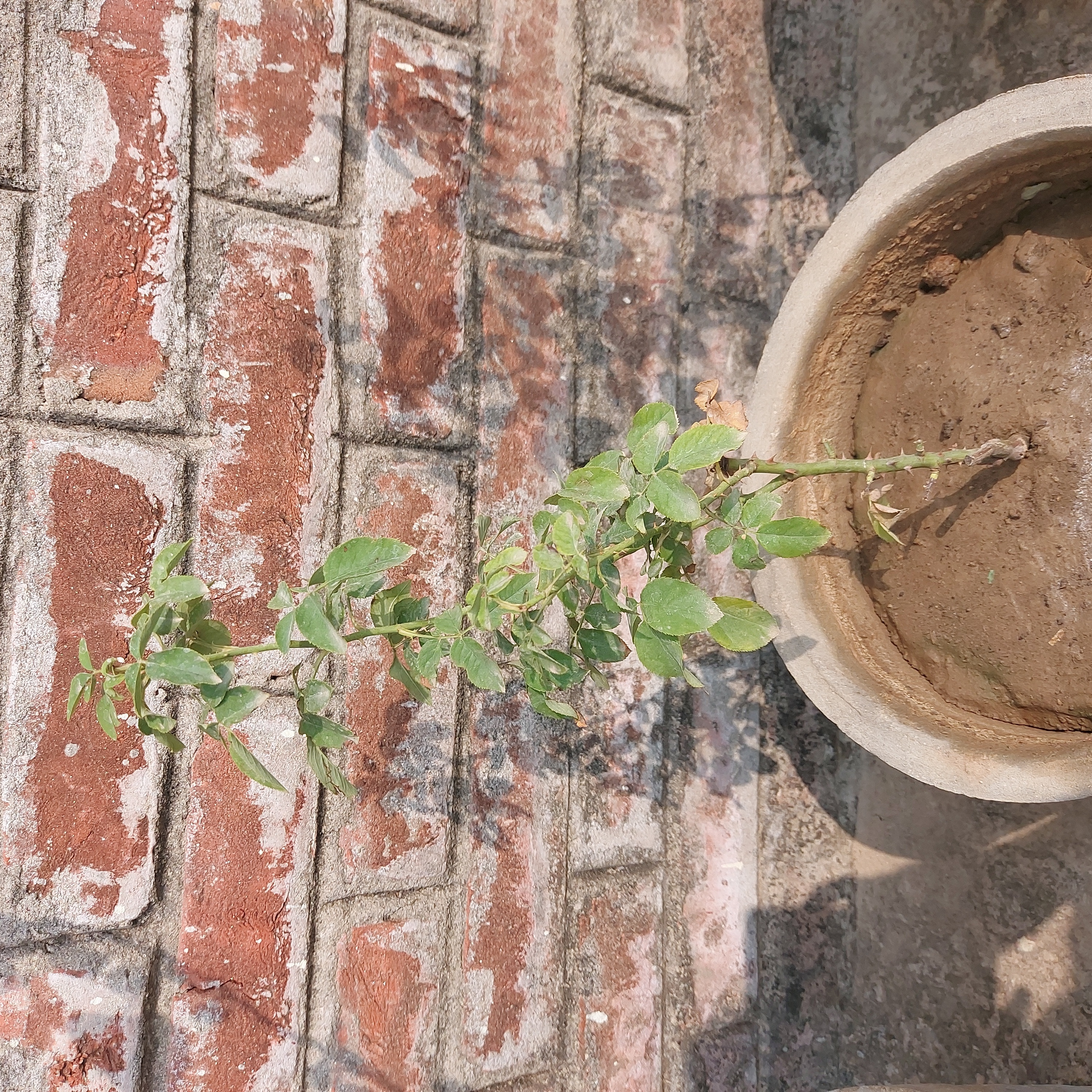
Parade Roses do best in glazed ceramic or plastic pots that hold steady moisture without waterlogging. Pick a container about 2 inches wider than the current root ball. Drainage holes are essential since roses are prone to root rot in standing water.
What Size Pot Does a Parade Rose Need?
Parade Roses are compact climbers, so they need a pot deep enough to support a vigorous root system. Start with a container about 2 inches wider than the nursery pot, and make sure it's at least as deep as it is wide.
When roots start circling the bottom or poking through drainage holes, it's time to size up. Going too large too fast holds excess moisture around the roots, which roses don't appreciate.
A mature Parade Rose in a container will usually settle into a 14 to 18 inch pot. That's large enough to anchor the plant and keep it fed between waterings.
Young plant (under 1 ft)6–8" pot
Established plant (1–3 ft)10–12" pot
Mature climber (3–5 ft)14–18" pot
What Material Pot Is Best for Parade Rose?
Parade Roses have dense, fibrous root systems that need consistent moisture but can't sit in soggy soil. The roots also benefit from a stable temperature, since heat swings stress the plant and reduce blooming.
A pot that retains some moisture while still allowing airflow around the root zone will keep this rose happiest. Heavier containers also help anchor the plant as it grows upward.
Dries fastest → Slowest
Best for Parade Rose
Fabric
Dries out quickly, so you'll need to water more often, especially in summer heat.
Unglazed Ceramic
Great airflow to the roots, but expect to water a bit more frequently than with glazed pots.
Wood
Naturally insulates roots from temperature swings, which roses appreciate.
Glazed Ceramic
Holds moisture well and keeps roots at a steady temperature. A top pick for roses.
Plastic
Lightweight and retains moisture well. Just make sure drainage holes are generous.
MetalOVERHEATS
Conducts heat rapidly and can cook roots in direct sun, which is where roses need to be.
Parade Roses are flexible when it comes to pot materials. Fabric, unglazed ceramic, wood, glazed ceramic, and plastic all work well, so pick whichever fits your space and style. Just make sure the drainage holes are generous, since roses hate sitting in water.
The one material to avoid is metal. Roses need full sun, and metal pots heat up fast in direct light. That trapped heat can cook the roots right when your plant needs them most.
Stay on top of plant care
Get seasonal reminders for watering and fertilizing — personalized for your plants.
Yes, always. Roses are especially sensitive to waterlogged soil, and standing water invites root rot and fungal diseases fast. Every pot you use for a Parade Rose should have at least one large drainage hole.
If you love a decorative pot without holes, use it as a cachepot. Set the rose in a well-draining inner pot and lift it out to water. Never let the outer pot collect standing water for more than a few minutes.
When Should I Repot My Parade Rose?
Plan to repot your Parade Rose every 2 to 3 years, or sooner if it dries out unusually fast between waterings. Early spring, just before new growth starts, is the ideal time.
When you repot, gently loosen the outer roots and trim any that are circling tightly. This encourages fresh root growth into the new soil.
Use a well-draining potting mix designed for roses or general-purpose mix with added perlite. Go up only 2 inches in pot diameter to avoid excess moisture sitting around the roots.
Signs It's Time to Repot
Roots visible through drainage holes
Soil dries out within a day of watering
Growth has slowed despite regular feeding
Plant becomes top-heavy and tips easily
Canes produce fewer or smaller blooms than usual
When Can I Plant My Parade Rose in the Ground?
Parade Roses are hardy in USDA zones 5a through 9b, so most temperate climates can support them outdoors year-round. Plant in the ground after the last frost date in spring, choosing a spot with at least 6 hours of direct sun and well-drained soil.
If you're in a colder zone, you can still grow Parade Rose in a container and overwinter it in an unheated garage or sheltered spot. Just water sparingly through winter and resume normal care when new growth appears in spring.
Got More Questions?
Can I use a pot without drainage holes for my Parade Rose?
It's not recommended. Roses need excellent drainage, and standing water quickly leads to root rot. Use a pot with holes, or place a draining inner pot inside a decorative outer one.
How do I know if my pot is too big?
If the soil stays wet for more than a few days after watering, the pot is probably too large. Excess soil holds moisture the roots can't use, which invites fungal problems.
Should I use a trellis inside the pot?
Yes. Parade Rose is a climbing variety, so it needs support even in a container. A small obelisk or fan trellis inserted into the pot works well.
Can I keep my Parade Rose in the same pot forever?
Not indefinitely. Even with annual top-dressing, the soil structure breaks down over time. Repot every 2 to 3 years to refresh the growing medium and give roots room.
Do I need to mulch the top of the pot?
A thin layer of mulch or pebbles helps retain moisture and keeps roots cooler in summer. Just keep it an inch away from the base of the canes to prevent stem rot.
Stay on top of plant care
Get seasonal reminders for watering and fertilizing — personalized for your plants.
Kiersten Rankel holds an M.S. in Ecology & Evolutionary Biology from Tulane University. A certified Louisiana Master Naturalist, she has over a decade of experience in science communication, with research spanning corals, cypress trees, marsh grasses, and more. At Greg, she curates species data and verifies care recommendations against botanical research.
See Kiersten Rankel's full background on LinkedIn.
Editorial Process
Container guidance verified against Rosa 'Parade' growth data from Greg's botanical database, cross-referenced with USDA hardiness zone data and published horticultural research.