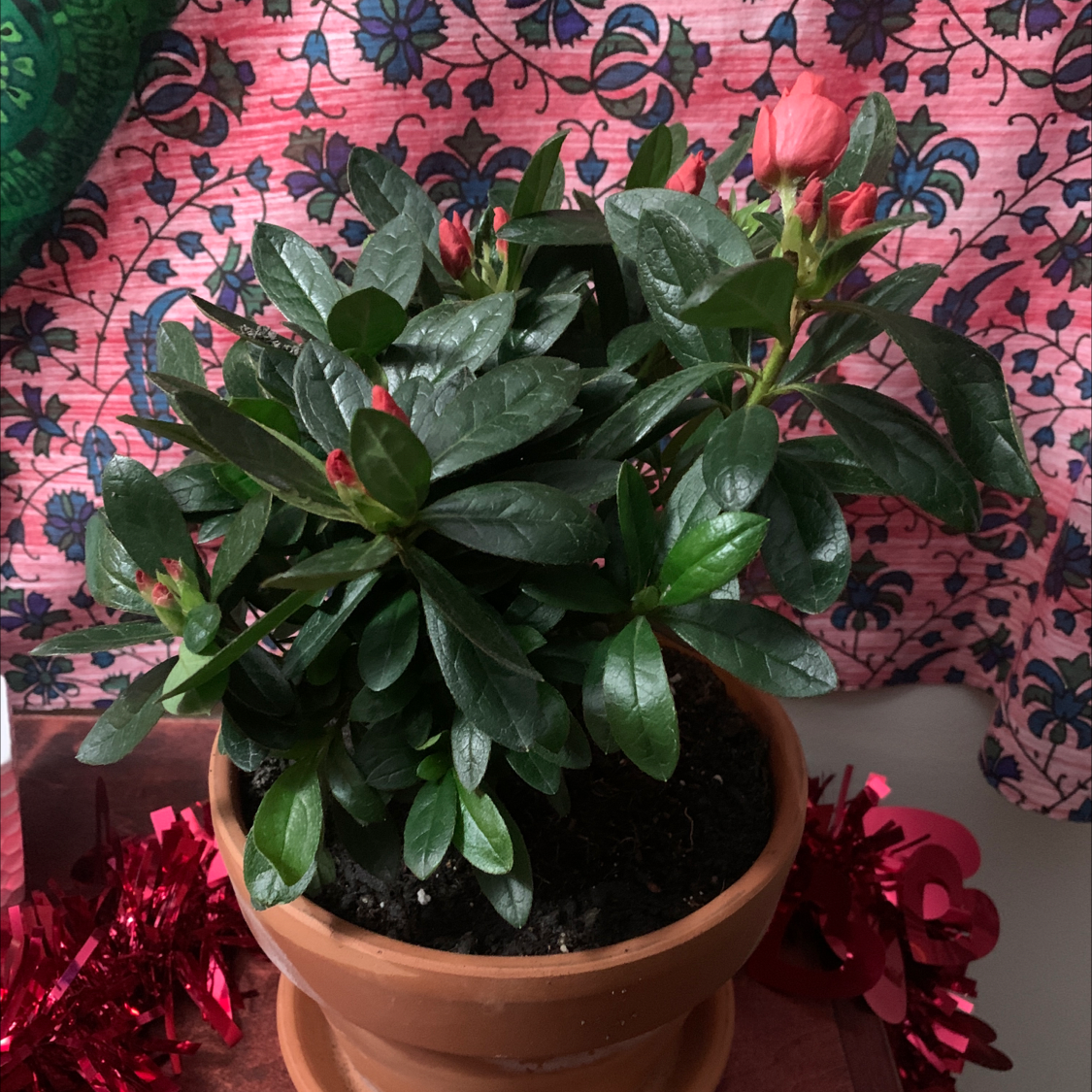
Rhododendrons do best in glazed ceramic or plastic pots with drainage holes. Choose a wide, shallow container since their roots spread outward rather than downward. Use acidic potting mix (pH 4.5–6.0) and keep the soil consistently moist but never waterlogged.
What Size Pot Does a Rhododendron Need?
Rhododendrons have very shallow, fibrous root systems that spread horizontally rather than growing deep. A wide, shallow pot gives those fine roots room to expand without leaving a soggy layer of unused soil at the bottom.
For a nursery plant in a 1-gallon pot, move to a container about 2–4 inches wider. Rhododendrons prefer being slightly snug over swimming in excess soil, so don't jump more than one size at a time.
Avoid deep pots. The bottom layer of soil stays wet long after the root zone has dried, and rhododendron roots are sensitive to prolonged moisture at depth.
Small nursery plant (under 1 ft)8–10" wide, shallow pot
Established plant (1–2 ft)12–14" wide, shallow pot
Mature specimen (2–4 ft)16–20" wide, shallow pot
What Material Pot Is Best for Rhododendron?
Rhododendron roots are fine and fibrous, adapted to the moist, acidic leaf litter of forest floors. They need consistent moisture without ever sitting in water. A pot that holds moisture at a moderate, even pace matches these needs better than one that dries out fast.
Temperature stability also matters. Rhododendron roots are near the surface and vulnerable to heat stress, so a pot that insulates against temperature swings protects the shallow root zone.
Dries fastest → Slowest
FabricTOO FAST
Dries out too quickly for rhododendrons, which need consistent moisture around their shallow, fine roots.
Best for Rhododendron
Unglazed Ceramic
Breathable but dries faster than ideal. Water more frequently and monitor soil moisture closely.
Wood
Good insulation and moderate moisture retention. Cedar or redwood resists rot from the acidic soil rhododendrons need.
Glazed Ceramic
An excellent choice. Holds moisture evenly, insulates roots, and the weight provides stability for larger specimens.
Plastic
Retains moisture well and is lightweight for large, shallow containers. A practical and affordable option.
Metal
Works for indoor azaleas. Outdoor rhododendrons in metal pots risk root overheating in summer sun.
Rhododendrons have shallow, fine roots that need consistent moisture, so avoid anything that dries out too quickly. Fabric pots are too fast for this plant, leaving those delicate roots parched between waterings.
Glazed ceramic is an excellent choice, holding moisture evenly while insulating roots from temperature swings. Plastic works well too, especially for larger, shallow containers. If you use wood, cedar or redwood are best since they resist rot from the acidic soil rhododendrons prefer.
Stay on top of plant care
Get seasonal reminders for watering and fertilizing — personalized for your plants.
Yes. Rhododendrons need consistently moist soil, but they absolutely cannot tolerate standing water. Their fine roots suffocate quickly in waterlogged conditions, and root rot sets in fast.
Good drainage paired with a moisture-retentive acidic potting mix creates the balance rhododendrons need. Water should flow freely from the bottom, but the organic-rich soil should hold enough moisture to keep roots from drying out between waterings.
When Should I Repot My Rhododendron?
Repot rhododendrons every 2–3 years in early spring, right after flowering finishes. This gives the plant a full growing season to establish in its new container before winter.
Go up 2–4 inches in width and use a fresh acidic potting mix. Rhododendrons are sensitive to planting depth, so position the root ball at the same level it was in the previous pot. Burying the crown invites rot.
Handle the root ball gently. Rhododendron roots are fine and break easily. If roots are tightly circling, tease them apart lightly with your fingers rather than cutting.
Signs It's Time to Repot
Roots matted at the soil surface or growing out drainage holes
Water sits on the surface instead of soaking in
Leaves yellow despite proper watering (soil pH may have drifted)
Plant wilts quickly between waterings even in shade
When Can I Plant My Rhododendron in the Ground?
Rhododendrons grow in the ground year-round in zones 7a through 9b. Plant in early spring or early fall, choosing a spot with dappled shade and moist, acidic soil. Morning sun with afternoon shade is ideal in warmer zones.
In zones colder than 7a, florist azaleas (Rhododendron simsii) are best kept in pots indoors for winter. They can spend summer outdoors in a shaded spot but should come back inside before temperatures drop below 40°F. Hardy garden rhododendrons are a better choice for in-ground planting in cold climates.
Got More Questions?
Can I use a pot without drainage holes for my rhododendron?
No. Rhododendron roots rot quickly in standing water despite needing consistent moisture. Always use a pot with drainage holes and a saucer you empty after watering.
How do I know if my rhododendron's pot is too big?
If the soil stays soggy for days after watering, the pot is too large. The excess wet soil around the fine root zone leads to suffocation and rot. Size up gradually.
Does my rhododendron need acidic soil in a pot?
Yes. Rhododendrons need a soil pH between 4.5 and 6.0. Use a potting mix formulated for azaleas, camellias, and rhododendrons. Regular potting soil is usually too alkaline.
Why are my rhododendron's leaves turning yellow?
Yellow leaves often signal a pH problem. If the soil becomes too alkaline, the plant can't absorb iron. Repot with fresh acidic mix or water with an acidifying fertilizer designed for acid-loving plants.
Can I grow a florist azalea outdoors year-round?
Only in zones 7a through 9b. Florist azaleas (Rhododendron simsii) are less cold-hardy than garden varieties. In cooler climates, keep them in pots and bring them indoors before the first frost.
Stay on top of plant care
Get seasonal reminders for watering and fertilizing — personalized for your plants.
Kiersten Rankel holds an M.S. in Ecology & Evolutionary Biology from Tulane University. A certified Louisiana Master Naturalist, she has over a decade of experience in science communication, with research spanning corals, cypress trees, marsh grasses, and more. At Greg, she curates species data and verifies care recommendations against botanical research.
See Kiersten Rankel's full background on LinkedIn.
Editorial Process
Container guidance verified against Rhododendron simsii growth data from Greg's botanical database, cross-referenced with USDA hardiness zone data and published horticultural research.