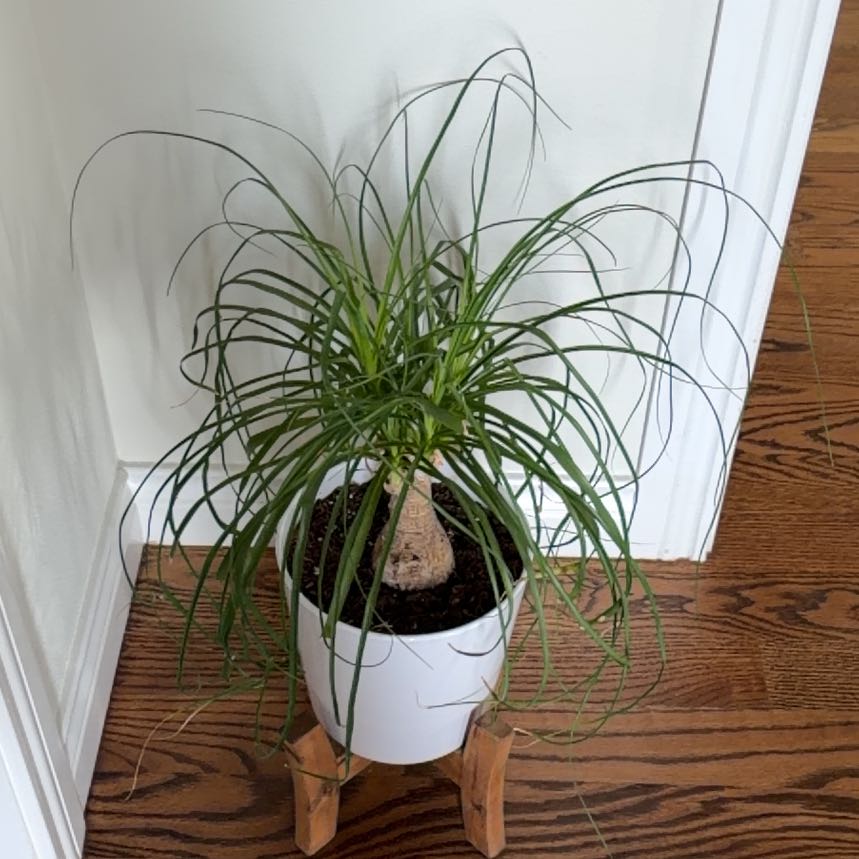
Ponytail Palms do best in unglazed ceramic pots with drainage holes. Choose a shallow, wide container that fits the bulbous caudex with about 1–2 inches of clearance on each side. These drought-tolerant plants prefer fast-draining soil and a pot that dries out completely between waterings.
What Size Pot Does a Ponytail Palm Need?
The Ponytail Palm's swollen trunk base (called a caudex) stores water and dictates pot size more than the root system does. Pick a pot just wide enough to fit the caudex with 1–2 inches of space around it.
A shallow pot works better than a deep one. The roots are relatively modest for the size of the plant, and deep soil below the root zone stays wet too long. A squat, wide planter is ideal.
Ponytail Palms grow very slowly, so you won't need to size up often. Keeping them slightly rootbound actually encourages the caudex to thicken, which most owners prefer.
Young plant (under 1 ft)4–6" pot
Small caudex (1–2 ft tall)6–8" pot
Established (2–4 ft tall)8–12" pot
Mature specimen (4–6 ft tall)12–16" pot
What Material Pot Is Best for Ponytail Palm?
Ponytail Palms store water in their thick caudex, so they're built for drought. Their roots are adapted to sandy, fast-draining soils and they're far more likely to die from overwatering than underwatering. A pot material that lets soil dry quickly and provides airflow to the roots is the safest choice.
Weight is also worth considering. A tall Ponytail Palm with a heavy caudex can tip a lightweight pot over, so a heavier material adds stability as the plant matures.
Dries fastest → Slowest
Best for Ponytail Palm
Fabric
Excellent airflow keeps the caudex dry and healthy. A great choice while the plant is young and lightweight.
Unglazed Ceramic
The best all-around option. Breathable walls plus enough weight to keep a mature Ponytail Palm stable.
Wood
Good drainage and insulation. Line the inside to extend the life of the planter.
Glazed Ceramic
Works if you use a very fast-draining soil mix and water carefully. The non-porous walls slow drying.
PlasticTOO SLOW
Holds moisture too long for this drought-adapted plant, increasing the risk of caudex rot.
Best for Ponytail Palm
Metal
Fine for indoor Ponytail Palms. The fast heat transfer actually helps soil dry more quickly.
Ponytail Palms are drought-adapted plants from Mexico that store water in their swollen base. They need soil that dries out completely between waterings, making breathable pots the best fit. Unglazed ceramic is the top choice, combining porous walls with enough weight to keep a mature plant stable.
Avoid plastic, which holds moisture too long and puts the water-storing base at risk of rot. If you prefer a decorative pot, glazed ceramic works as long as you use a very fast-draining mix and resist the urge to water on a schedule.
Stay on top of plant care
Get seasonal reminders for watering and fertilizing — personalized for your plants.
Yes, without question. The Ponytail Palm's caudex stores a surprising amount of water, and the plant draws from that reservoir between waterings. If the roots also sit in wet soil, the caudex can rot from the bottom up.
Use a pot with at least one large drainage hole and a fast-draining cactus or succulent soil mix. After watering, make sure no water sits in the saucer for more than 30 minutes.
When Should I Repot My Ponytail Palm?
Ponytail Palms are very slow growers, often adding just a few inches of height per year. You'll only need to repot every 3–4 years, and only when the caudex is pressing against the sides of the pot.
Spring is the best time to repot. Choose a pot just 1–2 inches wider than the caudex. Gently lift the plant out, brush away old soil, and settle it into fresh, fast-draining mix.
Don't bury the caudex deeper than it was before. The top of the bulge should sit at or slightly above the soil line. Burying it invites rot.
Signs It's Time to Repot
Caudex is pressing tightly against the pot walls
Roots visible through drainage holes
Plant has become top-heavy and tips easily
Soil is exhausted and no longer drains well
When Can I Plant My Ponytail Palm in the Ground?
Ponytail Palms can grow in the ground year-round in zones 9a through 11b. They're native to the dry forests of eastern Mexico and handle heat and drought well, but they have no tolerance for prolonged freezing temperatures.
If you live in a suitable zone, plant in full sun with sandy or rocky soil that drains fast. In cooler climates, keep your Ponytail Palm in a pot and bring it indoors before temperatures drop below freezing. It makes an excellent indoor plant in bright light.
Got More Questions?
Can I use a pot without drainage holes for my Ponytail Palm?
No. This is one of the most rot-prone houseplants when overwatered. A pot without drainage is almost guaranteed to cause caudex rot eventually.
How do I know if my Ponytail Palm's pot is too big?
If the soil stays damp for more than a week after watering, the pot is too large. The excess soil holds moisture the roots can't use, and the caudex absorbs water from the air too.
Should I use a shallow pot or a deep pot?
Shallow and wide. The Ponytail Palm's root system is modest compared to its above-ground size. A deep pot just adds soil that stays wet below the root zone.
Can I keep my Ponytail Palm rootbound?
Yes, and it's actually good for the plant. Slightly rootbound conditions encourage the caudex to thicken and reduce the risk of overwatering. Only repot when the caudex outgrows the container.
Why is the base of my Ponytail Palm soft?
A soft or mushy caudex usually means overwatering or poor drainage. Move the plant to a pot with drainage holes and fast-draining soil immediately. Let the soil dry completely before watering again.
Stay on top of plant care
Get seasonal reminders for watering and fertilizing — personalized for your plants.
Kiersten Rankel holds an M.S. in Ecology & Evolutionary Biology from Tulane University. A certified Louisiana Master Naturalist, she has over a decade of experience in science communication, with research spanning corals, cypress trees, marsh grasses, and more. At Greg, she curates species data and verifies care recommendations against botanical research.
See Kiersten Rankel's full background on LinkedIn.
Editorial Process
Container guidance verified against Beaucarnea recurvata growth data from Greg's botanical database, cross-referenced with USDA hardiness zone data and published horticultural research.