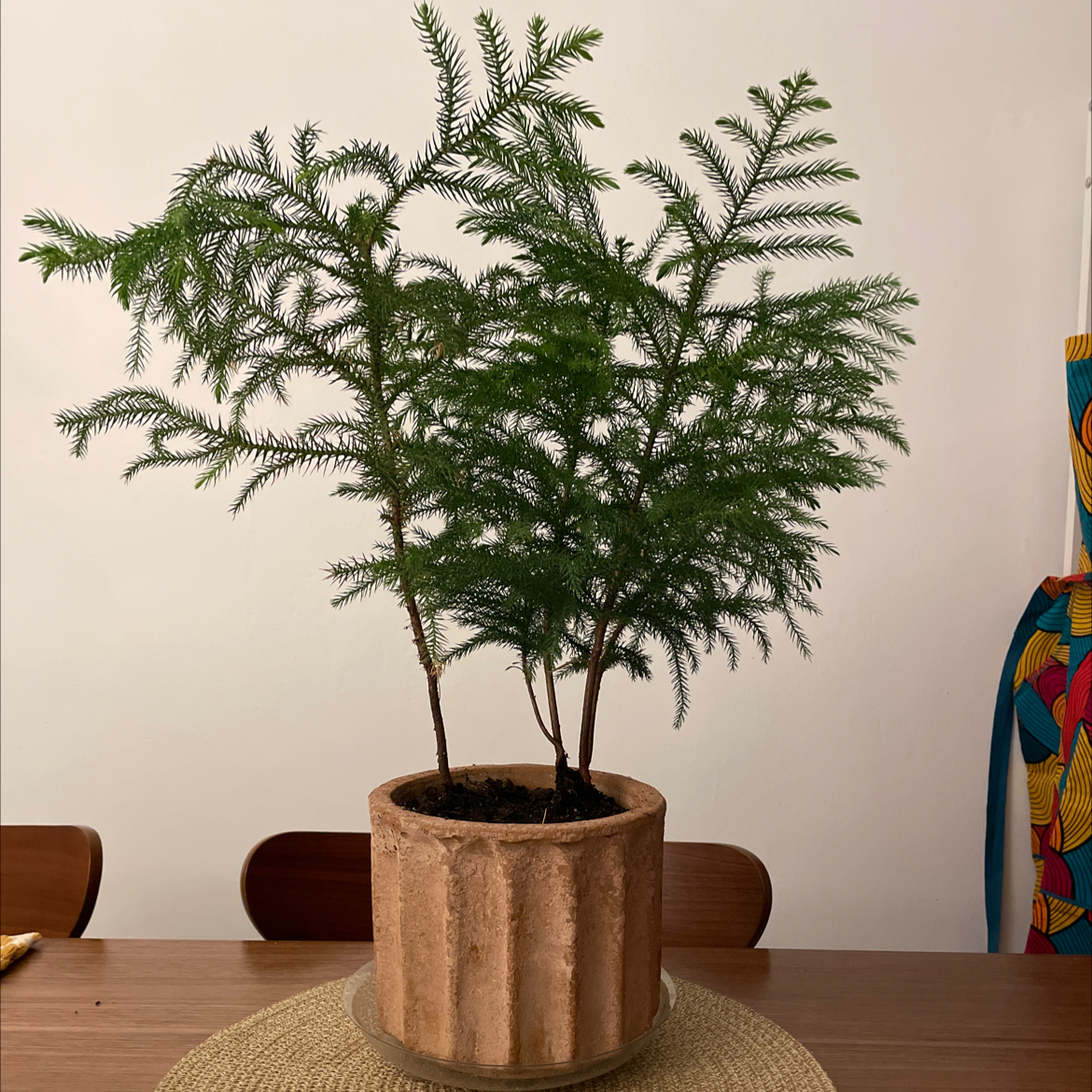
Norfolk Island Pine does best in a deep pot with drainage holes, made from glazed ceramic or plastic to hold consistent moisture. Choose a pot that is proportional to the tree, about one-third the height of the plant. This tree has a deep root system and needs a stable, weighty base to stay upright.
What Size Pot Does a Norfolk Island Pine Need?
Norfolk Island Pine is a tree, and its roots grow downward more than outward. Choose a pot that is taller than it is wide, giving the taproot room to develop. A good rule of thumb is a pot diameter about one-third the height of the tree.
Size up by 2 inches in diameter when roots fill the current pot. These are not fast growers indoors, so you may only need to repot every two to three years.
A pot that is too shallow forces the roots to circle, which makes the tree unstable. One that is far too large holds excess moisture that the roots cannot use.
Small tree (under 2 ft)6–8" deep pot
Medium tree (2–4 ft)8–10" deep pot
Tall tree (4–6 ft)10–14" deep pot
Large specimen (6+ ft)14–18" deep pot
What Material Pot Is Best for Norfolk Island Pine?
Norfolk Island Pine has a deep root system that likes soil to stay evenly moist without being waterlogged. The tree grows slowly and steadily, so a pot that provides consistent conditions helps it thrive.
As the tree grows taller, weight and stability matter. A large Norfolk Island Pine in a lightweight pot can tip over easily, especially near windows where people walk by.
Dries fastest → Slowest
Best for Norfolk Island Pine
Fabric
Fabric pots work but dry out quickly, so you will need to water more often to keep the soil evenly moist.
Unglazed Ceramic
Terra cotta adds welcome weight for stability, though it dries faster than glazed options.
Wood
A wooden planter complements the tree's natural look and provides moderate moisture retention.
Glazed Ceramic
Excellent balance of moisture retention, weight, and stability for a tall tree.
Plastic
Affordable and retains moisture well, but may need a heavier cachepot for stability as the tree grows.
Metal
Metal works fine for this indoor tree. The added weight helps with stability.
Norfolk Island Pine grows into a tall, upright tree indoors, so stability matters as much as moisture. Glazed ceramic and metal are excellent picks because their weight keeps the pot from tipping as the tree grows.
Lighter materials like plastic and fabric work fine when the tree is small, but you may need to set them inside a heavier outer pot as it matures. This tree likes evenly moist soil, so avoid letting it dry out completely no matter which pot you choose.
Stay on top of plant care
Get seasonal reminders for watering and fertilizing — personalized for your plants.
Yes. Norfolk Island Pine wants consistently moist soil, but standing water at the bottom of the pot will damage the roots over time. Drainage holes let excess water escape so the soil can stay damp without becoming swampy.
Always empty the saucer under the pot about 30 minutes after watering. Letting the pot sit in collected water is the most common cause of root issues with this tree.
When Should I Repot My Norfolk Island Pine?
Norfolk Island Pine grows slowly indoors and usually needs repotting every two to three years. The best time is spring, just as new growth begins at the branch tips.
When you repot, handle the root ball gently. This tree does not recover well from root damage. Slide it out of the old pot, loosen the outer roots slightly, and place it in the new pot at the same depth.
Use a well-draining potting mix with some added perlite. Water thoroughly after repotting and keep the tree in bright, indirect light for a few weeks while it adjusts.
Signs It's Time to Repot
Roots circling tightly at the bottom of the pot
Water runs straight through without being absorbed
Tree is visibly top-heavy and unstable
Growth has slowed significantly even in good light
Can I Plant My Norfolk Island Pine in the Ground?
Norfolk Island Pine is only hardy outdoors in zones 9a through 11b. In these warm coastal climates, it can become a towering landscape tree reaching 60 feet or more. Plant it in a spot with full sun and well-draining soil, away from structures since it grows very tall.
In all other zones, this tree must stay in a container indoors for most of the year. It can spend the summer outside in a shaded spot, but bring it back in before nighttime temperatures drop below 50 degrees Fahrenheit. Frost will kill it.
Got More Questions?
Can I use a pot without drainage holes for my Norfolk Island Pine?
It is not recommended. This tree is sensitive to root rot from standing water. Use a pot with holes, or keep it in a nursery pot inside a decorative cachepot.
How do I know if my Norfolk Island Pine's pot is too big?
If the soil stays wet for more than a week after watering and lower branches start browning, the pot may be too large. Move it to a smaller container where the soil dries more evenly.
Does my Norfolk Island Pine need a deep or wide pot?
Deep. This is a tree with a taproot, so it benefits from vertical space more than width. A pot that is at least as deep as it is wide is a good minimum.
Can I keep my Norfolk Island Pine in the same pot to limit its size?
You can slow its growth by keeping it slightly rootbound, but eventually the roots will exhaust the soil. Refresh the soil every two to three years even if you do not size up the pot.
Should I use a heavy pot for my Norfolk Island Pine?
Yes, especially as the tree gets taller. A ceramic or stone pot prevents tipping. If you prefer plastic, place it inside a heavy outer container for stability.
Stay on top of plant care
Get seasonal reminders for watering and fertilizing — personalized for your plants.
Kiersten Rankel holds an M.S. in Ecology & Evolutionary Biology from Tulane University. A certified Louisiana Master Naturalist, she has over a decade of experience in science communication, with research spanning corals, cypress trees, marsh grasses, and more. At Greg, she curates species data and verifies care recommendations against botanical research.
See Kiersten Rankel's full background on LinkedIn.
Editorial Process
Container guidance verified against Araucaria heterophylla growth data from Greg's botanical database, cross-referenced with USDA hardiness zone data and published horticultural research.