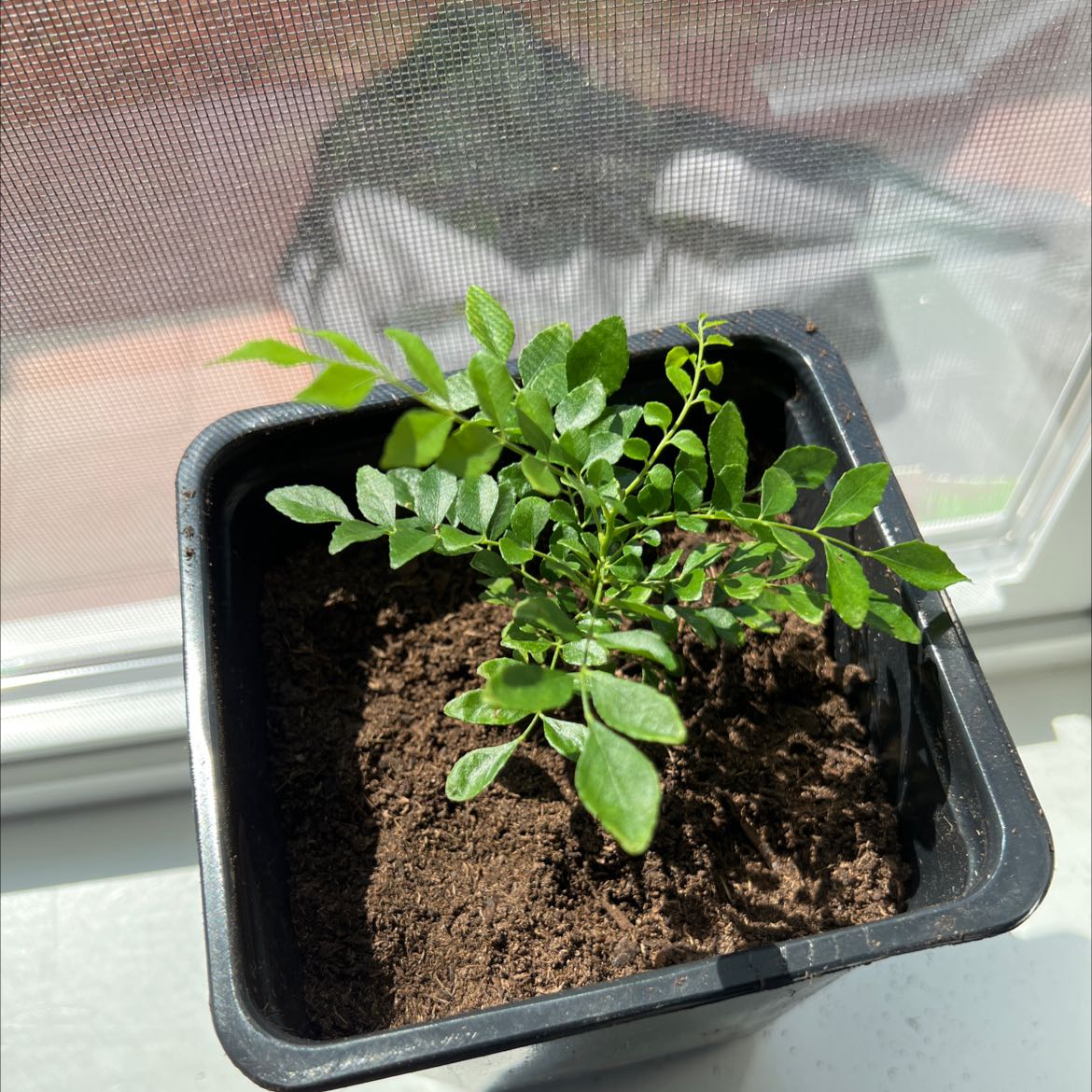
An unglazed ceramic or terracotta pot is ideal for a Curry Tree because it lets soil dry evenly between waterings, which these trees prefer. Pick a pot 1-2 inches wider than the root ball with plenty of depth for the taproot. Drainage holes are a must.
What Size Pot Does a Curry Tree Need?
Curry trees develop a strong taproot, so they need a pot with good depth rather than just width. Choose a container that's 1-2 inches wider than the current root ball and at least as deep as it is wide.
When your tree starts pushing roots out of the drainage holes or the soil dries out within a day of watering, it's time to size up. Go one pot size larger each time, which is typically 2 inches in diameter.
Avoid jumping to an oversized pot. Too much extra soil around the roots holds moisture your Curry Tree can't use, which raises the risk of root rot.
Seedling (under 1 ft)4–6" pot
Young tree (1–2 ft)8–10" pot
Established tree (2–4 ft)12–14" pot
Mature tree (4+ ft)16–20" pot
What Material Pot Is Best for Curry Tree?
Curry trees have a deep, somewhat woody root system that prefers to dry out slightly between waterings. Soil that stays too wet for too long invites fungal root problems, so the pot material should allow some airflow and gradual moisture loss through the walls.
Because Curry Trees are often kept indoors or on patios, temperature stability also matters. A pot with moderate thermal mass helps buffer root temperatures during seasonal shifts.
Dries fastest → Slowest
Best for Curry Tree
Fabric
Excellent aeration for Curry Tree roots, but you'll water more frequently, especially in warm weather.
Unglazed Ceramic
The sweet spot for Curry Trees, letting soil breathe while holding enough moisture between waterings.
Wood
Good insulation for root temperature and decent breathability for your Curry Tree.
Glazed Ceramic
Works well if you let the top inch of soil dry out before watering again.
Plastic
Lightweight and affordable, just make sure drainage holes are generous since plastic holds moisture longer.
Metal
Fine for indoor Curry Trees, but can overheat roots if placed in direct sun on a hot patio.
Curry Trees like evenly moist soil that dries out slightly between waterings, which means almost any pot material can work. Unglazed ceramic hits the sweet spot, giving roots enough air while holding moisture between waterings.
All six materials are suitable for this plant. If you keep your Curry Tree outdoors in direct sun, just be mindful that metal pots can overheat the roots on hot days. Indoors, any well-drained pot will do the job.
Stay on top of plant care
Get seasonal reminders for watering and fertilizing — personalized for your plants.
Yes, absolutely. Curry trees are sensitive to soggy soil, and without drainage holes, water collects at the bottom where roots can't access oxygen. This quickly leads to root rot, especially during cooler months when the tree uses less water.
If your favorite pot doesn't have holes, use it as a decorative cover and keep your Curry Tree in a plain nursery pot inside it. Just be sure to empty any standing water from the cover pot after watering.
When Should I Repot My Curry Tree?
Curry trees are moderate growers, so plan to repot every 1-2 years when the tree is young, then every 2-3 years once it reaches a mature size. Spring is the best time, just as new growth begins.
When you unpot the tree, gently loosen the outer roots if they've started circling the pot. Trim any mushy or dark roots, then settle the tree into its new container at the same depth it was growing before.
Once your tree is in its final pot size (16-20 inches), you can refresh the top 2-3 inches of soil each spring instead of repotting entirely.
Signs It's Time to Repot
Roots emerging from the drainage holes
Soil dries out within a day of watering
Growth slows despite good light and feeding
Leaves yellowing from the bottom up without overwatering
When Can I Plant My Curry Tree in the Ground?
Curry trees can grow in the ground year-round in USDA zones 9a through 11b. If you live in one of these warm climates, plant your tree in spring after the last frost in well-draining soil with full sun to partial shade.
Outside these zones, keep your Curry Tree in a container so you can bring it indoors before temperatures drop below 40F. It can spend the warm months on a sunny patio, but frost will kill it.
Got More Questions?
Can I use a pot without drainage holes for my Curry Tree?
It's not recommended. Curry trees are prone to root rot in waterlogged soil. If your pot lacks holes, use it as a cover pot with a draining nursery pot inside.
How do I know if my Curry Tree's pot is too big?
If the soil stays wet for more than a week after watering, the pot is likely too large. Excess soil holds moisture the roots can't absorb, which leads to rot.
Should I use a deep pot or a wide shallow one?
Go with a deeper pot. Curry trees develop a prominent taproot that needs vertical space more than horizontal spread.
Can I keep my Curry Tree in the same pot forever?
Once it reaches a 16-20 inch pot, you can stop sizing up. Just refresh the top few inches of soil each spring to replenish nutrients.
Do Curry Trees grow well in self-watering pots?
They can, but be cautious. Self-watering pots keep soil consistently moist, which Curry Trees don't always prefer. Let the reservoir empty occasionally so the soil can dry slightly.
Stay on top of plant care
Get seasonal reminders for watering and fertilizing — personalized for your plants.
Kiersten Rankel holds an M.S. in Ecology & Evolutionary Biology from Tulane University. A certified Louisiana Master Naturalist, she has over a decade of experience in science communication, with research spanning corals, cypress trees, marsh grasses, and more. At Greg, she curates species data and verifies care recommendations against botanical research.
See Kiersten Rankel's full background on LinkedIn.
Editorial Process
Container guidance verified against Murraya koenigii growth data from Greg's botanical database, cross-referenced with USDA hardiness zone data and published horticultural research.