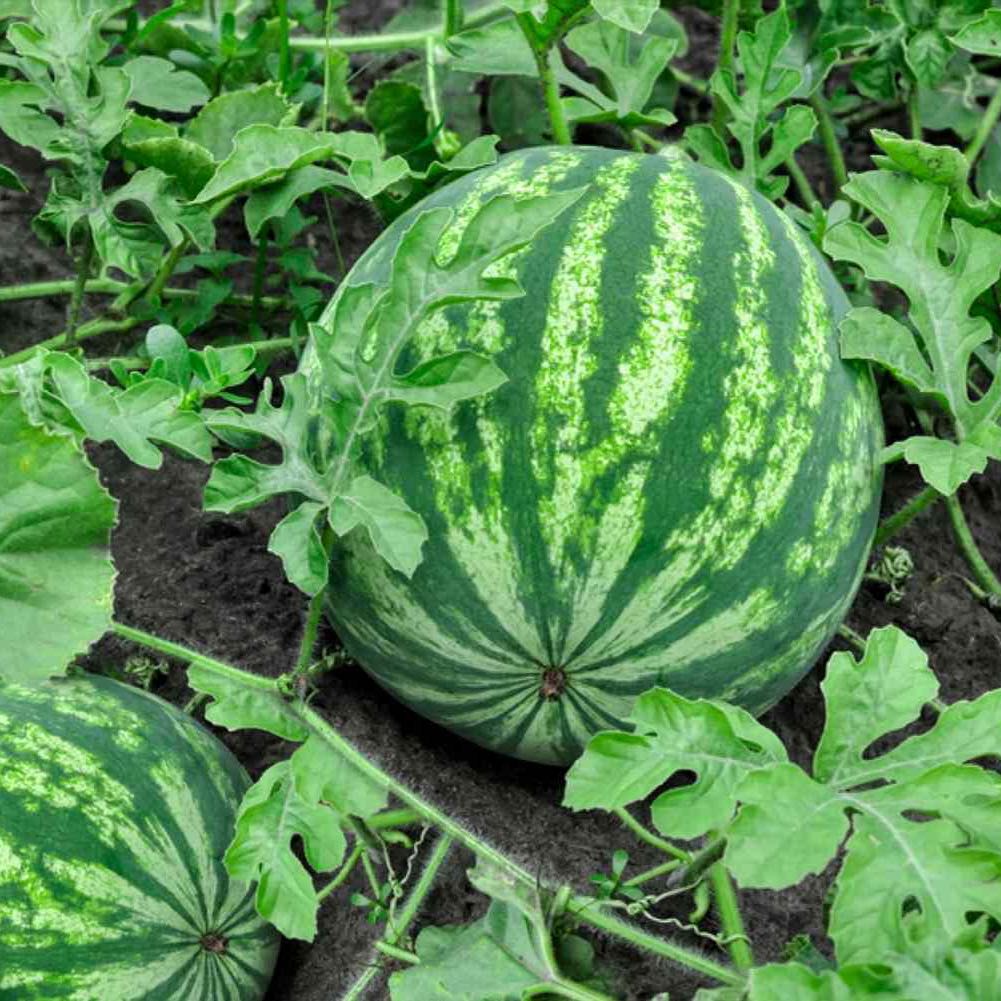
Watermelons do best in large plastic or fabric pots, at least 5 gallons, with drainage holes. Their sprawling roots need room to spread, so go bigger than you think. Consistent moisture is critical once fruits start forming.
What Size Pot Does a Watermelon Need?
Watermelons have wide, spreading root systems that match their sprawling vines above ground. A single plant needs at least a 5-gallon container, but 10 gallons or more gives much better results and bigger fruit.
Choose a pot that is wide rather than deep. Watermelon roots stay in the top 12 inches of soil but fan out broadly, so a squat, wide container works better than a tall narrow one.
If your pot feels too small, it probably is. Undersized containers dry out fast in summer heat and restrict fruit development, leading to small or misshapen melons.
Seedling (transplant ready)4–6" pot
Young vine (1–3 ft spread)12–14" pot (5 gal)
Fruiting plant (6+ ft spread)18–24" pot (10–15 gal)
What Material Pot Is Best for Watermelon?
Watermelon roots need consistent moisture and warm soil temperatures to produce fruit. Their shallow, spreading root system dries out quickly in hot weather, so your pot should retain enough moisture to keep up with heavy summer water demands.
At the same time, watermelons are not sitting in wet conditions over winter since they are annuals harvested before frost. The main risk is heat and drought, not overwatering.
Dries fastest → Slowest
Best for Watermelon
Fabric
Great airflow keeps roots healthy, but you will need to water more often in peak summer heat.
Unglazed Ceramic
Breathable walls help prevent root rot, though heavy pots are hard to move once filled.
Wood
Insulates roots from temperature swings and retains moisture well for thirsty vines.
Glazed Ceramic
Holds moisture longer than unglazed, which helps during hot stretches when fruit is developing.
Plastic
Lightweight, affordable, and retains moisture well, making it the most practical choice for large containers.
MetalOVERHEATS
Metal pots absorb too much heat in the full sun watermelons require, cooking shallow roots.
Watermelon vines are big, thirsty plants that need full sun and lots of water, especially while fruit is developing. Plastic is the most practical choice for the large containers these vines require because it is lightweight, affordable, and holds moisture well.
Wood and glazed ceramic also work great, insulating roots from temperature swings and retaining water during hot stretches. Fabric and unglazed ceramic are fine too, though both will need more frequent watering.
Avoid metal pots. Watermelons need full sun, and metal absorbs too much heat, which can cook shallow roots.
Stay on top of plant care
Get seasonal reminders for watering and fertilizing — personalized for your plants.
Yes, drainage holes are essential. Watermelons drink heavily, especially once fruit starts to swell, and you will be watering frequently. Without drainage, that water pools at the bottom and suffocates roots.
Make sure your pot has at least 2-3 drainage holes. If you are using a fabric pot, drainage is built in since water seeps through the sides.
When Should I Repot My Watermelon?
Watermelons are annuals, so you will not repot them the way you would a perennial. Instead, start seeds in small pots indoors and transplant once into their final large container after the last frost.
The key timing is when seedlings have 2-3 true leaves and nighttime temperatures stay above 60F. Transplant into the largest pot you plan to use, since watermelons grow fast and do not like root disturbance once established.
Handle the rootball gently during transplant. Watermelon roots are delicate and slow to recover from damage.
Signs It's Time to Repot
Seedling has 2-3 true leaves and is ready for final pot
Roots visible through the starter pot's drainage holes
Plant is wilting despite regular watering in a small container
Nighttime temperatures consistently above 60F
When Can I Plant My Watermelon in the Ground?
Watermelons grow in USDA zones 3a through 11b as a warm-season annual. Plant outdoors after the last frost when soil temperatures reach at least 70F. In zones 3-5, start seeds indoors 3-4 weeks before transplanting to give the vines enough time to produce ripe fruit before fall frost.
In-ground planting is ideal if you have the space, since watermelon vines can spread 10 feet or more. Amend heavy clay soil with compost so roots can spread freely. In short-season climates, black plastic mulch helps warm the soil faster.
Got More Questions?
Can I grow watermelon in a pot without drainage holes?
No. Watermelons need heavy watering, especially during fruiting, and all that water must drain freely. Without holes, roots will rot within days during hot weather.
How do I know if my watermelon pot is too big?
For watermelons, bigger is almost always better. Unlike most plants, you cannot really go too large. A pot that is too small is a much bigger risk, leading to stunted fruit and constant wilting.
Can I grow a full-size watermelon in a container?
You can, but compact varieties like Sugar Baby or Bush Sugar Baby are much better suited to containers. Full-size varieties need 15+ gallon pots and still produce smaller fruit than in-ground plants.
Should I put my watermelon pot on a saucer?
Only if you empty the saucer after each watering. Standing water under the pot defeats the purpose of drainage holes and can attract mosquitoes.
How often should I water a potted watermelon?
In summer heat, often daily or even twice daily. Container soil dries much faster than ground soil. Water when the top inch feels dry, and never let the soil dry out completely once fruit is forming.
Stay on top of plant care
Get seasonal reminders for watering and fertilizing — personalized for your plants.
Kiersten Rankel holds an M.S. in Ecology & Evolutionary Biology from Tulane University. A certified Louisiana Master Naturalist, she has over a decade of experience in science communication, with research spanning corals, cypress trees, marsh grasses, and more. At Greg, she curates species data and verifies care recommendations against botanical research.
See Kiersten Rankel's full background on LinkedIn.
Editorial Process
Container guidance verified against Citrullus lanatus growth data from Greg's botanical database, cross-referenced with USDA hardiness zone data and published horticultural research.