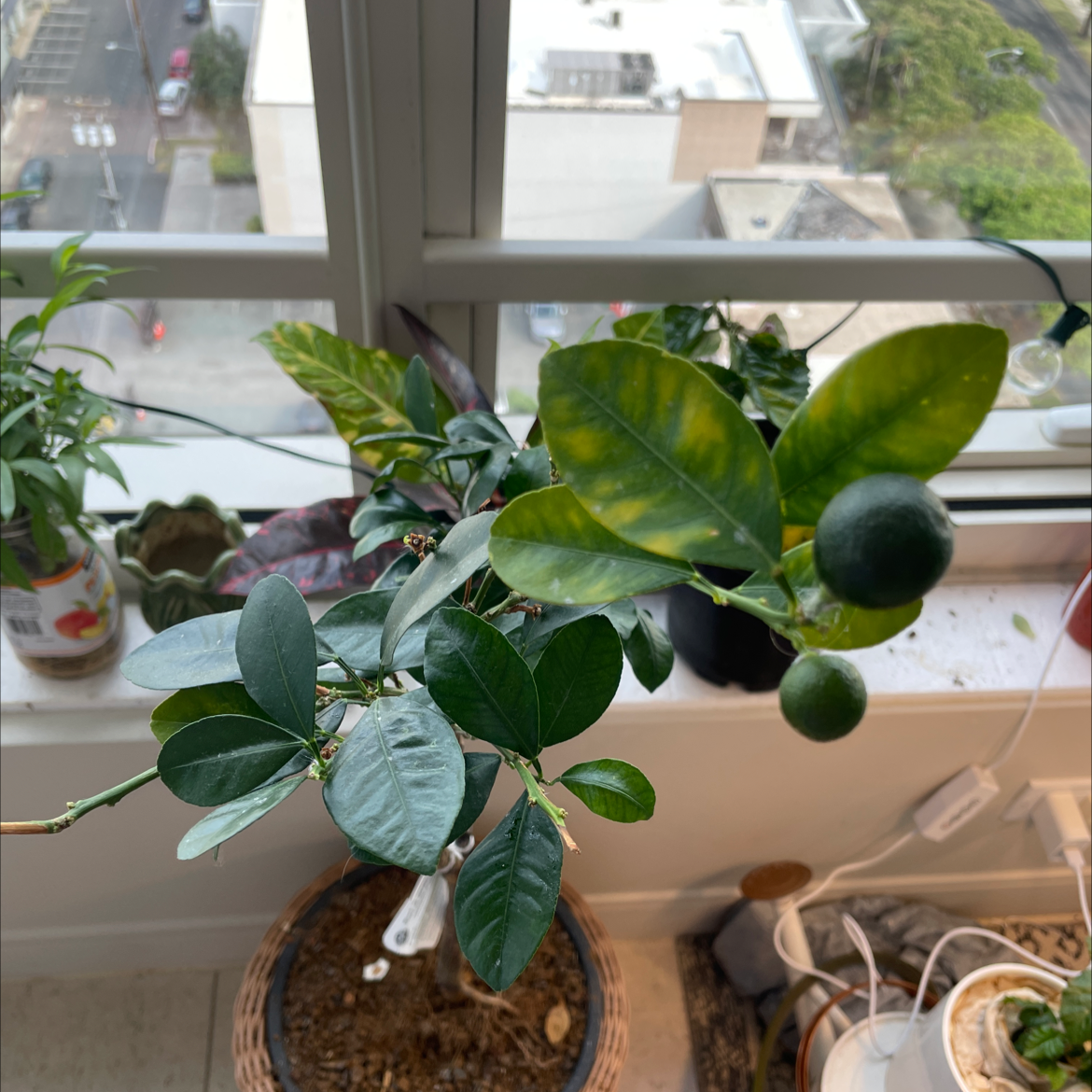
Calamondin trees thrive in unglazed ceramic or wood pots with drainage holes. Choose a pot 2-4 inches wider than the root ball. Citrus roots need fast-draining soil and good airflow, so pick a breathable pot material and never let the roots sit in water.
What Size Pot Does a Calamondin Need?
Calamondin is a compact citrus tree that works well in containers, typically staying under 4 feet tall indoors. Start with a pot 2-4 inches wider than the nursery container. A pot that's slightly snug encourages fruiting over excessive vegetative growth.
Citrus roots grow deep, so choose a pot with good depth rather than a wide, shallow planter. A pot that's at least as deep as it is wide gives the root system room to anchor the tree.
As the tree matures, you'll eventually reach a maximum pot size you can manage. At that point, you can top-dress with fresh soil annually rather than continuing to size up.
Young tree (under 1 ft)8–10" pot
Growing tree (1–2 ft)10–14" pot
Established tree (2–3 ft)14–18" pot
Mature tree (3–4 ft)18–22" pot
What Material Pot Is Best for Calamondin?
Calamondin has a deep, woody root system typical of citrus trees. These roots are vulnerable to rot in soggy conditions and benefit from consistent airflow around the root zone. Fast drainage is more important than moisture retention for citrus.
Because calamondin is often grown outdoors in full sun during warm months, the pot needs to handle heat exposure without cooking the roots. A breathable, insulating material checks both boxes.
Dries fastest → Slowest
Best for Calamondin
Fabric
Excellent aeration and prevents root circling. Water more frequently since it dries faster in sun.
Unglazed Ceramic
A top choice for citrus. Breathable walls, great drainage, and heavy enough to stabilize the tree.
Wood
Another excellent option. Insulates roots from heat and cold. Use rot-resistant cedar or redwood.
Glazed Ceramic
Works well with a very fast-draining citrus soil mix. Provides good weight and stability.
Plastic
Acceptable with a gritty, fast-draining mix. Can heat up in direct sun, so choose a light color.
MetalOVERHEATS
Metal heats up rapidly in direct sun and can damage citrus roots. Avoid for outdoor calamondin.
Calamondin is a small citrus tree that thrives in pots with excellent drainage. Unglazed ceramic is a top choice because it breathes well, drains fast, and is heavy enough to keep the tree stable.
Fabric and wood containers also work nicely, with wood offering the added benefit of insulating roots from hot and cold weather. Plastic is fine with a very fast-draining citrus soil mix.
Skip metal pots outdoors. Metal heats up quickly in the sun that citrus trees need, and that heat can damage the roots.
Stay on top of plant care
Get seasonal reminders for watering and fertilizing — personalized for your plants.
Absolutely, and this is non-negotiable for citrus. Calamondin roots are highly susceptible to root rot in waterlogged soil. Every pot must have drainage holes, and ideally more than one.
Elevate the pot on feet or a stand so water drains freely from the bottom. Adding a layer of coarse material (like large perlite or pot shards) over the drainage holes keeps them from clogging with soil.
When Should I Repot My Calamondin?
Repot your Calamondin every 2-3 years in early spring, before the main flush of new growth. Citrus trees don't like frequent root disturbance, so only repot when truly needed.
Use a well-draining citrus potting mix or make your own by combining regular potting soil with plenty of perlite and bark. Citrus roots need air, so the mix should feel gritty and loose, not dense and peaty.
When repotting, handle the root ball gently. Trim any dead or mushy roots with clean shears. Set the tree at the same depth, keeping the graft union (if present) above the soil line.
Signs It's Time to Repot
Roots growing out of drainage holes
Water pooling on the soil surface instead of soaking in
Leaf yellowing despite regular fertilizing
Tree producing smaller fruit than previous seasons
Soil has become compacted and pulls away from pot edges
When Can I Plant My Calamondin in the Ground?
Calamondin is hardy in USDA zones 9a through 11b. In these warm zones, plant it in full sun with well-draining soil. Avoid low spots where water collects. Citrus trees planted in the ground develop stronger root systems and produce more fruit than potted specimens.
In cooler climates, keep your calamondin in a pot and bring it indoors for winter. Place it near a bright, south-facing window. Reduce watering during winter but don't let the soil go completely dry. The tree may drop some leaves indoors, which is normal as it adjusts to lower light.
Got More Questions?
Can I use a pot without drainage holes for my Calamondin?
No. Citrus trees are extremely sensitive to wet roots. A pot without drainage will almost certainly cause root rot. Always use a pot with holes.
How do I know if my Calamondin pot is too big?
If the soil stays wet for more than a few days after watering, the pot is likely too large. Excess damp soil around citrus roots invites fungal problems. Size up gradually.
What soil should I use in my Calamondin pot?
Use a fast-draining citrus mix or blend regular potting soil with perlite and bark chips in roughly equal parts. Citrus roots need excellent aeration and quick drainage.
Can I grow Calamondin in a self-watering pot?
It's not ideal. Citrus prefer to dry out slightly between waterings, and self-watering pots keep the soil consistently moist. If you use one, let the reservoir empty between refills.
Should I fertilize differently based on pot material?
Breathable pots (fabric, unglazed ceramic) can leach nutrients faster with frequent watering. If you're watering often, use a slow-release citrus fertilizer to keep nutrients available longer.
Stay on top of plant care
Get seasonal reminders for watering and fertilizing — personalized for your plants.
Kiersten Rankel holds an M.S. in Ecology & Evolutionary Biology from Tulane University. A certified Louisiana Master Naturalist, she has over a decade of experience in science communication, with research spanning corals, cypress trees, marsh grasses, and more. At Greg, she curates species data and verifies care recommendations against botanical research.
See Kiersten Rankel's full background on LinkedIn.
Editorial Process
Container guidance verified against Citrus x microcarpa growth data from Greg's botanical database, cross-referenced with USDA hardiness zone data and published horticultural research.