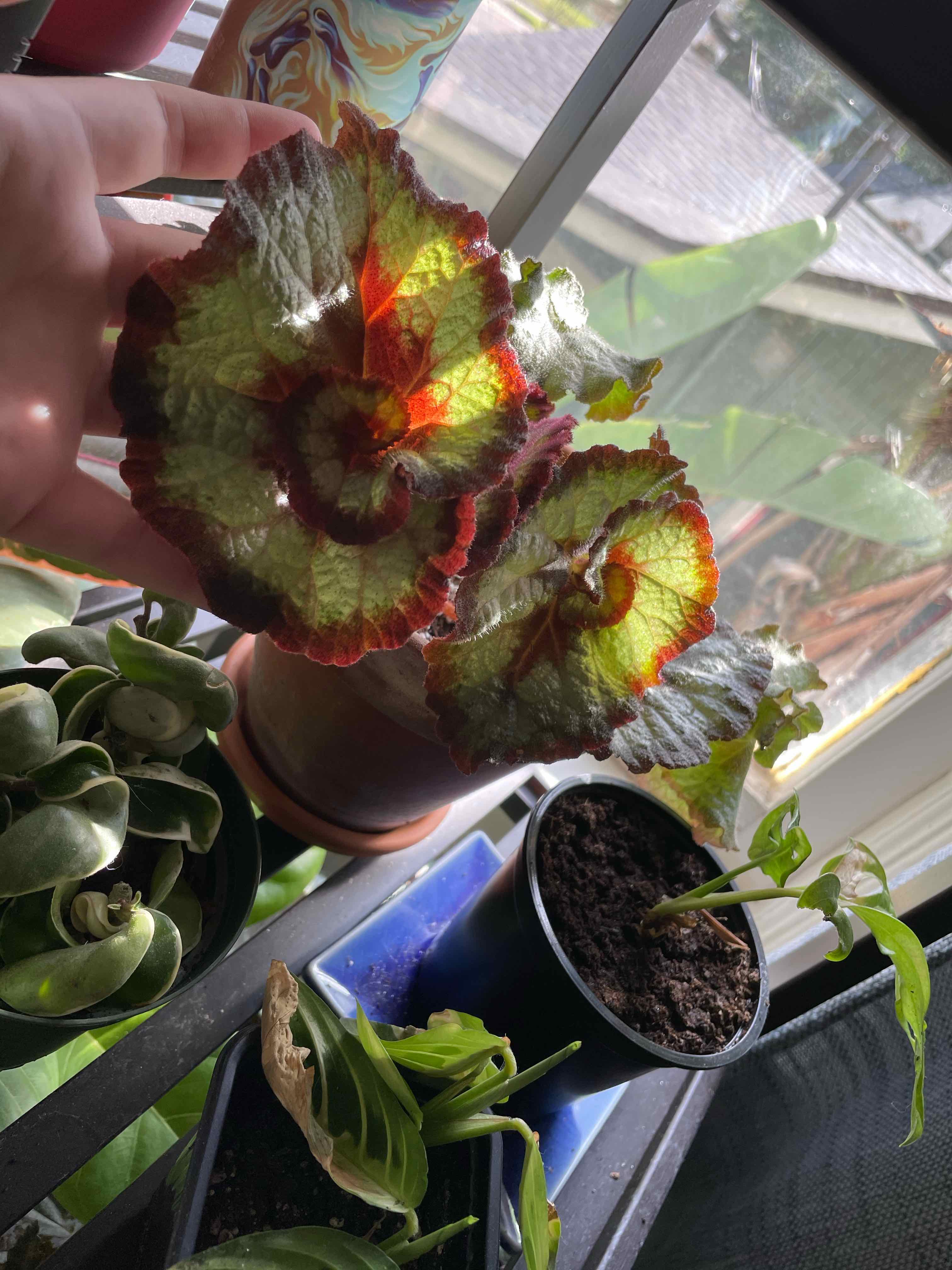
Best Pot for Rex Begonia
What Size Pot Does a Rex Begonia Need?
Rex Begonias have shallow, compact root systems that spread outward rather than diving deep. A pot that's 1–2 inches wider than the current root ball is plenty. Going too large causes the extra soil to stay wet for too long, which is the fastest way to lose a Rex Begonia to root rot.
Start small plants in a 4–5 inch pot and move up one size at a time as the plant fills out. A mature Rex Begonia typically maxes out in a 6–8 inch pot. Because the roots stay near the surface, a wider, shallower pot (sometimes called a bulb pot or azalea pot) works better than a deep standard pot.
Signs it's time to size up include roots circling the bottom of the pot or peeking out of drainage holes. Signs the pot is too big include soil that stays wet for more than a week after watering, yellowing lower leaves, or a plant that looks small and lost in its container.
What Material Pot Is Best for a Rex Begonia?
Rex begonias grow from shallow rhizomes that creep just beneath the soil surface, making them more sensitive to both soggy conditions and rapid drying than many other houseplants. The rhizomes need steady, even moisture with good drainage to prevent rot, especially in humid conditions.
A wide, shallow container suits their horizontal root habit better than a deep pot. Walls that don't lose moisture too aggressively help maintain the consistent humidity the rhizomes prefer, while reliable drainage at the base prevents the standing water that rhizomes cannot tolerate.
Rex Begonias have shallow roots that dry out quickly, so fabric pots lose moisture too fast for this plant. Everything else on the spectrum is fair game.
Unglazed ceramic and wood sit in a comfortable middle ground, offering some breathability while holding enough moisture for those delicate roots. Glazed ceramic is a popular choice because it pairs beautifully with the ornamental foliage.
Plastic and metal retain the most moisture, which actually suits Rex Begonias well. Since these plants live indoors, metal works fine as long as it's not baking in a sunny window.

Does My Rex Begonia Need Drainage Holes?
Yes, drainage holes are non-negotiable for Rex Begonias. This plant is sensitive to soggy soil, and standing water at the bottom of a pot will rot the roots quickly. Rex Begonias like moisture, but the key word is even moisture, not waterlogged soil.
If your favorite decorative pot has no drainage holes, use it as a cachepot: grow the plant in a plain nursery pot with holes, then set that inside the decorative container. Empty the saucer or cachepot after every watering so the plant is never sitting in water.
When Should I Repot My Rex Begonia?
Rex Begonias are moderate growers that typically need repotting every 1–2 years. Because their root system is shallow and compact, they don't outgrow pots as quickly as faster-spreading houseplants. The right time to repot is when you see the plant signaling it's running out of room, not on a fixed schedule.
Spring is the best time to repot, right as the plant is coming out of its slower winter growth period. Repotting in spring gives the plant a full growing season to settle into its new container. When you repot, handle the fragile stems and leaves carefully since Rex Begonias are brittle and can snap under rough handling.
Move up only one pot size at a time. Jumping too large a container slows growth and keeps soil wet, which invites rot.
Can I Plant My Rex Begonia in the Ground?
Rex Begonias are hardy in USDA zones 10a–12b, which covers frost-free tropical and subtropical regions. In most of the United States, they are treated as strictly indoor plants or summer annuals. If you live in a frost-free climate, you can grow them in the ground in a shaded, humid spot with well-draining soil.
For everyone else, Rex Begonias are best kept in containers year-round. They can go outside on a shaded patio during warm months (above 60°F at night), but must come back indoors before temperatures drop in fall. These plants have no cold tolerance and will collapse at the first frost.
Got More Questions?
About This Article
