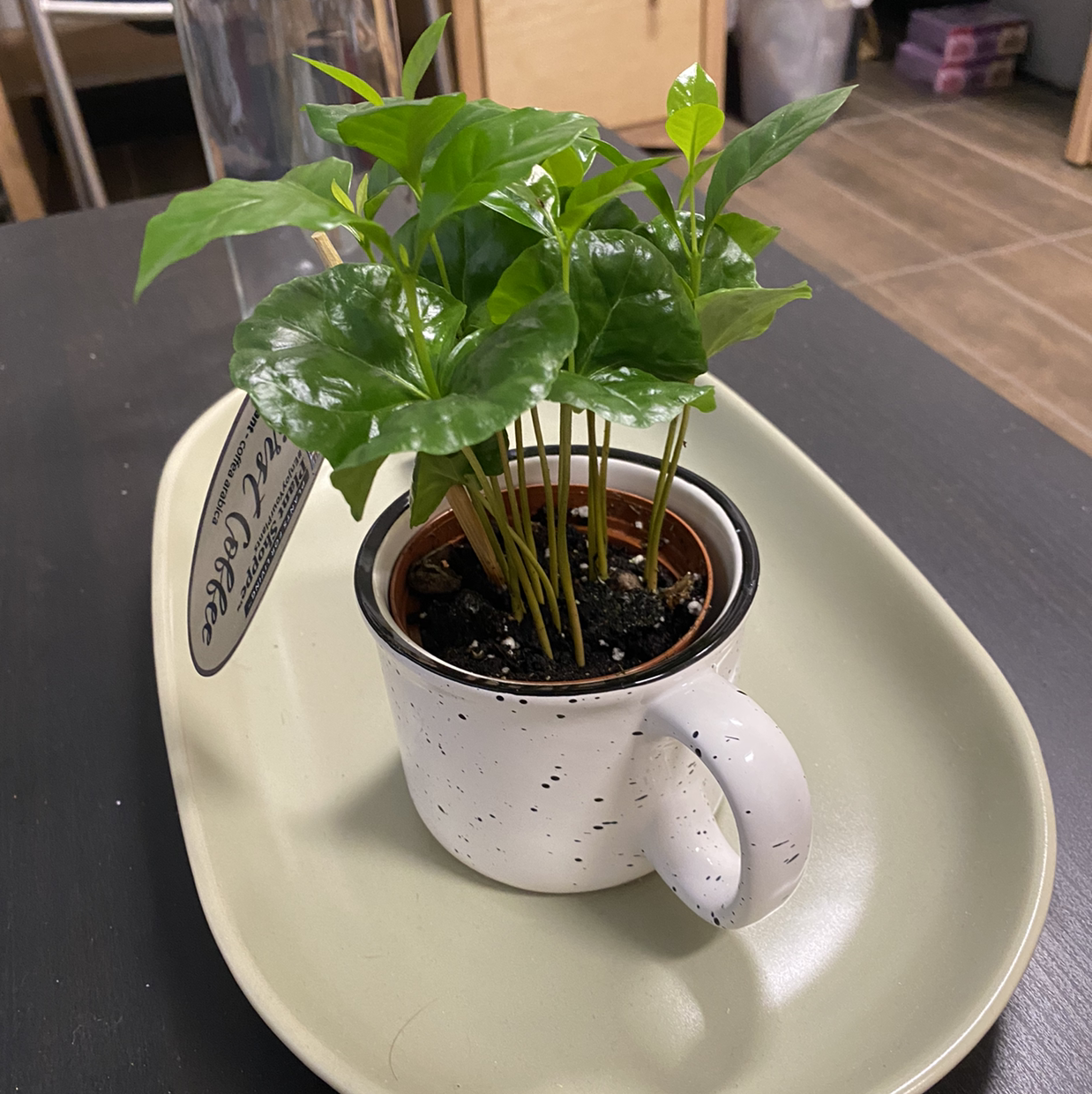
Best Pot for Arabian Coffee Plant
What Size Pot Does an Arabian Coffee Plant Need?
Arabian Coffee Plants grow as compact branching shrubs indoors, reaching 3–5 feet tall in a container over several years. They have a moderate, well-branching root system that fills pots steadily but doesn't need a lot of room at once. A pot that fits the rootball with about 1–2 inches of space around the edges is the right fit.
When sizing up, go one pot size at a time (typically 1–2 inches wider). Jumping to a much larger pot is the most common mistake, since too much extra soil holds moisture the roots can't use yet. That stagnant moisture leads to root rot.
For a young coffee plant in a 4" nursery pot, moving to a 6" pot gives it room to establish. From there, expect to repot every 2–3 years as growth dictates. A mature plant doing well in a 12–14" pot can stay there for a long time with occasional top-dressing of fresh soil.
What Material Pot Is Best for an Arabian Coffee Plant?
Coffee plants grow as understory trees in their native tropical habitat, where roots receive consistent moisture from rich, well-draining soil. Indoors, they prefer a pot that holds moisture evenly without becoming waterlogged -- their roots don't like to fully dry out between waterings.
With moderate root depth, a coffee plant benefits from a container that provides some insulation and keeps the root zone from swinging between very wet and very dry. Steady conditions around the roots translate directly to steady growth and healthy leaf production above.
Coffee plants are easygoing when it comes to pots. Every material on the spectrum works, so you can choose based on your watering habits and the look you want.
Fabric and unglazed ceramic dry out fastest, which is great if you tend to overwater. Unglazed ceramic is the classic pick for coffee plants because it keeps the roots aerated without drying too quickly.
Glazed ceramic, plastic, and metal all hold moisture longer, so let the top inch of soil dry before watering again. Since coffee plants live indoors, metal pots pose no heat risk and work just fine.

Does My Arabian Coffee Plant Need Drainage Holes?
Yes, always. Arabian Coffee Plants are notably sensitive to overwatering, and without drainage holes there's no escape route for excess water. Roots sitting in pooled moisture quickly develop root rot, which shows up as yellowing leaves and wilting that doesn't recover after watering, by then the damage is already done.
If you love a decorative pot without drainage, use it as a cachepot: keep your coffee plant in a plain nursery pot with holes and set that inside the decorative one. After watering, tip out or soak up any water that collects in the outer pot so the roots aren't sitting in it.
When Should I Repot My Arabian Coffee Plant?
Most Arabian Coffee Plants need repotting every 2–3 years. They're not the fastest growers, especially in lower light conditions indoors, but they do eventually fill their container and want more room. Spring is the best time to repot, the plant is coming out of slower winter growth and has the whole growing season ahead to settle into its new pot.
When you repot, gently loosen any circling outer roots to encourage them to spread into the new soil. Move up only one pot size (1–2 inches wider) and use a fresh, well-draining potting mix formulated for tropical houseplants.
After repotting, give your coffee plant a good watering and move it back to its usual bright, indirect light spot. It may drop a few leaves as it adjusts, this is normal. Hold off on fertilizing for about a month to let the roots settle before you start feeding again.
When Can I Plant My Arabian Coffee Plant in the Ground?
Arabian Coffee Plants can grow in the ground in USDA hardiness zones 10a–11b, where winters stay frost-free. In those climates, parts of South Florida, Hawaii, and Southern California, they thrive outdoors as handsome evergreen shrubs and will eventually produce coffee cherries if given enough sun and warmth.
In cooler climates (zone 9 and below), coffee plants must stay in containers indoors or in a greenhouse, as they have zero frost tolerance and even a light freeze will kill the plant. If you move your potted coffee plant outside for summer, bring it back indoors well before the first frost.
Got More Questions?
About This Article
