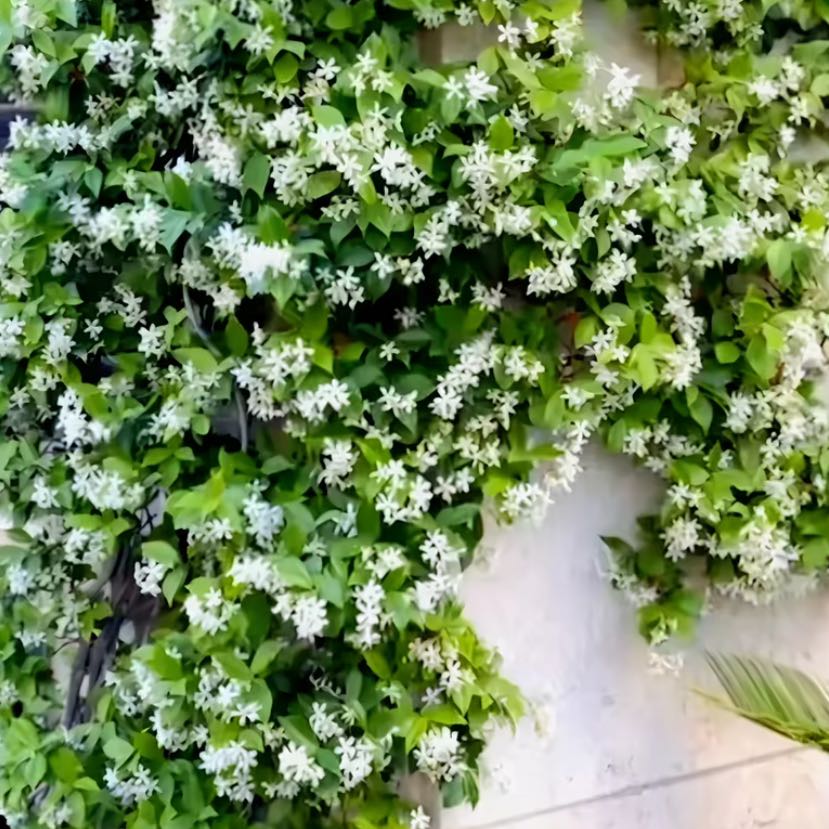
How to Repot a Star Jasmine
Repot Star Jasmine every 2 to 3 years into a pot that's 1 to 2 inches wider than the current pot. Use a standard well-draining houseplant mix with extra perlite. Set a sturdy trellis or stake in the new pot before filling with soil, and time the repot for early spring.

How to Know It's Time to Repot
Star Jasmine grows into a vigorous climbing vine that gets heavier each year, so the signs of a too-tight pot show up both in the roots and in the stems. Watch for these four signals.
-
1Roots circle the bottom of the pot or push out through the drainage holes.
-
2The plant has roughly doubled in size since you last potted it up.
-
3Soil dries out within a day or two of a thorough watering.
-
4Fewer flowers form than last year, or the new growth at the tips looks weak.
One sign on its own isn't reason enough to act, but two or more together means it's time. Most container Star Jasmines need a fresh pot every 2 to 3 years to keep up with the vine's vigorous growth and heavy bloom load.
The Best Time of Year to Repot
Star Jasmine repots best in early spring, just as new growth starts pushing on the vines but well before flower buds form. The plant is moving into its strongest growth window and recovers from root disturbance quickly.
Repotting once buds appear usually causes them to drop, which means losing the heavily scented spring flower display. Use the map below to find your window.

How to Choose a Pot and Soil Mix
Pot Size
Move up to a pot that's 1 to 2 inches wider than the current pot. That gives the roots enough fresh soil for the next couple of years of growth, with room to spread but not so much extra space that wet soil sits around them and rots.
Pot Material
Plastic and glazed ceramic both work well for Star Jasmine, especially if grown indoors or in a dry climate. They hold moisture long enough that the plant doesn't dry out between waterings.
Terracotta works too in humid climates where extra airflow helps prevent soggy soil. Whichever material you pick, make sure the pot has drainage holes. Star Jasmine roots rot fast in standing water.
Soil Mix
Mix two parts standard houseplant potting soil with one part perlite for the well-draining blend Star Jasmine wants. A handful of compost worked into the mix feeds the plant through its heaviest growing months.
Skip moisture-control formulas and dense peat-heavy mixes. Both hold too much water for these roots and lead to rot.
How to Repot a Star Jasmine, Step by Step
-
1Water the day before. Give the plant a thorough drink the day before repotting. Moist soil holds the root ball together when you slide it out and keeps the fine roots from tearing as you work.
-
2Pick the new pot and trellis. Choose a pot that's 1 to 2 inches wider than the current pot, with drainage holes. Have your trellis or stake ready before you start, since it needs to be set in the pot before the soil goes in.
-
3Set the trellis first. Stand the trellis or stake in the center of the new pot and hold it upright. Layer some fresh mix around the base to anchor it before placing the plant. Setting the trellis after the plant risks damaging the roots.
-
4Slide the plant out. Carefully unwind the vine from its old trellis if you can, then tip the pot onto its side and gently work the root ball loose. If the vine is too tangled to unwind, you can cut back excess growth or transfer the old trellis along with the plant.
-
5Set it in the new pot. Center the plant at the same depth it was growing before, with the new trellis just behind the stems. Fill in around the sides with fresh mix, pressing gently as you go to anchor both the trellis and the plant.
-
6Train the vines and water. Gently tie the longest stems to the new trellis with soft plant ties. Water slowly until you see it run out the drainage holes, and set the plant in bright indirect light or partial shade for the first couple of weeks. Hold off on fertilizer for 4 to 6 weeks so the roots can heal.
What to Expect After Repotting
Week 1
Some leaf droop or a few yellowing leaves is normal as the roots settle into their new home. The vine may also pull away slightly from the trellis.
Keep the soil lightly moist but not soggy, give the plant bright indirect light, and skip fertilizer for now. Resist the urge to move the pot around or retrain the vines.
Weeks 2 to 4
Fresh growth at the vine tips is the clearest signal that the plant has rooted in and is ready for normal care.
Move the pot back to its usual bright spot and ease into your regular watering rhythm. Start half-strength liquid fertilizer once you see clear new growth, and build up to full strength over the next two or three feedings. A bloom-boosting fertilizer in late spring encourages those famously scented white flowers.
Got More Questions?
About This Article
