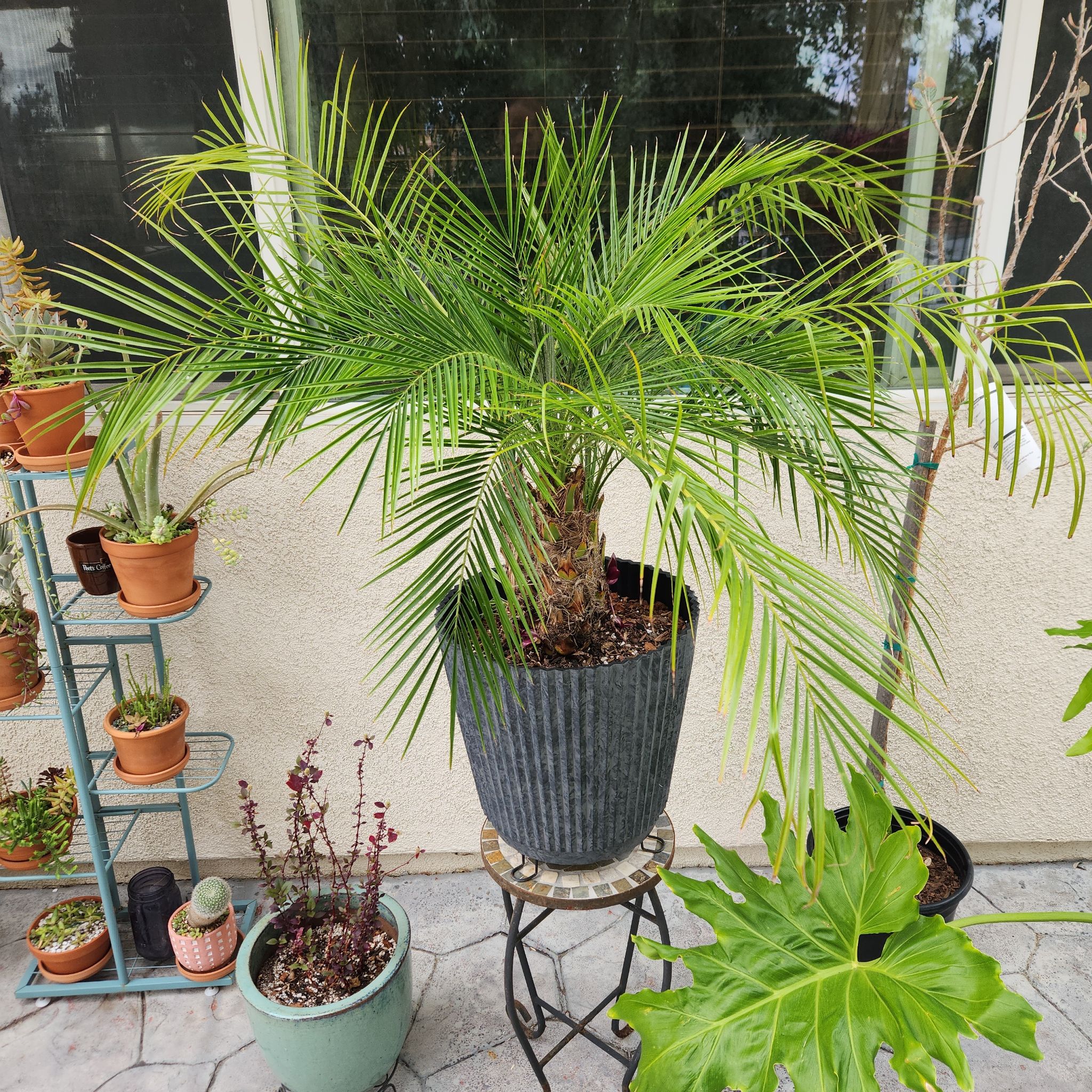
How to Repot a Pygmy Date Palm
Repot a Pygmy Date Palm every 3 to 4 years into a pot that's 1 to 2 inches wider than the current pot. Use a well-draining palm or houseplant mix with extra perlite. Late spring through early summer is the best time, when warmth speeds up root recovery.

How to Know It's Time to Repot
Pygmy Date Palms grow slowly and dislike having their roots disturbed, so they actually prefer to stay in the same pot for years. Wait for two or more of these four signals before reaching for a new pot.
-
1Roots circle the bottom of the pot or push out through the drainage holes.
-
2The plant has roughly doubled in size since you last potted it up.
-
3Soil dries out within a day or two of a thorough watering.
-
4New fronds come in noticeably shorter and stiffer than the older ones.
Pygmy Date Palms hate being disturbed, so don't repot just because the pot looks small. Most plants need a fresh pot every 3 to 4 years, sometimes longer for slow-growing ones in low light.
The Best Time of Year to Repot
Pygmy Date Palms recover slowly from repotting, so the timing window should fall squarely inside their active growing season. Late spring through early summer is the sweet spot, when warmth and longer days speed up root healing.
Repotting in cool or low-light months leaves the freshly cut roots sitting in damp soil for weeks without regrowing, which raises the rot risk. Use the map below to find your window.

How to Choose a Pot and Soil Mix
Pot Size
Move up to a pot that's 1 to 2 inches wider than the current pot. Pygmy Date Palms prefer a snug fit because their roots resent extra wet soil around them, and a small step up keeps the recovery short.
Pot Material
Terracotta is a good fit for Pygmy Date Palms because the porous walls help the soil dry evenly and protect the roots from sitting wet.
Plastic and glazed ceramic work too, especially if your home runs dry, and they add weight to a top-heavy plant. Whichever material you pick, make sure the pot has drainage holes. Pygmy Date Palm roots rot fast in standing water.
Soil Mix
Mix two parts standard houseplant potting soil with one part perlite and a handful of coarse sand for the well-draining blend palms prefer. A bagged palm or cactus mix works just as well if you don't want to blend your own.
Skip moisture-control formulas and dense peat-heavy mixes. Both hold too much water for these roots and lead to rot.
How to Repot a Pygmy Date Palm, Step by Step
-
1Water the day before. Give the plant a thorough drink the day before repotting. Moist soil holds the root ball together when you slide it out and keeps the fine roots from tearing as you work.
-
2Pick the new pot. Choose a pot that's 1 to 2 inches wider than the current pot, with drainage holes. Layer an inch of fresh mix in the bottom so the root ball will sit at the same height it did before.
-
3Wear long sleeves and gloves. Pygmy Date Palms have sharp spines near the base of each frond that can cut skin. Cover your arms and wear sturdy gloves before lifting the plant.
-
4Slide the plant out. Tip the pot onto its side and gently work the root ball loose. Handle the plant by the root ball rather than the trunk. If it's stuck, run a butter knife around the inside edge of the pot to release it.
-
5Loosen the roots gently. Palm roots dislike disturbance, so do as little as possible. Tease apart only the outermost roots that are wound into a tight circle, and trim away any sections that are black, mushy, or smell off. Leave the inner root ball intact.
-
6Set it in the new pot. Center the plant at the same depth it was growing before. Fill in around the sides with fresh mix, pressing firmly as you go to keep the top-heavy plant stable. Burying the base of the trunk above its original soil line can cause rot.
-
7Water and place in bright light. Water slowly until you see it run out the drainage holes. Set the plant somewhere bright with several hours of indirect light. Hold off on fertilizer for 4 to 6 weeks so the freshly cut roots can settle in.
What to Expect After Repotting
Weeks 1 to 2
Palms are slow to show change, so don't expect dramatic new growth right away. A frond tip may yellow or brown slightly while the roots reestablish.
Keep the soil lightly moist but not soggy, give the plant bright indirect light, and skip fertilizer for now. Pygmy Date Palms hate being moved while recovering, so leave the pot in one spot.
Months 1 to 3
A new frond pushing up from the center of the crown is the signal that the plant has settled in. That can take a month or more, which is normal for this species.
Resume your normal watering rhythm and start half-strength liquid fertilizer once you see clear new growth. Build up to full strength over the next two or three feedings.
Got More Questions?
About This Article
