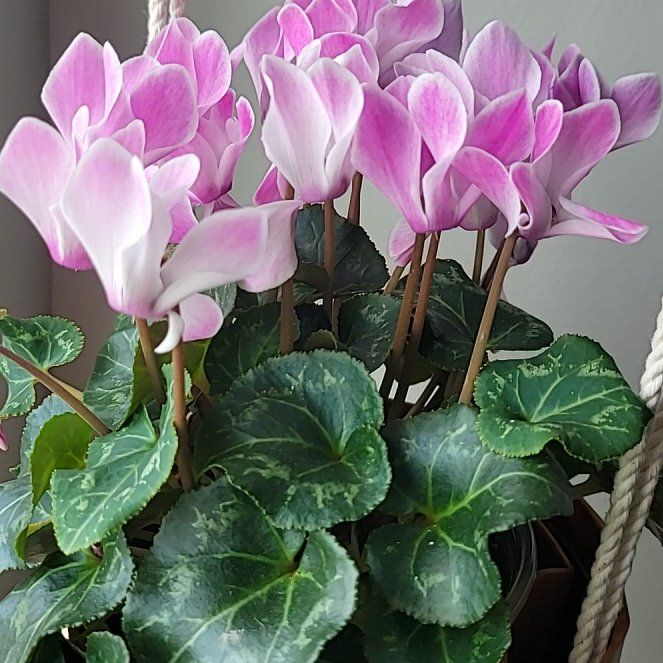
How to Repot a Persian Cyclamen
Repot a Persian Cyclamen every 1 to 2 years at the end of its summer dormancy, just as fresh leaves start to push up. Use a gritty, well-draining mix and leave the top half of the underground bulb-like base exposed above the soil. A pot just 1 to 2 inches wider than the current pot is plenty.

How to Know It's Time to Repot
Persian Cyclamens grow from a fleshy underground bulb-like base that swells over the years, and they cycle between active growth in cool months and rest in summer. The plant gives you four clear signals when it's time for a new pot.
-
1The bulb-like base has grown to fill the pot and is pressing against the sides.
-
2Roots circle the bottom of the pot or push out through the drainage holes.
-
3Fewer flowers appear than in previous years, even with cool temperatures and good light.
-
4The plant looks crowded, with leaves piled up against each other in the pot.
One sign on its own is not enough to act on, but two or more together means it's time. Most Persian Cyclamens need a fresh pot every 1 to 2 years, since the bulb-like base swells each season.
The Best Time of Year to Repot
Persian Cyclamens rest through summer and put out fresh growth as nights cool down in late summer or early fall. Repot at the very end of dormancy, just as you see the first new leaf buds pushing up from the bulb-like base.
Avoid repotting in winter when the plant is in full bloom or in midsummer when it is fully dormant. Use the map below to find your window.

How to Choose a Pot and Soil Mix
Pot Size
Move up to a pot that's 1 to 2 inches wider than the current pot. Persian Cyclamens prefer a snug fit and bloom better when slightly crowded, so resist the urge to jump several sizes up — too much wet soil around the bulb-like base leads to rot.
Pot Material
Terracotta is the best fit for Persian Cyclamens. The walls breathe, so the soil dries evenly between waterings, which matters for a plant with a rot-prone fleshy base.
Plastic and glazed ceramic work too, but you will need to water more carefully to keep the soil from staying soggy. Whichever material you pick, make sure the pot has drainage holes. Persian Cyclamens rot fast in standing water.
Soil Mix
Mix two parts standard potting soil with one part coarse perlite or pumice for the gritty, well-draining blend Persian Cyclamens want. A handful of coarse sand adds extra drainage and helps prevent the fleshy base from sitting in wet soil.
Skip moisture-control formulas and dense peat-heavy mixes. Both hold too much water for this plant and rot the bulb-like base.
How to Repot a Persian Cyclamen, Step by Step
-
1Wait for end of dormancy. Watch for the first tiny new leaf buds pushing up from the top of the bulb-like base in late summer. That's the signal that the plant is waking up and ready to be moved into fresh soil.
-
2Pick the new pot. Choose a pot that's 1 to 2 inches wider than the current pot, with drainage holes. Layer an inch of fresh gritty mix in the bottom so the top of the bulb-like base will still sit just above the rim when planted.
-
3Slide the plant out. Tip the pot onto its side and gently work the root ball loose. Hold the plant by the bulb-like base, not by individual leaves or stems. If the plant is stuck, run a butter knife around the inside edge of the pot to release it.
-
4Inspect the base and roots. Gently brush away the old soil so you can see the fleshy base and the roots clearly. Trim away any sections of root or base that are black, mushy, or smell sour, using a clean knife. The base itself should be firm and pale brown.
-
5Set it in the new pot with the top exposed. Center the bulb-like base in the new pot so the top half sits above the soil line. Burying the whole base leads to crown rot. Fill in around the sides with fresh gritty mix, pressing gently as you go.
-
6Water and place in a cool, bright spot. Water slowly around the edges of the pot, avoiding the top of the base. Set the plant somewhere cool with bright indirect light, ideally around 60 to 65 F. Hold off on fertilizer for 4 to 6 weeks while the roots heal.
What to Expect After Repotting
Weeks 1 to 2
Fresh leaf buds should keep emerging from the top of the bulb-like base over the first couple of weeks. Existing leaves may look slightly limp for a day or two.
Water from the edges of the pot, never on top of the base. Keep the plant cool and bright, and skip fertilizer for now.
Weeks 3 to 8
A flush of new leaves followed by the first flower stems is the signal that the plant has rooted in and is ready for normal care.
Continue watering from the edges and ease into your regular watering rhythm. Start half-strength liquid fertilizer once new growth is clearly underway, and build up to full strength over the next two or three feedings.
Got More Questions?
About This Article
