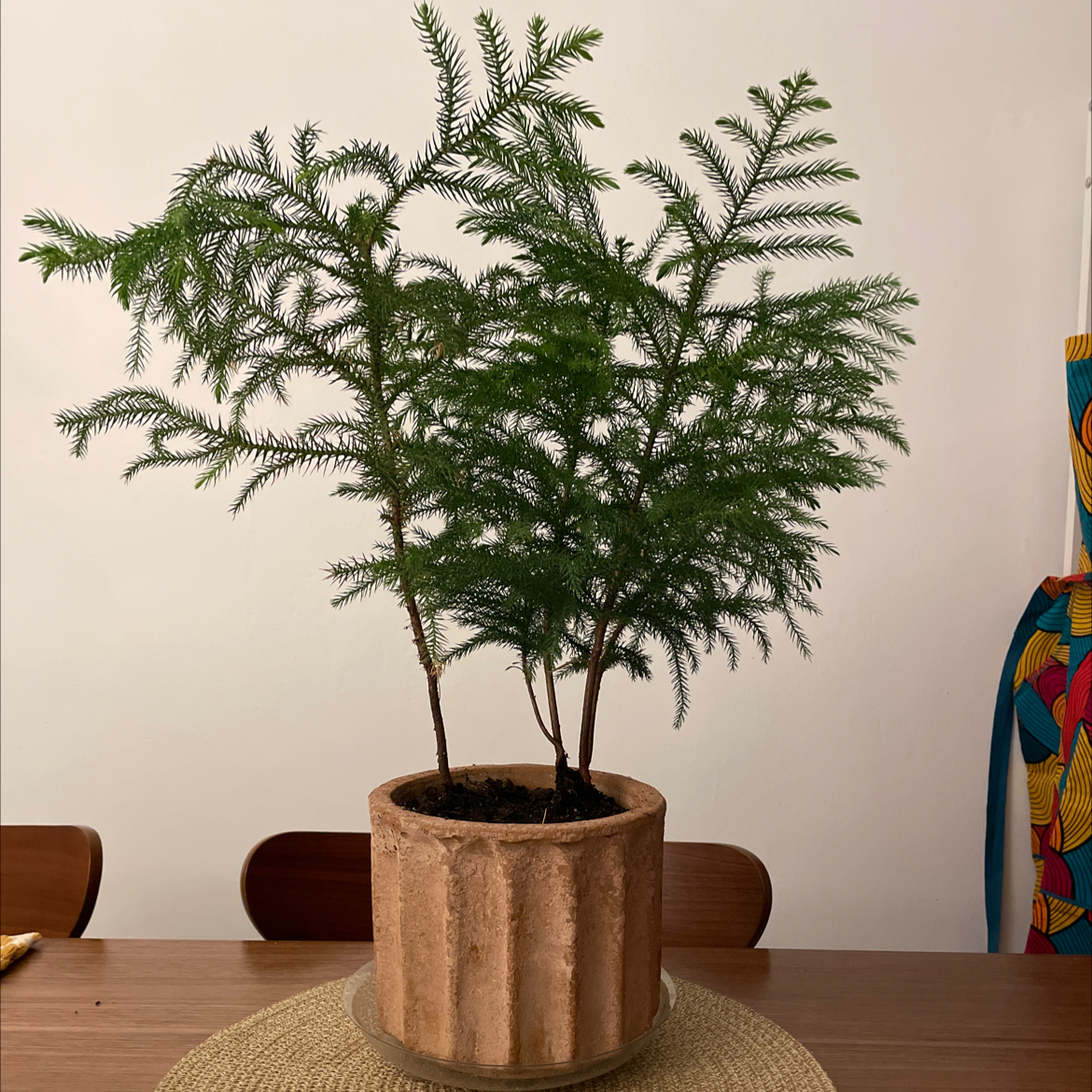
How to Repot a Norfolk Island Pine
Repot a Norfolk Island Pine every 3 to 4 years into a pot that's 1 to 2 inches wider than the current pot. Use a well-draining houseplant mix with extra perlite. Spring is the best window, when the plant is starting fresh growth at the tips.

How to Know It's Time to Repot
Norfolk Island Pines grow slowly and dislike root disturbance, so you only repot when the plant clearly needs it. Wait for two or more of these signals before reaching for a new pot.
-
1Roots circle the bottom of the pot or push out through the drainage holes.
-
2The plant has roughly doubled in size since you last potted it up.
-
3Soil dries out within a day or two of a thorough watering.
-
4The plant tips easily because the trunk has outgrown the pot's base.
One sign on its own is not enough to act on, but two or more together means it's time. Most Norfolk Island Pines only need a fresh pot every 3 to 4 years, since they grow slowly and resent disturbance.
The Best Time of Year to Repot
Norfolk Island Pines recover slowly from root disturbance, so timing matters. Wait for the start of active growth in spring, when warmth and longer days speed up root recovery.
Avoid repotting in winter, when the plant is essentially dormant and the freshly cut roots are slow to heal. Use the map below to find your window.

How to Choose a Pot and Soil Mix
Pot Size
Move up to a pot that's 1 to 2 inches wider than the current pot. Norfolk Island Pines grow slowly, so that small step up gives the roots enough fresh soil for the next few years without leaving too much wet soil around them.
Pot Material
Plastic and glazed ceramic are the best fit for Norfolk Island Pines. Both hold moisture long enough to keep the soft needles from drying out, and the added weight helps balance a tall trunk.
Terracotta works too, but you will need to water more often, especially in heated indoor air. Whichever material you pick, make sure the pot has drainage holes. Norfolk Island Pines rot fast in standing water.
Soil Mix
Mix two parts standard potting soil with one part perlite for the well-draining blend Norfolk Island Pines prefer. A handful of orchid bark adds extra air pockets and helps prevent the mix from packing down over time.
Skip moisture-control formulas and dense peat-heavy mixes. Both hold too much water for these roots and lead to root rot.
How to Repot a Norfolk Island Pine, Step by Step
-
1Water the day before. Give the plant a thorough drink the day before repotting. Moist soil holds the root ball together when you slide it out and keeps the fine roots from tearing as you work.
-
2Pick the new pot. Choose a pot that's 1 to 2 inches wider than the current pot, with drainage holes. Layer an inch of fresh mix in the bottom so the trunk will sit at the same height it did before.
-
3Slide the plant out. Tip the pot onto its side and gently work the root ball loose. Hold the trunk near the base, not partway up where the soft needles can snap off. If the plant is stuck, run a butter knife around the inside edge of the pot to release it.
-
4Inspect the roots. Tease apart the outer roots and trim away any sections that are black, mushy, or smell sour. Healthy Norfolk Island Pine roots are firm and pale tan. Avoid loosening the inner root ball more than necessary, since this plant resents disturbance.
-
5Set it in the new pot. Center the plant with the trunk perfectly upright, at the same depth it was growing before. Fill in around the sides with fresh mix, pressing gently as you go. Spin the pot and check from several angles to make sure the trunk is not leaning.
-
6Water and place in bright light. Water slowly until you see it run out the drainage holes. Set the plant somewhere bright with a few hours of indirect or gentle direct sun. Hold off on fertilizer for 4 to 6 weeks while the roots heal.
What to Expect After Repotting
Weeks 1 to 2
Norfolk Island Pines are slow to show change after a repot. A few yellow inner needles or a brief pause at the tips is normal as the roots settle in.
Keep the soil lightly moist but not soggy, give the plant bright light, and run a humidifier nearby if your home is dry. Skip fertilizer for now.
Weeks 3 to 8
A fresh whorl of soft new needles emerging at the top of the trunk is the clearest signal that the plant has rooted in and is ready for normal care.
Ease back into your regular watering rhythm. Start half-strength liquid fertilizer once new growth is clearly underway, and build up to full strength over the next two or three feedings.
Got More Questions?
About This Article
