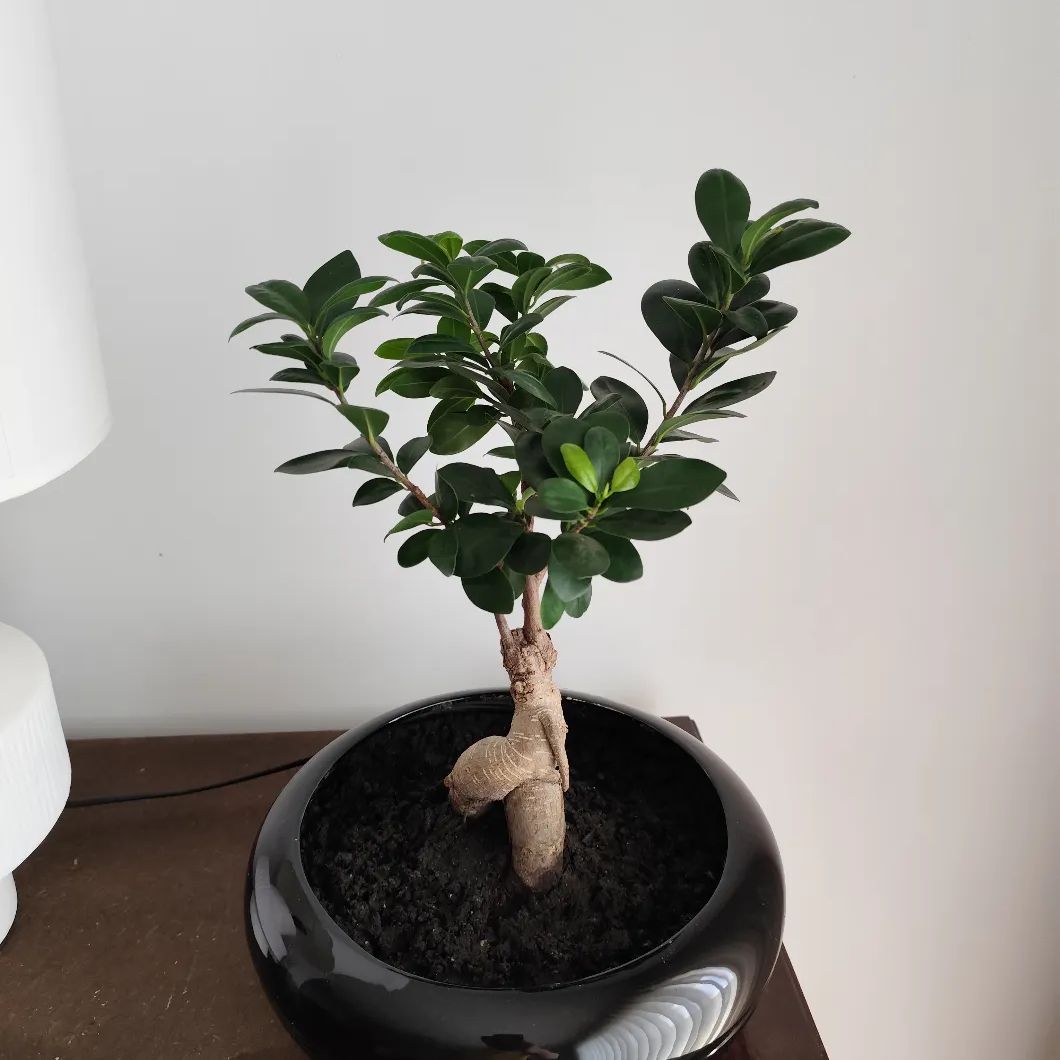
How to Repot a Ficus Ginseng
Repot a Ficus Ginseng every 2 to 3 years into a pot that's 1 to 2 inches wider than the current pot. Use a chunky, fast-draining mix of equal parts standard potting soil, orchid bark, and perlite. Late spring through early summer is the best window, when the plant is in active growth.

How to Know It's Time to Repot
Ficus Ginseng is a slow, steady grower with a thick, bottle-shaped trunk base, so the signs of a too-small pot are more about root crowding than dramatic size change. Watch for any of these four signals.
-
1Roots circle the bottom of the pot or push out through the drainage holes.
-
2The plant has roughly doubled in size since you last potted it up.
-
3Soil dries out within a day or two of a thorough watering.
-
4Lower leaves yellow and drop steadily even when watering is on schedule.
One sign on its own isn't enough to act on, but two or more together means it's time. Most Ficus Ginsengs need a fresh pot every 2 to 3 years, and older plants kept in a bonsai-style shallow pot can stretch to every 3 to 4 with occasional root pruning.
The Best Time of Year to Repot
Ficus Ginseng recovers fastest when it's in active growth, which kicks in once daytime light gets long and warmth builds. Late spring through early summer is the sweet spot.
Avoid repotting in winter, when the plant slows down and freshly cut roots are slow to heal. Use the map below to pin down your window.

How to Choose a Pot and Soil Mix
Pot Size
Move up to a pot that's 1 to 2 inches wider than the current pot. That gives the roots enough fresh soil for the next couple of years of growth, with room to spread but not so much extra space that wet soil sits around them and rots. If you want to keep the plant compact and bonsai-shaped, stay in the same pot size and do a light root prune instead.
Pot Material
Glazed ceramic and traditional bonsai pots are popular for Ficus Ginseng because they showcase the swollen trunk and dry at a moderate rate.
Terracotta works too, especially in humid homes where the extra airflow helps prevent soggy soil. Whichever material you pick, make sure the pot has drainage holes. Ficus roots rot fast in standing water.
Soil Mix
Mix equal parts standard potting soil, orchid bark, and perlite for the chunky, fast-draining blend a Ficus Ginseng wants. A pre-mixed bonsai soil works just as well and is sized to match a shallow pot.
Skip moisture-control formulas and dense peat-heavy mixes. Both hold too much water for these roots and lead to root rot.
How to Repot a Ficus Ginseng, Step by Step
-
1Water the day before. Give the plant a thorough drink the day before repotting. Moist soil holds the root ball together when you slide it out and keeps the fine roots from tearing as you work.
-
2Pick the new pot. Choose a pot that's 1 to 2 inches wider than the current pot, with drainage holes. Layer an inch of fresh chunky mix in the bottom so the swollen trunk base will sit at the same height it did before.
-
3Slide the plant out. Tip the pot onto its side and gently work the root ball loose. Handle the plant by the swollen base, never by the canopy of small branches. If the plant is stuck, run a butter knife around the inside edge of the pot to release it.
-
4Inspect and lightly prune the roots. Gently untangle any roots that have wound themselves into a tight circle at the bottom. Trim away any sections that are black, mushy, or smell off. For a more compact plant, you can also trim the outer roots by up to a third to slow growth and keep the canopy in proportion.
-
5Set it in the new pot. Center the plant at the same depth it was growing before, with the swollen base sitting just above the soil line so it doesn't get buried. Fill in around the sides with fresh chunky mix, pressing gently as you go to remove air pockets.
-
6Water and place in bright light. Water slowly until you see it run out the drainage holes. Set the plant somewhere bright with several hours of direct sun. Hold off on fertilizer for 4 to 6 weeks so the roots can heal.
What to Expect After Repotting
Week 1
Ficus Ginseng famously drops a handful of leaves whenever it's moved or repotted. A round of yellow leaves dropping in the first week is normal stress shed, not a sign of failure.
Keep the soil lightly moist but not soggy, give the plant bright light, and skip fertilizer for now. Resist the urge to move the pot around the house while it's recovering.
Weeks 2 to 4
Fresh small leaves unfurling at the tips of the branches are the clearest signal that the plant has rooted in and is ready for normal care.
Ease back into your regular watering rhythm. Start half-strength liquid fertilizer once you see clear new growth, and build up to full strength over the next two or three feedings.
Got More Questions?
About This Article
