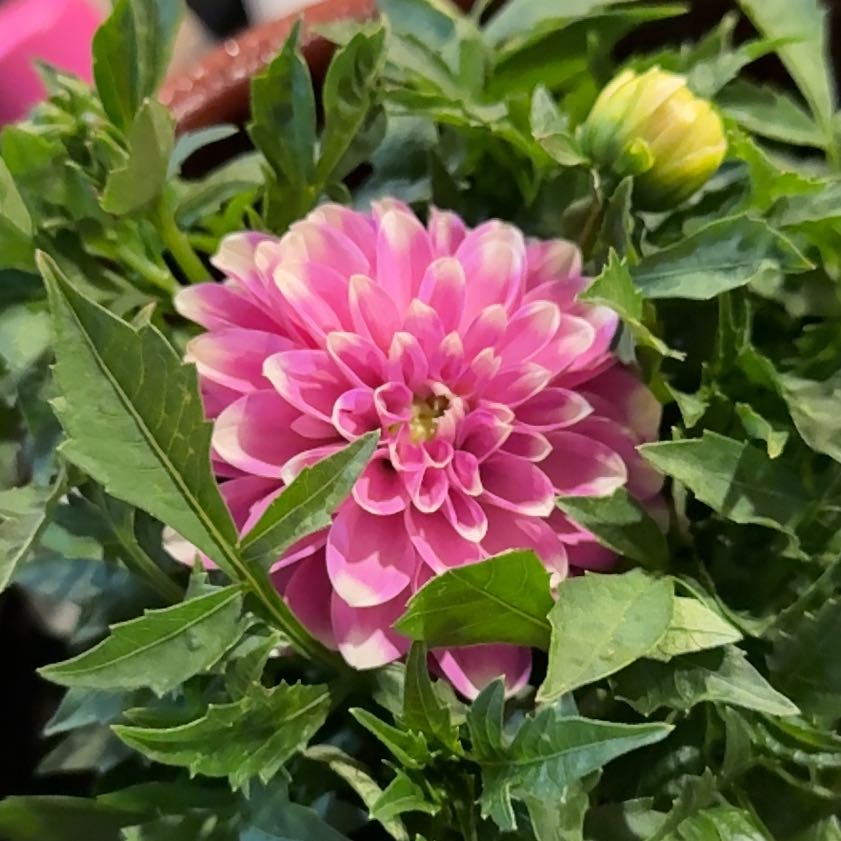
How to Repot a Garden Dahlia
Pot up Garden Dahlia tubers each spring after the last frost into a 3 to 5 gallon container. Use a rich, well-draining mix with compost and perlite. Plant the tuber about 4 inches deep with the growth eye facing up.

How to Know It's Time to Repot
Garden Dahlias grow from tubers that get lifted, stored, or replanted on a seasonal rhythm, so the signs to repot follow the calendar more than the look of the roots. Here are four signals to watch for.
-
1Last frost has passed and the soil has warmed to at least 55°F.
-
2Stored tubers show plump growth eyes or short pink shoots.
-
3Roots circle the bottom of the current pot or push out through the drainage holes.
-
4The plant has roughly doubled in size since the season started, and the pot is tipping.
Garden Dahlias are usually repotted once a year when the new season begins, either by setting stored tubers into fresh soil or by potting up nursery-started plants. Some growers also size up midseason if a vigorous plant outgrows its starter pot before flowering.
The Best Time of Year to Repot
Garden Dahlias are warm-weather perennials that sprout from tubers once the soil is reliably above 55°F. The pot-up window opens after your last frost date and closes before flowering really gets going.
In colder zones, you can start tubers indoors in pots a few weeks before the frost-free date to get a jump on the season, then move outside once nights are warm. Use the map below to pin down your frost-driven window.

How to Choose a Pot and Soil Mix
Pot Size
Aim for a 3 to 5 gallon container, roughly 12 to 14 inches wide and deep, for one Garden Dahlia tuber. Smaller pots stunt the plant, and bigger ones tend to hold too much wet soil around the tuber early in the season, which invites rot.
If you're sizing up midseason from a small starter pot to the final container, move to a pot that's 1 to 2 inches wider than the current pot to keep the transition gentle and avoid a big block of cold wet soil.
Pot Material
Plastic and glazed ceramic work well for Garden Dahlias. Both hold moisture long enough that you're not chasing the watering can in summer heat, which matters for a heavy-drinking flowering plant.
Terracotta works too, especially in hot, humid climates where extra airflow helps. Whichever material you pick, make sure the pot has drainage holes. Tubers rot fast in standing water.
Soil Mix
Mix two parts standard potting soil with one part compost and a handful of perlite for the rich, well-draining blend Garden Dahlias want. The compost feeds heavy flowering, while perlite keeps the mix from compacting around the tuber.
Skip pure garden soil and moisture-control formulas. Garden soil compacts in containers, and moisture-control mixes hold so much water that the tuber rots before it sprouts.
How to Repot a Garden Dahlia, Step by Step
-
1Inspect the tuber. Whether starting from stored tubers or a nursery plant, check the tuber for firmness and visible growth eyes. Trim away any soft, shriveled, or moldy sections with a clean knife. A healthy tuber is firm and shows pinkish eyes near the crown.
-
2Pick the new pot. Choose a 3 to 5 gallon container with drainage holes for one tuber. Add a few inches of fresh rich mix to the bottom so the tuber will sit with its growth eye about 4 inches below the surface.
-
3Set the tuber in the pot. Lay the tuber on the layer of mix with the growth eye or stem stub facing up. The eye is where the new shoot will emerge, so getting it pointed up matters. Center it so there's a couple of inches of room on all sides.
-
4Cover lightly with soil. Fill in around and over the tuber with fresh rich mix until it's about 4 inches below the surface. Press gently. Do not pack the soil tight, since the new shoot needs to push up through it.
-
5Add a stake before growth starts. Push a sturdy stake into the soil at the edge of the pot now, while the tuber is still dormant. Doing this later means driving wood through the tuber or new roots. Garden Dahlias grow tall and floppy in flower and almost always need support.
-
6Water lightly and place in full sun. Give the pot one gentle watering, just enough to moisten the soil, then hold off until you see the first shoot push up. Overwatering before sprouting is the fastest way to rot a tuber. Set the pot in full sun once outdoor nights stay above 50°F.
What to Expect After Repotting
Weeks 1 to 3
Don't expect to see anything above the soil for the first two to three weeks while the tuber wakes up underground.
Keep the soil barely moist, not wet, until you see a green shoot push through the surface. Full sun and warm soil speed sprouting, while cool wet soil delays it and can rot the tuber.
Weeks 4 to 8
Once the first true leaves open, the plant is settled and ready for normal care. Stems will grow quickly through early summer.
Start a balanced liquid fertilizer at half strength when the plant is about a foot tall, then build up to full strength over the next two or three feedings. Shift to a lower-nitrogen, higher-phosphorus feed once flower buds appear to push blooms instead of leaves.
Got More Questions?
About This Article

Royal Horticultural Society