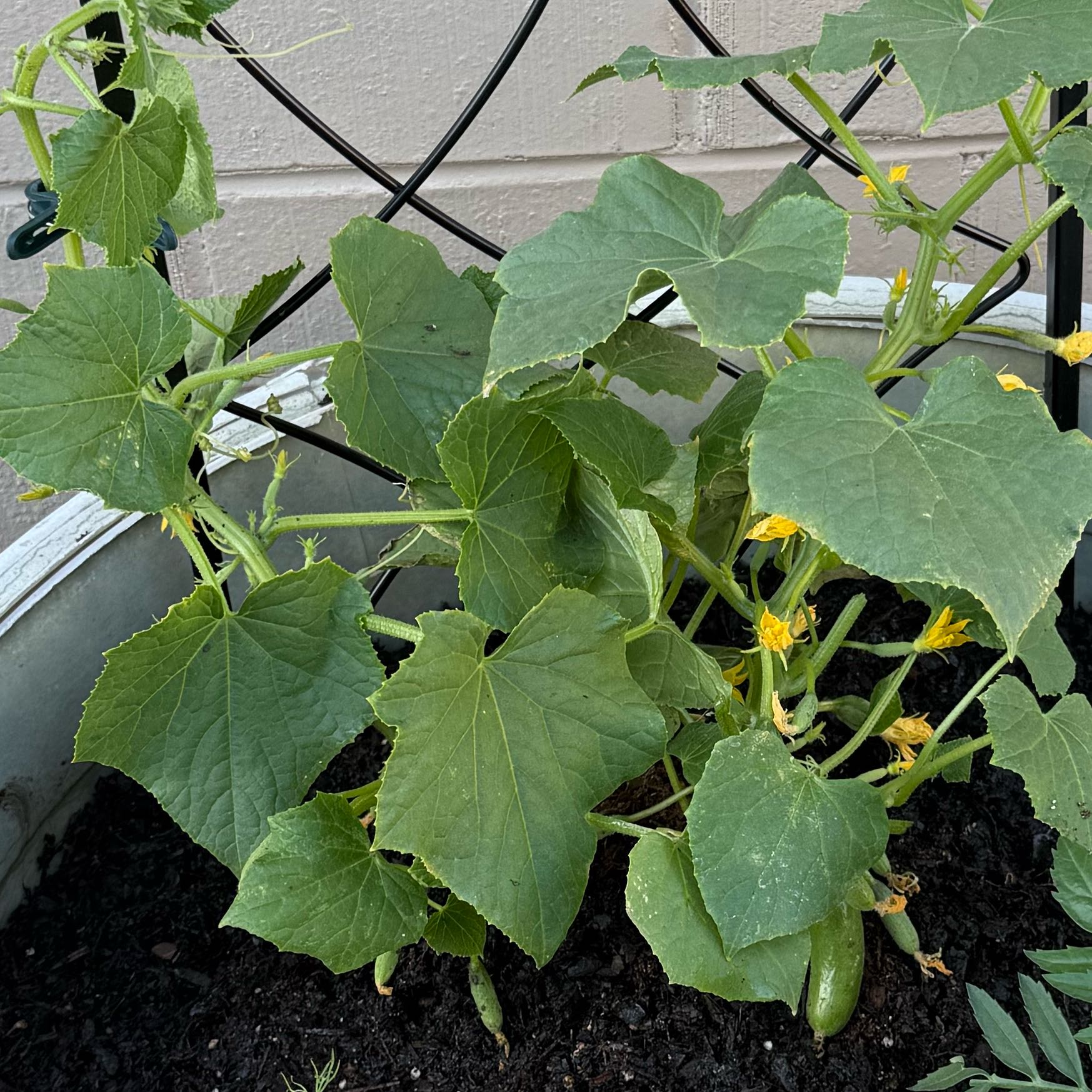
How to Repot a Cucumber
If you started Cucumbers from seed, pot up from the starter cell to a 4 inch pot once they have two true leaves, then to a 5 gallon final container after the last frost. If you bought a nursery seedling, move straight from the nursery pot to the final container after frost. Use a rich, well-draining mix with plenty of compost.

How to Know It's Time to Repot
Cucumbers grow fast and have sprawling roots that quickly run out of room, so the signs of a too-small pot show up within weeks. Here are four signals to watch for.
-
1Roots circle the bottom of the pot or push out through the drainage holes.
-
2The plant has roughly doubled in height since you last potted it up.
-
3Soil dries out within a day of a thorough watering.
-
4Lower leaves yellow and the vine looks pale even with regular water and sun.
Cucumbers are annuals, so you'll usually do one or two pot-ups in a single season rather than year after year. Expect to move a seed-started plant up once or twice before its final 5 gallon container, and a nursery seedling straight into the final pot after frost.
The Best Time of Year to Repot
Cucumbers are warm-weather annuals that resent cold soil, so the final pot-up has to wait until after the last frost in your area and once soil temperatures sit above 60°F. For seed-starters, intermediate pot-ups happen indoors starting a few weeks before that frost date.
Try to finish all repotting before the plant starts flowering. Disturbing the roots once flowers appear sets back fruit production. Use the map below to pin down your frost-driven window.

How to Choose a Pot and Soil Mix
Pot Size
If you started from seed, follow a two-step path. Pot up from the starter cell to a 4 inch pot when the seedling has two true leaves, then to a 5 gallon final container after frost.
If you bought a nursery seedling, skip the intermediate step. Move straight from the nursery pot into the 5 gallon final container after frost. Cucumbers are heavy feeders and big drinkers, so anything smaller than 5 gallons (about 12 inches wide and deep) leaves them stunted by midsummer.
Pot Material
Fabric grow bags and large plastic pots are both great for Cucumbers. Fabric breathes well and prevents the roots from circling, while plastic holds moisture longer between waterings.
Skip terracotta for the final container. It dries out too fast for a thirsty vine in summer heat. Whichever you pick, make sure the pot has drainage holes. Cucumber roots rot fast in standing water.
Soil Mix
Mix two parts standard potting soil with one part compost and a handful of perlite for the rich, well-draining blend Cucumbers want. Compost feeds the heavy nutrient demand of a fruiting vine, while perlite keeps the mix loose.
Skip pure garden soil and moisture-control formulas. Garden soil compacts in containers, and moisture-control mixes hold too much water around the roots.
How to Repot a Cucumber, Step by Step
-
1Water the day before. Give the plant a thorough drink the day before potting up. Moist soil holds the root ball together when you slide it out and keeps the fine roots from tearing as you work.
-
2Pick the next pot. If you started from seed, move from the starter cell to a 4 inch pot at the true-leaf stage, then to a 5 gallon final container after frost. If you bought a nursery seedling, go straight from the nursery pot to the 5 gallon container after frost. Always pick a pot with drainage holes.
-
3Slide the plant out. Tip the pot onto its side and gently work the root ball loose, supporting the base of the stem with one hand. Cucumber stems are brittle, so avoid pulling on the vine. If the plant is stuck, squeeze the sides of the pot or run a butter knife around the inside edge.
-
4Set it in the new pot. Center the plant at the same depth it was growing before. Cucumber stems do not root from buried portions, so do not bury the stem. Fill in around the sides with fresh rich mix, pressing gently as you go to remove air pockets.
-
5Add support before the vines run. Push a stake or trellis into the soil at the back of the pot now, while the roots are small. Adding support later means driving wood through established roots. Cucumber vines need vertical support to keep fruit off the soil and the leaves dry.
-
6Water deeply and place in full sun. Water slowly until you see it run out the drainage holes. Set the plant in full sun once outdoor nights stay above 55°F. Skip fertilizer for the first two weeks while the roots settle into the new soil.
What to Expect After Repotting
Day 1 to 3
A little droop right after the move is normal as the roots reach into fresh soil.
Keep the plant out of direct midday sun for the first day or two if leaves are wilting hard, and check the soil daily. Cucumbers in fabric or 5 gallon pots may need watering once a day in summer heat.
Week 1 to 2
New leaf growth at the tip of the vine and tendrils reaching for the trellis are the signal the plant has settled in and is ready for normal care.
Start a balanced liquid fertilizer at half strength once you see clear new growth, then build up to full strength over the next two or three feedings. Cucumbers are heavy feeders, so plan on feeding every week or two through the growing season.
Got More Questions?
About This Article
