How to Plant a Mango
Plant a grafted mango in spring once nights stay above 50°F, in full sun with fast-draining soil. Dig a hole twice as wide as the root ball, set the graft union two inches above the finished soil, and backfill with native soil. In zones 10b and 11, plant in the ground. In zones 9 and colder, use a 15 to 25 gallon container and overwinter indoors. Grafted plants fruit in three to four years.

When and where to plant
Mango is a tropical fruit tree that thrives in zones 10b and 11, where ground freezes never happen and summer heat is steady. In those zones, plant directly in the ground. Anywhere from zone 9 down to zone 7, the only realistic path is a 15 to 25 gallon container that lives outside in warm weather and moves indoors before the first 40°F night.
The site needs at least six hours of direct sun, ideally eight or more. Less sun means weaker growth and far fewer fruit. Mango will not tolerate standing water for even a day, so well-drained soil matters more than soil type. On heavy clay or low ground, plant on a 12 inch mound or skip in-ground entirely. The plant prefers slightly acidic soil from pH 5.5 to 7.5 and tolerates a wide range as long as drainage is fast.
Plant in spring once daytime temperatures hold above 70°F and nights stay above 50°F. Spacing for in-ground trees is 25 to 30 feet from other trees, buildings, and overhead lines, since a mature mango reaches 30 to 60 feet tall.
Planting a grafted container tree
Grafted trees fruit in three to four years and produce fruit true to the named type, which is why almost every serious mango grower starts here. The single most important rule is the graft union, the swollen knob where the named scion was joined to the rootstock, must sit two inches above the finished soil line. If the union is buried, the rootstock sends up its own shoots that outcompete the scion, and within a year or two the plant you bought is gone.
-
1Pick a warm planting day Aim for an overcast morning in spring after nights have been consistently above 50°F for two weeks. Mango roots stall in cold soil and stay vulnerable to rot until they start moving again. Avoid planting on a hot sunny afternoon, since freshly disturbed roots cannot keep up with the moisture pulled from the leaves.
-
2Dig the hole twice as wide Measure the root ball, then dig a hole twice as wide and the same depth, not deeper. In heavy or compacted ground, rough up the sides of the hole with a fork so new roots can push out laterally. On clay or low ground, build a 12 inch mound on top of the native grade instead, since standing water is the fastest way to kill a young mango.
-
3Find the graft union and set the depth Look for the swollen knob low on the trunk where the bark texture or angle changes. That is the graft union. Position the tree so this union sits two inches above your finished soil level. A graft buried at or below grade lets the rootstock take over and the named plant you bought slowly disappears.
-
4Backfill, water in, and mulch Hold the tree upright and backfill with the same native soil, firming gently to remove large air pockets. Water slowly until the planting hole settles, then top with two to three inches of wood chip mulch kept four inches back from the trunk. Mulch piled against the trunk traps moisture against living bark and invites rot at the exact spot where the graft needs to stay healthy.
Planting from a seed
Growing mango from a grocery store seed is a great project for kids and a slow project for fruit. Polyembryonic types from India and Southeast Asia often come true from seed, while monoembryonic Florida types do not. Either way, a seedling takes five to eight years to fruit and grows into a much larger tree than a grafted one, so think of this as a houseplant or ornamental for the first several years.
-
1Open the husk and free the seed Eat or scrape the flesh off the fibrous pit, then use scissors to carefully cut along the seam of the husk without slicing into the smooth inner seed. The actual seed inside looks like a large flat bean and is what will sprout. Soak the freed seed in water for 24 hours to wake it up.
-
2Fill a one gallon pot with fast-draining mix A nursery pot with multiple drainage holes is required, since soggy soil rots the seed before it can sprout. Use a mix of two parts potting soil to one part perlite, or any cactus mix amended with extra perlite. Fill to about two inches below the rim so you have room to water without overflow.
-
3Plant the seed shallow and on its side Lay the seed flat on the surface of the mix with the slight curve facing down, then cover with about one inch of soil. Burying the seed deeper slows sprouting and increases the chance of rot. Water once until the mix is evenly damp and let the surface dry slightly before watering again.
-
4Keep warm and bright until it sprouts Place the pot somewhere consistently warm between 70°F and 85°F with bright indirect light, like a sunny windowsill or under a grow light. A heating mat under the pot speeds sprouting in cool homes. Once the first shoot pushes up in two to four weeks, move the seedling into direct sun for at least six hours a day.
The first year
Most of what a newly planted mango is doing in its first year happens underground. The plant is building the root system that supports decades of fruiting growth, and visible activity on top stays modest until the roots have reached into native soil.
The most common new-grower mistake is overwatering. Mango roots need air as much as they need water, and constantly damp soil is what causes the root rot the plant is most vulnerable to in its first year. Water deeply and let the top two inches of soil dry between sessions. Skip fertilizer entirely until the tree has settled, since pushing leaf growth before the roots can support it weakens the plant.
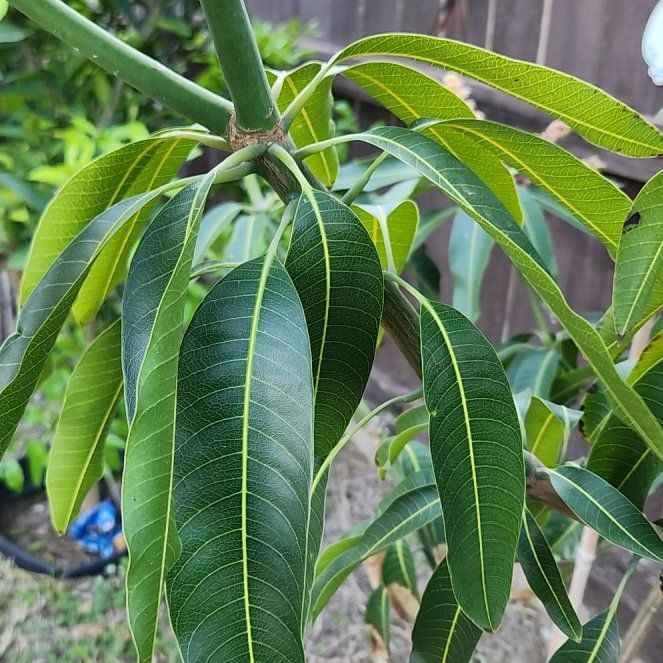
Healthy first year growth looks like one or two flushes of bronze-red new leaves that harden to deep green, glossy mature foliage with no significant browning, and a slow steady gain in trunk thickness.
What can go wrong
-
Wilting leaves in the first weeks
Transplant shock from heat or wind drying the foliage faster than new roots can rehydrate it is the usual cause. Check that the root zone is staying evenly moist, not soaked. Water deeply at the base in the morning and avoid wetting the foliage during the hottest part of the day. Light shade cloth for the first two weeks helps a young tree recover during a warm planting window. -
Buried graft union (slow decline)
If the graft knob disappeared into the planting hole or under added mulch, the rootstock will start sending up vigorous shoots that outcompete the named scion. Gently pull soil and mulch back until you can clearly see the union sitting two inches above grade. Done within the first year, the plant usually recovers. Done after several years of buried-graft decline, the scion has often been overtaken and the tree is no longer the plant you bought. -
Mushy stem near the soil line
Soggy soil or a low planting spot collecting water is starving the roots of oxygen, and root rot has reached the trunk. Lift the plant if the ground stays saturated for more than a day after rain and either replant on a 12 inch mound or move to a better-drained site. Going forward, water based on whether the soil feels dry two inches down rather than on a fixed schedule. -
Leaves with pale yellow patches and green veins
Iron lockout from alkaline soil is the most common cause, especially on limestone-based sites in South Florida and parts of Southern California. The roots cannot pull iron out of soil above pH 7.5 even when it is present. Apply a chelated iron supplement labeled for fruit trees, mulch heavily with wood chips that acidify as they break down, and avoid alkaline irrigation water. -
Cold damage on leaves and tips
Mango leaves blacken below 40°F and stems are killed outright at temperatures near freezing. If a cold night is forecast, wrap the trunk with frost cloth or burlap and string old-style incandescent holiday lights through the canopy for gentle heat. Containerized mangoes anywhere outside zones 10b and 11 should already be moved indoors before nights drop into the 40s. -
Dark sunken spots on new leaves
Anthracnose, a fungal disease that thrives in warm wet weather, is the most likely cause of dark patches on the new bronze flush. Prune out and dispose of affected leaves rather than composting them, and avoid overhead watering that keeps foliage wet. In humid zones a copper fungicide labeled for fruit trees can be used during prolonged wet stretches in spring. -
Seedling rots before it sprouts
Cold or constantly soggy mix is the cause. The freed seed needs warmth between 70°F and 85°F and a mix that drains within seconds of watering. Use a heating mat under the pot in a cool home and let the top inch of mix dry between waterings. If the husk is still around the seed, sprouting takes longer and the rot risk is higher, so open the husk and free the inner seed first. -
Slow visible growth in year one
This is normal for a newly planted mango, which puts most of its energy underground during the first full year. A healthy tree typically adds only 1 to 2 feet of new growth and one or two leaf flushes in year one. If the leaves stay glossy green and the trunk is slowly thickening, the plant is doing what it should, and growth picks up noticeably in year two.
About This Article
