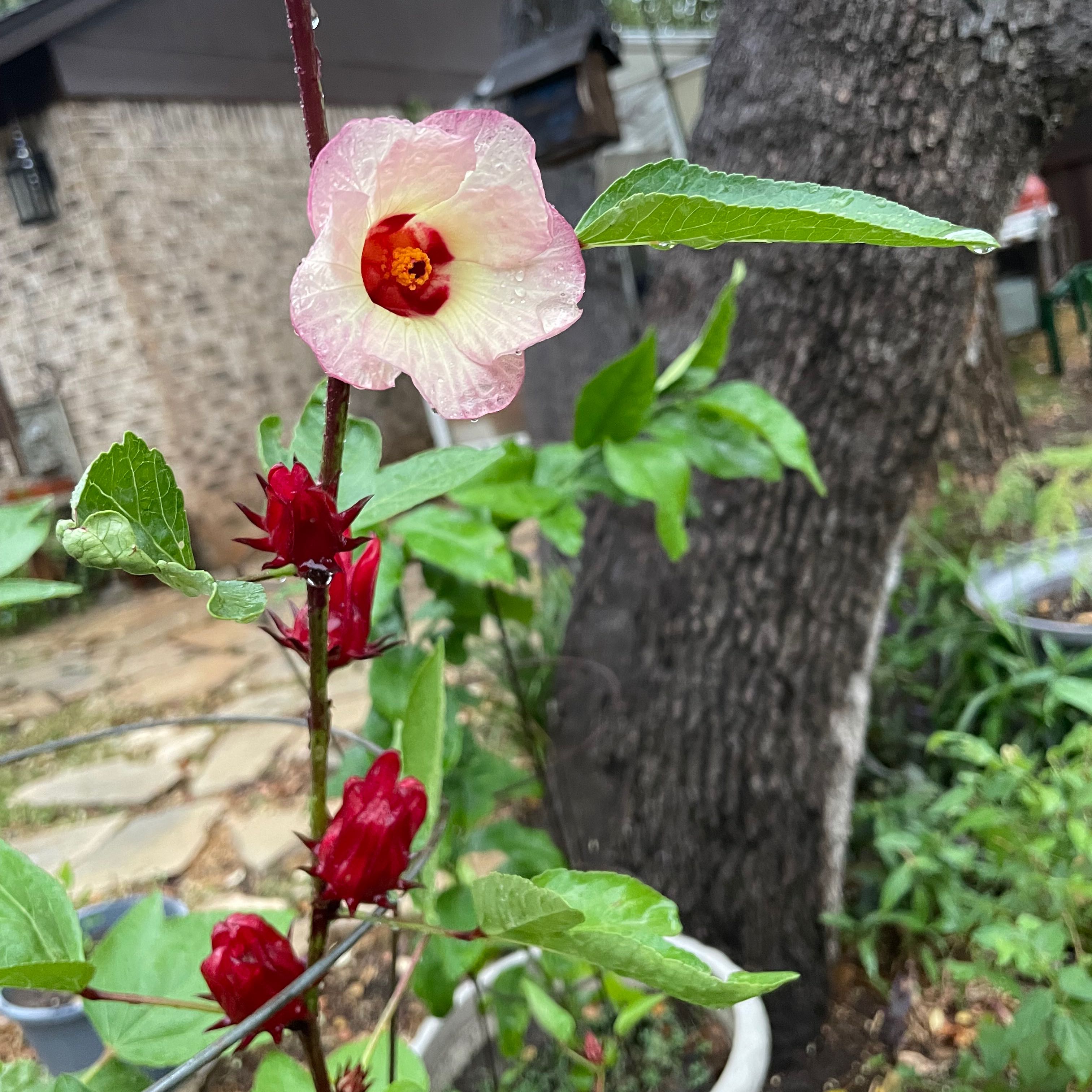
How to Plant a Jamaican Sorrel
Plant Jamaican Sorrel, also called Roselle, outside after your last spring frost once nights stay above 60°F. Sow seeds half an inch deep in full sun and loose well-drained soil, or set transplants three feet apart. Keep the seedbed evenly moist until sprouts appear in 7 to 14 days. Most home growers harvest the red calyces about 4 months after planting, well before the first fall frost.

When and where to plant
Jamaican Sorrel is a tropical plant that needs heat to make a crop. The plant is reliably hardy only in USDA zones 8 through 11, and almost everyone else grows it as an annual through one long warm season. Wait to plant outside until two to four weeks after your last spring frost, once daytime temperatures stay in the 70s and nighttime lows hold above 60°F.
Pick the sunniest spot you have. The plant wants six or more hours of direct sun a day to grow the strong leafy frame that supports a heavy calyx harvest in fall. Less sun means a smaller plant and a thinner crop.
The ideal soil is loose, well-drained, and slightly acidic to neutral, with a pH around 6.0 to 6.8. Heavy clay holds too much water for sorrel's taste, so plant on a slight mound or amend with compost in clay ground. Allow about three feet between plants in a row and four feet between rows, because a healthy plant easily reaches three to six feet tall and wide by harvest time.
Planting from seed
Starting Jamaican Sorrel from seed is the common path because seeds are cheap, widely available, and germinate readily in warm soil. The critical rule for seed is heat. Sorrel seeds rot in cool wet ground and only sprout reliably once the soil reads 70°F or higher at two inches deep, so wait for genuine warmth rather than rushing the calendar.
-
1Wait for warm soil and sow direct Sow outside two to four weeks after your last frost, once soil at two inches deep reads 70°F or warmer. In cooler northern zones, start seeds indoors four to six weeks before the last frost and transplant out when nights are reliably warm. Pre-soaking seeds in room-temperature water for an hour softens the hard coat and speeds germination.
-
2Drop seeds half an inch deep Make a shallow furrow or dibble holes about half an inch deep, then drop two to three seeds at each spot you want a plant, three feet apart. Cover lightly with soil and press the surface down with your palm to seat the seed against moist ground. Seeds buried deeper than an inch often fail to push through.
-
3Keep the seedbed evenly moist Water gently right after sowing and again every day or two until you see sprouts, which usually takes 7 to 14 days in warm soil. The top inch of soil should feel damp but not soggy, since standing water at this stage causes the seeds to rot. A light layer of straw or shade cloth over the row helps hold moisture during hot dry stretches.
-
4Thin to one strong seedling per spot Once the seedlings have a true leaf or two, pinch off the weaker ones at soil level and leave the strongest plant standing alone at each spot. Crowded seedlings compete for light and soil moisture and never size up properly. Cutting rather than pulling avoids disturbing the keeper plant's roots.
Planting from a nursery transplant
Transplants are less common at big retailers but show up at farm stands, ethnic grocery stores, and specialty seed companies that ship young plants in late spring. The critical rule for transplants is timing. A Jamaican Sorrel seedling stalls or dies if you set it out into cold ground, so wait for the same warm-night window the seed needs and harden the plant off for a week first.
-
1Harden the plant off for a week Set the pot outside in dappled shade for two or three hours the first day, then add an hour or two each day while gradually moving it into more direct sun. After about a week the plant is acclimated to outdoor sun, wind, and temperature shifts. Skipping this step often causes leaf burn and shock right after planting.
-
2Dig a hole the same depth as the pot On a cool overcast morning, dig a hole roughly twice as wide as the root ball and the same depth, not deeper. Loose sidewalls let the new roots push out laterally into the surrounding ground. Planting deeper than the original soil line buries the stem base and can cause it to rot.
-
3Set the plant in at the original soil line Slide the root ball out of the pot, loosen any tightly circling roots with your fingers, and set the plant in the hole so the surface of the root ball sits level with your finished soil line. Backfill with the native soil you removed, firming gently around the roots to remove large air pockets. Position the plant on the side of the row that gives it the most sun exposure.
-
4Water in and mulch lightly Water the planting hole slowly until the soil settles around the roots, using about a gallon per plant. Then top the area with an inch or two of straw or shredded leaf mulch, keeping the mulch a few inches away from the stem. Mulch holds moisture and keeps the soil temperature steady, both of which help the plant push new roots fast.
The first month
The first month after planting Jamaican Sorrel is about quietly building the root system and the lower frame of the plant. You will not see dramatic top growth yet, which is normal and good. The plant is anchoring itself for the heavy leafy push that comes once daytime heat sets in.
The most common new-grower mistake at this stage is overwatering on the assumption that more is better. Sorrel evolved in warm climates with seasonal rainfall, not constant moisture, so soggy soil at the roots causes more trouble than a slightly dry day. Water when the top inch of soil feels dry, not on a fixed schedule.
Healthy first-month growth looks like upright sprouts, true leaves with a slight reddish tint along the stems and leaf veins, and steady visible size gain after week two. No flowers yet — Jamaican Sorrel is a short-day plant and only sets its red calyces as the days shorten in late summer and fall.
What can go wrong
-
Seeds rotting before they sprout
Cold, wet soil is almost always the cause. Sorrel seeds need soil at 70°F or warmer to germinate cleanly, and cooler temperatures let soil fungi attack the seed before it can sprout. Wait for genuine warmth before sowing outdoors, and consider starting seeds indoors on a heat mat in cooler zones. If a spot has not sprouted in two weeks of warm weather, replant fresh seed at half an inch deep. -
Seedlings stalled with purple stems and small leaves
Cold soil and cool nights are pulling the brakes on growth. Jamaican Sorrel essentially pauses below 60°F and turns reddish-purple as it sits in the cold. Wait for nights to warm into the mid 60s and the plant will resume growth on its own. If a cold snap is forecast, cover seedlings overnight with a frost blanket or upturned bucket to hold a few degrees of warmth. -
Wilting after transplant
Transplant shock from sun and wind drying the foliage faster than disturbed roots can rehydrate it is the usual culprit. Check that the root ball is staying moist, not soaked, and water deeply at the base if it has gone dry. Shade the plant with a piece of cardboard or shade cloth for two or three afternoons until it stiffens up. Plants that were skipped on hardening off are especially prone to this. -
Yellow lower leaves on a young plant
Waterlogged soil starving the roots of oxygen is the most common cause early in the season. Stick a finger two inches into the soil at the base of the plant. If it feels saturated rather than moist, back off watering until the soil dries and consider mounding more soil around the base for better drainage. Persistent yellowing on plants in heavy clay usually means the site needs amending or a raised bed. -
Leggy plants reaching sideways
The plant is not getting enough direct sun. Sorrel needs six or more hours of sun to build a sturdy upright frame, and anything less makes the stems stretch toward the light. Move container plants to a sunnier spot if possible, or thin overhead branches if a tree or fence is shading the in-ground row. Plants stuck in partial shade will produce far fewer calyces in fall. -
Holes chewed in young leaves
Flea beetles, Japanese beetles, and caterpillars all sample young sorrel foliage in early summer. Light damage is cosmetic and the plant outgrows it without intervention, especially once the warmest weather kicks in. For heavier pressure, hand-pick beetles into soapy water in the morning when they are sluggish, or cover young plants with floating row cover until they size up. Avoid broad-spectrum sprays that also kill the pollinators sorrel relies on later. -
Lots of leaves, no flowers by midsummer
This is normal and not a problem. Jamaican Sorrel is a short-day plant that only forms its yellow flowers and red calyces once daylight drops below about 12 hours, which happens in late summer or early fall depending on your latitude. Keep watering and feeding lightly through the summer to grow the biggest possible frame. The calyx harvest follows automatically once day length triggers blooming. -
Frost damage on a late-planted crop
Sorrel is highly frost-sensitive and a single light frost blackens the leaves and stops calyx development in its tracks. In short-season areas, plants set out late may not reach the day-length trigger before fall frost arrives. Start seeds indoors four to six weeks before the last spring frost in zones 6 and colder to buy enough season, and watch the forecast in early fall so you can harvest any developed calyces just before the first frost hits.
About This Article
