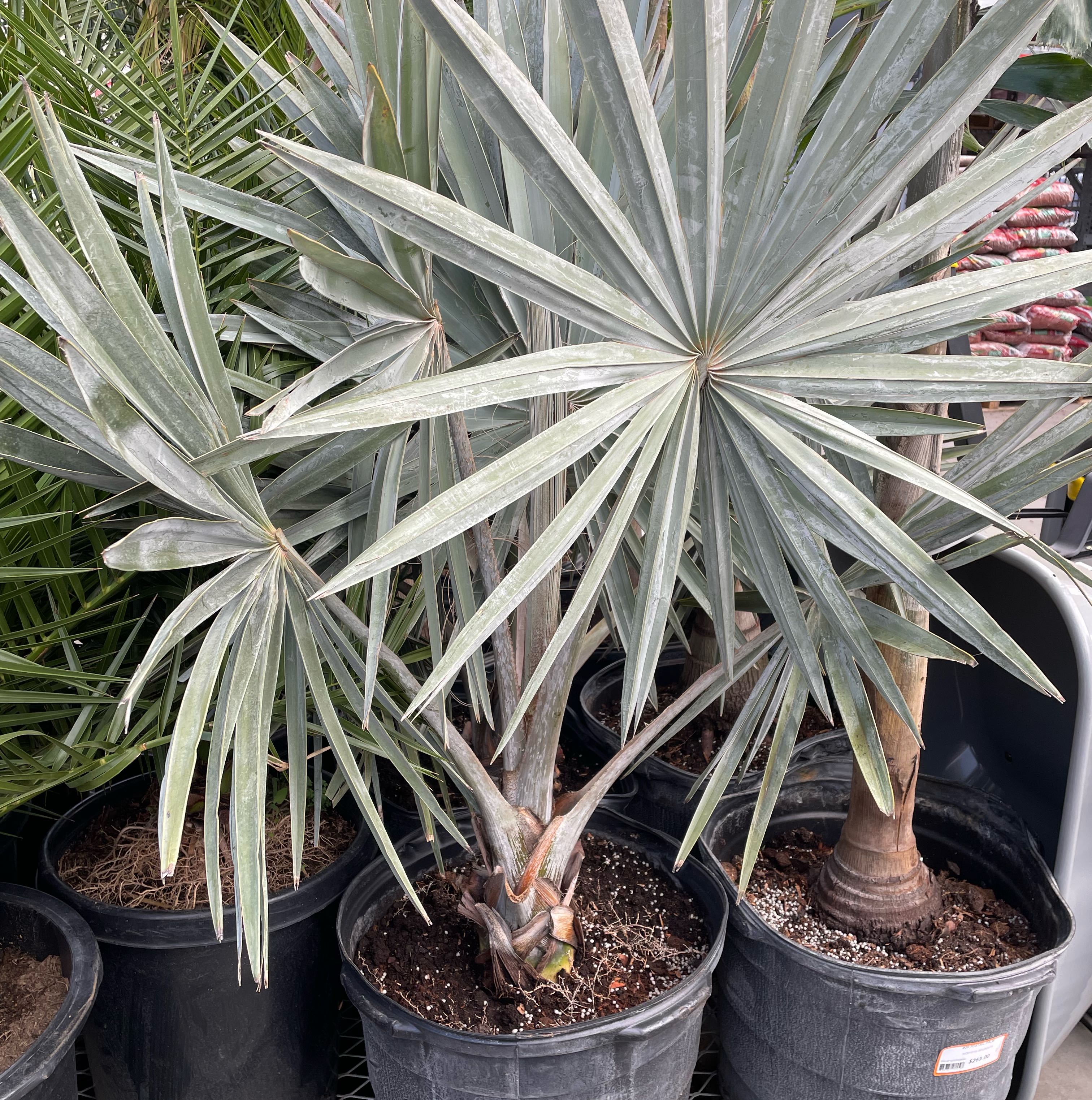
How to Plant a Bismarck Palm
Plant Bismarck Palm outside once soil temperatures stay above 70°F and the last frost is fully behind you, only in zones 10a through 11b. Pick a full sun spot with well-drained soil and at least twenty feet of clearance on all sides. Set the root ball at the same depth it sat in the nursery pot, never deeper. Water deeply twice a week through the first year. Expect a fully settled palm by the start of year two.

When and where to plant
Bismarck Palm is hardy in zones 10a through 11b and grows best in full sun, six or more hours of direct light each day. Anything less and the silver-blue fronds lose their signature color and the plant stretches awkwardly toward the light. The species comes from open grasslands and savannas in Madagascar, so a wide open sunny site mimics the conditions it evolved for.
Plant in late spring or early summer once soil temperatures hold above 70°F and the last frost is firmly past. A young Bismarck cannot handle a freeze, full stop. Even a brief dip to 28°F can kill an unestablished plant, and mature palms suffer serious damage below 25°F. If your winter low ever touches freezing, this is not the right palm for your site.
The site needs well-drained soil. Bismarck tolerates sandy, loamy, and even slightly rocky ground, but it will rot in heavy clay that stays wet for days after rain. Allow at least twenty feet of clearance from buildings, driveways, and other large plants. A mature Bismarck spreads twelve to sixteen feet across at the crown and reaches thirty to sixty feet tall over decades, so it needs real room to grow into the landscape statement it becomes.
Planting a container-grown palm
The single most important rule for any palm is depth, and it works differently than for broadleaf trees. Palms have a root initiation zone at the base of the trunk where new roots emerge, not a root flare. Set the palm so the top of the root ball sits level with the surrounding ground, exactly as it sat in the nursery pot. Planting deeper buries the root initiation zone and slowly suffocates the palm over one to three years.
-
1Pick a planting day Aim for a warm overcast morning in late spring or early summer, after all frost risk has passed and soil reads above 70°F at four inches deep. Bismarck Palm puts out new roots only in warm soil, so planting into cold ground stalls the palm for weeks. If you must plant on a hot sunny day, do it before 9 a.m. and rig temporary shade cloth over the crown through the first afternoon.
-
2Dig the hole twice as wide Measure the nursery container, then dig a hole twice as wide and exactly the same depth, not deeper. A wide hole loosens the surrounding ground so new roots can push out laterally into the native soil. Matching the depth keeps the root initiation zone at its correct level once you set the palm in.
-
3Slide the palm in at the correct depth Lay the container on its side and gently slide the palm out, supporting the root ball with both hands. Lower it into the hole so the top of the root ball sits flush with the surrounding soil surface, never below. The base of the trunk where the roots emerge must stay at or just above ground level for the palm to keep pushing new roots from that zone.
-
4Backfill and water in slowly Refill the hole with the same native soil you removed, firming gently every few inches to remove large air pockets without compacting the ground. Build a low ring of soil about three inches tall at the edge of the original hole to hold water. Fill that ring slowly until the water soaks all the way down through the root ball, which usually takes ten to fifteen minutes.
-
5Mulch with a clear gap at the trunk Spread two to three inches of bark or wood-chip mulch over the planting area, keeping it pulled back at least four inches from the base of the trunk. Mulch piled against the trunk holds moisture against living wood and invites the same rot the correct planting depth is meant to prevent. Refresh the mulch ring each spring to keep weeds down and soil temperatures stable.
The first year
The first year for a newly planted Bismarck Palm is almost entirely an underground story. The palm moves energy from new frond production into pushing roots out into the native soil, building the anchor and water-uptake network that supports decades of slow steady growth. You should not expect much visible top change during this period, and that is exactly right.
The most common new-grower mistake is reading slow above-ground growth as a sign of trouble and reaching for fertilizer or more frequent water. Both can backfire. Soggy soil invites root rot, which Bismarck is particularly vulnerable to, and fertilizer pushes leafy growth before the root system can support it. Stick to deep watering twice a week through warm months and skip the fertilizer entirely the first year.
Healthy first-year growth looks like the existing fronds holding their silver-blue color, no significant browning beyond the normal loss of one or two lower fronds, and one fresh spear emerging from the crown by midsummer.
What can go wrong
-
Browning frond tips in the first weeks
Transplant shock from heat or wind pulling moisture from the fronds faster than the new roots can replace it is the usual culprit. Check that the root ball is staying moist but not waterlogged. Water deeply at the base every two to three days for the first month and avoid wetting the fronds during the hottest part of the day. If a few outer fronds yellow and drop, that is normal and not a sign of trouble.
-
Buried root initiation zone (slow decline)
If the base of the trunk where the roots emerge disappeared into the planting hole or under added mulch, the palm is slowly suffocating. Gently excavate with your hands until you can see that zone clearly, then pull soil and mulch back from that point so the top of the root ball sits at or just above ground level. Done within the first year, recovery is usually full. Done after two or three years, the decline is often too far along to reverse.
-
Mushy or rotting roots from waterlogged soil
Heavy clay or a low spot that collects water for days starves the roots of oxygen, leading to root rot. Lift the palm if the ground is staying saturated for more than a day after rain, then either replant on a 6-inch mound or move to a better-drained site entirely. Going forward, water based on whether the soil feels dry an inch down rather than on a fixed schedule.
-
Cold damage after a freeze
Any temperature below 30°F damages young Bismarck Palms, and a hard freeze below 25°F can kill the crown outright. Brown or blackened fronds after a cold night are the warning sign. Cut off only the fully dead fronds once temperatures stabilize, leave any with green tissue, and protect the crown with a frost blanket through future cold spells. If the central spear pulls out cleanly, the growing point is gone and the palm will not recover.
-
Palm leaning to one side
A leaning Bismarck in the first few months usually means the root ball settled unevenly during watering or a strong wind shifted the partly-anchored palm. Straighten by hand, then drive two or three wooden stakes outside the root ball and tie soft strapping between stakes and trunk, never against bare bark. Remove the stakes after six months once the roots have anchored fully. Skipping this step on a tall newly planted palm risks losing the whole plant in a storm.
-
Fronds yellowing across the whole canopy
Widespread yellowing in the first year usually points to poor drainage or a nutrient lockout from constantly wet soil. Probe the soil six inches down. If it feels swampy, the site is too wet and the palm needs to be moved or replanted on a mound. If drainage looks fine, the yellowing may be cold soil slowing nutrient uptake, which resolves on its own once temperatures climb in late spring.
-
Slow visible growth in year one
This is completely normal. Bismarck Palm is one of the slowest-growing landscape palms, adding only one or two new fronds in the first full year as it builds its underground root system. If the silver-blue color holds and the central spear is still pushing fresh growth, the palm is doing what it should. Visible canopy growth picks up noticeably in year two and three.
-
Wind shredding on the new fronds
Bismarck fronds are large stiff fans that catch wind, and a young palm on an exposed coastal or open site can show torn or shredded leaflets after a storm. The damage is cosmetic and the next round of fronds replaces them within a year. On chronically windy sites, plant on the lee side of a building or windbreak, and avoid full exposure to salt spray, which can scorch the silver coating that gives the fronds their color.
About This Article
