How to Grow a Mountain Rose
Plant Mountain Rose in part shade in cool, acidic, well-drained soil with plenty of organic matter. The shrub stays low at 1 to 3 feet tall, blooms pink in early summer, and needs cool roots through hot summers. Mulch deeply with pine bark or pine needles and never let the soil dry out completely.

Where to plant
Mountain Rose is a low evergreen alpine shrub for USDA zones 4 through 7. The shrub matures to 1 to 3 feet tall and 2 to 4 feet wide over many years, since growth is slow. The plant struggles in zones with hot humid summers.
Sun
Part shade with cool morning sun and afternoon shade is the sweet spot for most climates. Four to six hours of dappled or morning light produces good bloom without scorching the leaves. In cooler northern zones, more direct sun is fine. In warmer zones, lean toward more shade to keep the roots cool through summer.
Drainage
Mountain Rose roots rot quickly in soggy ground but also die fast in pure dry sand. The plant wants the cool moist conditions of a high-elevation forest floor. Pick a spot on a gentle slope or any high point in the yard, and avoid low pockets where rainwater pools after storms.
Soil
Acidic soil rich in organic matter is essential. Mountain Rose evolved on peaty acidic alpine soils and cannot take up nutrients from neutral or alkaline soil. Work several inches of pine bark fines, composted pine needles, or aged leaf mold into the planting area. If the local soil tests alkaline, build a raised bed of acidic soil rather than fighting the ground.
Space
Give the shrub at least 3 to 4 feet of clear space in every direction. Crowded plantings get fungal trouble faster, and slow-growing shrubs hate competition from aggressive neighbors. The shrub looks at home in a woodland edge, alpine garden, or shaded foundation bed with similar acid-loving companions.
How to plant
Plant in early spring as the ground thaws, or in early fall at least six weeks before the first hard frost. Container-grown shrubs can go in any time during the growing season, but Mountain Rose establishes most reliably in cool wet conditions.
-
1Dig a wide shallow hole Twice as wide as the root ball but no deeper. Mountain Rose roots are fine and shallow, fanning out near the surface. A wide hole gives them room to spread, while a deep hole leaves them too low in the soil profile.
-
2Loosen the root ball If the roots are circling tightly inside the nursery pot, gently tease them apart with fingers or score the outside with a knife. The roots are wiry and fine, so work carefully but firmly to break the circling pattern.
-
3Amend the planting area with acidic organic matter Mix several handfuls of pine bark fines, composted pine needles, or aged leaf mold into the dug-out soil and the hole. The amended soil should feel light, springy, and clearly acidic in character.
-
4Set the shrub slightly high The top of the root ball should sit about an inch above the surrounding soil. Mountain Rose hates a buried crown, and even a half inch of soil over the original root ball causes rot at the base.
-
5Backfill and water deeply Use the amended soil to fill in around the root ball. Soak the planting until the top six inches feel uniformly damp. This first deep watering settles the soil around the fine roots.
-
6Mulch three inches deep with acidic mulch Use pine bark, pine needles, or composted oak leaves, kept a few inches back from the base. The mulch keeps the shallow root zone cool, holds moisture, and slowly adds acidity to the soil as it breaks down.
Watering and feeding
Watering
Water deeply once or twice a week through the first two growing seasons to help the shrub establish, soaking the root zone rather than splashing the leaves. Use rainwater if possible, since hard tap water gradually raises the soil pH and reduces flowering over years.
Established shrubs from year three onward still need consistent moisture. A deep weekly soak through any summer dry spell is critical, since the fine surface roots dry out fast. The plant does not bounce back from a dry summer the way many shrubs do.
Feeding
Feed once in early spring with a fertilizer for acid-loving plants, scattered around the drip line and watered in. Mountain Rose is a light feeder and resents heavy fertilizing, which pushes weak growth and burns the fine roots.
A two-inch top-up of pine bark fines or composted pine needles each spring is often the only fertilizer this shrub needs. Skip any fertilizer designed for lawns or general gardens, since those raise the pH and stress the plant.
Pruning and maintenance
Mountain Rose needs very little pruning. The shrub is slow-growing and naturally keeps a tidy rounded shape, so the main task is a light cleanup once a year and occasional deadheading after the early summer bloom fades.
When to prune
Prune within a few weeks after the bloom fades in early summer. The shrub sets next year's flower buds during late summer, so any cut later in the season removes those buds.
What to cut
Remove any dead, broken, or weak stems at the base. Snap off spent flower clusters with finger and thumb, taking care not to damage the new shoots forming just below the bloom. Avoid shearing the shrub, since the natural domed shape is the look.
If a stem dies back from winter cold or disease, cut it back to where the wood is healthy and green just under the bark. Healthy regrowth pushes from buds along the remaining stem within a few weeks during the growing season.
Renovating an overgrown shrub
Mountain Rose does not recover well from heavy renovation pruning. If the shrub has gotten leggy or bare at the base, the better fix is to take stem-tip cuttings, root them, and start over with fresh plants. Hard cutting an old plant often kills it.
Blooming and color
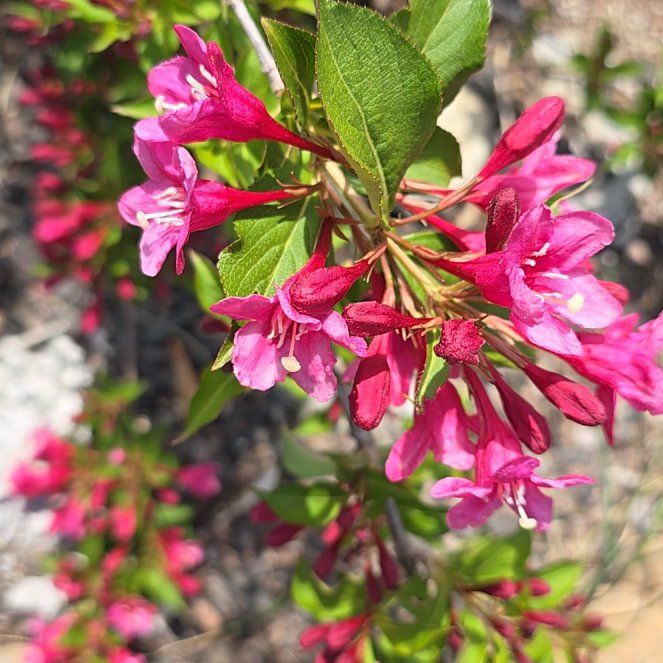
Mountain Rose is grown for the dense clusters of pink bell-shaped blooms that cover the shrub in early summer. The flowers last about two to three weeks and turn the low evergreen shrub into a sheet of rosy pink over dark green leaves.
Bloom timing
Flowers open in June or early July in most climates, opening from rounded pink buds into clusters of small bell-shaped flowers. Each cluster lasts two to three weeks. After bloom, small dry seed capsules form and last on the shrub through summer.
Foliage and form
The small leathery evergreen leaves are dark glossy green on top and rusty brown underneath, which gives the plant its species name (ferrugineum means rust-colored). The shrub keeps its leaves year-round, providing winter structure in the alpine or woodland bed.
Mature shrubs naturally take a low rounded mounded form, never tall and leggy. The form holds for decades with almost no shaping.
Encouraging more blooms
Acidic well-amended soil is the single biggest factor. A shrub planted in too-alkaline soil rarely blooms heavily even with perfect light and water. Test the soil pH with a simple home test kit before planting, and re-amend with acidic materials every few years if rainfall and water gradually raise the pH.
Light deadheading after the bloom fades, and a steady annual mulch of pine bark or pine needles, both help the plant bank energy for next year's blooms.
Common problems and pests
Mountain Rose is a tough alpine shrub when its soil and root conditions match what it evolved for. Most problems trace back to wrong soil chemistry, root stress from heat, or poor drainage.
Yellow leaves with green veins
Iron chlorosis, caused by alkaline soil locking up iron and other nutrients. Apply a chelated iron foliar spray for fast recovery, then amend the soil with sulfur, pine bark fines, or peat moss to gradually lower the pH. Test the soil yearly until the pH stabilizes below 5.5.
Browning leaf edges in midsummer
Heat or drought stress. Mountain Rose hates hot dry summers and shows it first on the leaf edges. Mulch the root zone three inches deep with pine bark or pine needles, water deeply during dry spells, and consider planting in more afternoon shade if browning becomes a yearly pattern.
Wilting even when soil is wet
Root rot from a soggy site or chronic overwatering. Dig down a few inches to check the drainage. If the soil stays wet, the plant needs to come out and go into a raised bed with better drainage. Advanced root rot rarely recovers.
No flowers this year
Most often a late frost damaging the buds, since this shrub sets buds in summer and carries them through winter. Wrong-time pruning can also remove next year's buds. In the long term, soil that is no longer acidic enough causes a gradual fall-off in bloom even on a healthy-looking plant.
Sticky leaves and ants on stems
Aphids or scale insects feeding on sap and excreting a sugary residue, which then grows black sooty mold and attracts ants. Knock aphids off with a strong spray of water, or wipe scales off with a cotton swab dipped in rubbing alcohol. Horticultural oil applied in late winter while dormant prevents the next round.
Small chewed scallops along leaf edges
Black vine weevil adults feed on leaves at night, leaving distinctive notches. The grubs feed on roots and are the more serious problem. Apply beneficial nematodes to the soil in late summer to kill the grubs, and pick off adults at night by flashlight.
Brown spots or blotches on leaves
Leaf spot, a fungal disease that shows up in humid weather with poor airflow. Rake up and discard fallen leaves to break the disease cycle. Avoid splashing the foliage when watering, and improve airflow by giving the shrub adequate spacing. Severe outbreaks respond to a copper-based fungicide.
Sudden dieback of branches
Phytophthora root and crown rot, a soil-borne disease that thrives in wet conditions. Once advanced, the disease is hard to stop. Improve drainage, avoid overwatering, and remove badly affected branches back to healthy wood. Replace badly diseased plants and avoid replanting in the same spot.
Slow growth and sparse leaves
Often a sign that the soil is not acidic enough. Mountain Rose pushes only a few inches of new growth a year even in ideal conditions, but a starved plant looks visibly thin. Renew acidic mulch each spring and apply a fertilizer for acid-loving plants once a year.
About This Article

Royal Horticultural Society