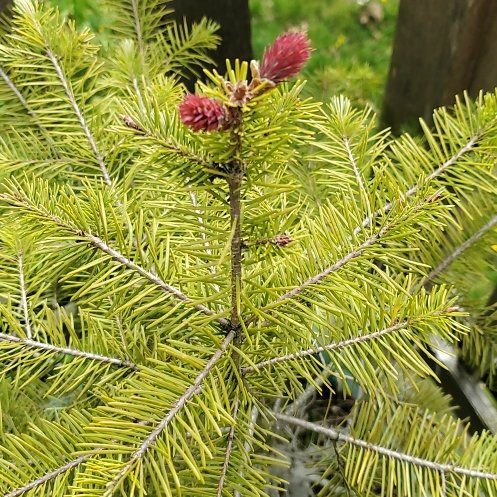
How to Grow a Douglas Fir
Plant Douglas Fir in full sun with well-drained slightly acidic soil, water deeply through the first three years, and give the tree at least 30 feet of clear space. The tree thrives in cool moist climates and grows 1 to 2 feet a year once established.

Where to plant
Douglas Fir is an evergreen conifer for USDA zones 4 through 6, doing best in cool moist regions and struggling in hot dry summers. The tree reaches 40 to 80 feet in a yard setting and well over 100 feet in the wild over many decades. Pick a permanent spot, since moving an established tree is impractical.
Sun
Six or more hours of direct sun produces the densest pyramidal shape and the heaviest cone crop. Light shade through hot afternoons is fine in the warmer end of the range.
Deep shade thins the canopy and slows growth. Avoid placing the tree under the canopy of a larger tree or close to a north-facing wall.
Drainage
Well-drained soil is essential. The roots rot in standing water and the tree declines slowly over several years if the spot is too wet. Heavy clay yards need a raised planting site or extensive amendment with coarse compost in a wide area.
Soil
Deep moist loam that stays slightly acidic is the sweet spot. The tree tolerates a range of soil textures as long as drainage is good and roots can push down at least three feet. Shallow rocky soil limits the tree to a smaller mature size.
Space
Give the tree at least 30 feet of clear space in every direction at maturity, more in regions where it grows fastest. Watch for overhead utility lines, since the tree will easily top them within twenty years.
The lower branches sweep wide as the tree ages, so allow extra room near walkways and structures.
How to plant
Plant in early spring or early fall when the soil is workable and the tree is cool. Bare-root saplings are usually planted in late winter to early spring, while container-grown trees can go in any time the ground is not frozen. Avoid summer planting in hot regions.
-
1Dig a wide shallow hole Twice as wide as the root ball but only as deep. A wide hole helps the shallow lateral roots establish fast in the surrounding soil rather than spiraling within the original planting pocket.
-
2Loosen circling roots If the nursery pot roots are circling, gently tease them outward or score the outside with a knife in three or four vertical lines. Circling roots become a slow strangulation hazard as the trunk thickens.
-
3Set the root flare at grade Find the gentle swelling where the trunk meets the roots. That flare belongs at or just above the surrounding soil. A buried flare invites trunk rot, which is one of the most common causes of slow decline in young conifers.
-
4Backfill with native soil Use the soil you dug out, broken up into fine pieces, without amending the hole heavily. A heavily amended hole encourages the roots to stay inside the easy pocket rather than pushing out into the surrounding yard.
-
5Water deeply Soak the root zone with several buckets of water until the top foot feels uniformly damp. The first watering settles the soil around the roots and removes air pockets that can desiccate fine root hairs.
-
6Mulch three inches deep Wood chips or pine bark mulch hold moisture and keep the root zone cool. Spread mulch in a wide ring at least 3 feet across, kept a few inches off the trunk so the bark stays dry.
Watering and feeding
Watering
Water deeply once a week through the first three growing seasons, soaking the root zone slowly with a hose at the base. Drip irrigation or a soaker hose at the dripline works well for a tree this size.
After year three, the tree usually rides out rainfall alone in its preferred climate. A deep soak during extended summer drought keeps the needles fresh and prevents the cone-shedding stress that follows a dry year.
Feeding
Douglas Fir rarely needs supplemental feeding in good soil. A single light application of a balanced slow-release fertilizer in spring helps a young tree push fresh growth, but established trees do not benefit from regular feeding.
Yellow needles on a fed tree usually point to poor drainage or alkaline soil rather than lack of nutrients. Address the underlying issue rather than piling on fertilizer.
Pruning
Douglas Fir needs very little pruning. The tree shapes itself into a clean pyramidal form without intervention. The main pruning task is removing damaged branches and lifting the canopy if a walking path or driveway runs nearby.
When to prune
Prune in late winter or early spring before new growth begins. Avoid pruning in summer, since fresh cuts ooze sap and attract bark beetles in warm dry weather.
What to cut
Remove dead, broken, or crossing branches at the point of origin on the trunk. Never cut the central leader, since the tree loses its pyramidal shape without it.
If the central leader is damaged, splint a strong upright side branch to the trunk with a stake and tie. The branch trains upward over a season and becomes the new leader.
Limbing up for clearance
If a walkway or driveway runs under the tree, remove the lowest branches as the tree ages to lift the canopy. Take one or two branches off at a time over several years rather than all at once. Cut at the branch collar without flush-cutting the trunk.
Blooming and color
Douglas Fir is grown for the tall pyramidal evergreen form, the soft blue-green needles, and the distinctive pendant cones with their three-pointed bracts. The tree provides year-round structure, shelters wildlife, and produces a steady cone crop on mature trees.
Year-round evergreen form
The pyramidal silhouette and soft needles give the tree a strong visual presence year-round. New spring growth flushes pale green and gradually darkens to mature color over the season. The canopy looks best from a distance, where the full pyramid reads clearly.
Cones
Mature trees produce 3 to 4 inch hanging cones with the famous three-pronged bracts poking out between the scales. Cones ripen in late summer and drop intact through fall and winter. The cone crop varies year to year, with heavy seed years every 2 to 7 years.
Squirrels and pine siskins feed on the seeds, so a steady cone crop also brings wildlife to the yard.
Holiday and craft uses
Lower branches yield short trimmings useful for holiday wreaths and garlands. Clip fresh boughs in early December and condition them in a bucket of water for a day before assembling. Whole tree-farm-grown trees are a popular Christmas tree, but a yard tree should not be cut for that purpose.
Common problems and pests
Most Douglas Fir troubles trace back to drainage, drought, or climate mismatch when the tree is planted outside its preferred cool moist range.
Brown or yellow needles dropping
Older interior needles brown and drop in late summer and fall as a normal annual cycle. Concern is only warranted when fresh new growth at the branch tips also yellows, which points to drought stress or root rot. Check soil moisture at depth and confirm drainage.
Slow growth in a hot dry region
The tree underperforms outside its preferred cool moist range. Plant in part shade with a deep mulch layer and irrigate deeply during summer dry spells. Pick a different tree for a long-term landscape in zones 7 and warmer with hot dry summers.
Needle cast diseases
Fungal diseases like Swiss needle cast and Rhabdocline needle cast cause yellow or brown bands on needles followed by premature needle drop. Rake and discard fallen needles to reduce overwintering spores. Severe outbreaks on a young tree respond to a copper fungicide applied at bud break. Established trees usually live with mild infections.
Bark beetles in stressed trees
Douglas Fir bark beetle and other beetles attack drought-stressed or fire-damaged trees. Small holes with pitch tubes on the trunk and yellowing top branches are the signs. Maintain steady watering and avoid summer pruning that releases attractive volatiles. Severely infested trees usually decline beyond saving.
Tussock moth caterpillars defoliating branches
Hairy caterpillars feed in groups on the needles in late spring and early summer, sometimes stripping branches bare. Light damage heals on its own. Heavy infestations on a young tree respond to a Bt spray applied while caterpillars are small. Naturally rising outbreak years usually collapse within two seasons.
Cooley spruce gall adelgid
Cone-like green galls on branch tips in spring, hardening to brown by summer. Damage is mostly cosmetic on Douglas Fir and the tree tolerates the galls without long-term harm. Prune off and discard heavily galled tips while the galls are still green. A horticultural oil spray in early spring reduces overwintering populations.
Root rot from wet soil
Standing water at the roots leads to fungal root rot, which shows up as thinning canopy and slow decline over several years. Check drainage at the base of the tree and improve a wet spot with mounding or French drains if possible. A tree well into root rot rarely recovers.
Top dieback in late summer
Drought damage or heat scorch in a hot dry year. The dead leader may need replacing by training a side branch upward into the central position. Mulch deeply and water through summer dry spells to prevent recurrence.
Heart rot in older trees
Internal trunk decay from fungi that enter through old wounds and broken branch stubs. Conks or shelf fungi on the trunk are visible signs. Have a certified arborist evaluate large old trees for structural soundness, since heart rot increases the chance of trunk failure in storms.
About This Article
