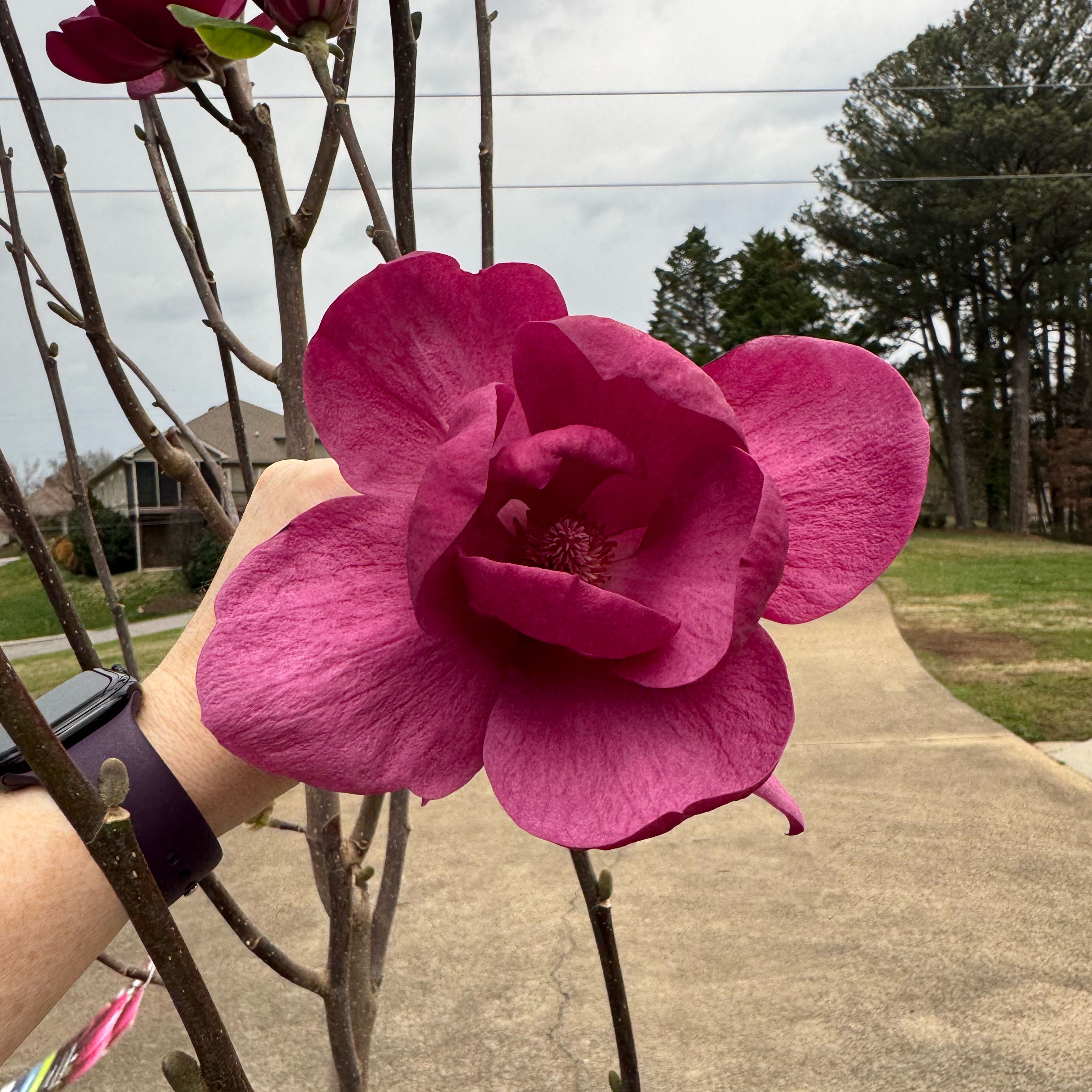
How to Grow a Black Tulip Magnolia
Plant Black Tulip Magnolia in full sun to part shade, in moist well-drained soil, and give the tree 12 to 15 feet of clear space at maturity. Prune only right after spring flowering ends, since new flower buds form on this year's wood for next year's bloom. Hardy in zones 5 to 9.

Where to plant
Black Tulip Magnolia is a deciduous flowering tree hardy in USDA zones 5 to 9. The tree matures to 15 to 20 feet tall and 8 to 12 feet wide over 10 to 15 years, with a narrower upright form than most older magnolia cultivars. The compact size suits small yards and front-yard planting.
Sun
Full sun to part shade, with six or more hours of direct light producing the heaviest bloom. Trees in less than four hours of sun bloom sparsely.
In zone 8 and warmer, light afternoon shade through summer helps the leaves stay fresh through the hottest months.
Drainage
Moist well-drained soil is the target. The roots tolerate occasional wet feet in spring but rot in soggy conditions through summer. Dig a one-foot test hole and fill with water. If it drains within a few hours, the spot is fine. If water sits overnight, plant on a raised mound.
Soil
Slightly acidic to neutral soil rich in organic matter is the natural preference. Heavy alkaline soils cause yellow leaves and weak growth. Amend the planting area with a few inches of compost worked in, and refresh with pine bark or pine needle mulch each year.
Space and frost pocket placement
Give the tree at least 12 to 15 feet of clear space in every direction. The early bloom is the main draw, but late spring frosts can damage open flowers and turn the show brown overnight. Avoid low-lying spots where cold air pools at night. A slope or a sheltered south-east exposure helps the buds open later when frost risk has dropped.
How to plant
Plant in early spring after the soil thaws and before bud break, or in early fall at least six weeks before the first hard frost. Magnolia roots are fleshy and slow to recover from disturbance, so handle the root ball gently.
-
1Dig a wide shallow hole Twice as wide as the root ball but only as deep. The wide hole lets the shallow lateral roots establish quickly in the first season. A deep narrow hole leaves the roots in a column and slows growth.
-
2Handle the root ball carefully Do not tear or aggressively tease apart the roots when removing the tree from the container. Magnolia roots break easily and slow to regrow. If the roots are circling, score the outside lightly with a knife but do not pull at them.
-
3Set the tree at the same depth The top of the root ball should sit level with the surrounding soil. Burying the trunk deeper than it grew at the nursery rots the bark and slows the tree.
-
4Backfill with the original soil and compost Mix a few inches of compost into the dug-out soil and use that to fill the hole. Skip rich potting mixes or pure compost since roots stay lazy in overly rich soil and never spread into the wider yard.
-
5Water deeply Soak the root zone until the top six inches feel uniformly damp. The first watering settles the soil around the roots and is the most important watering of year one.
-
6Mulch two to three inches deep Use shredded bark or pine needles, kept several inches back from the trunk. Magnolia roots run shallow and benefit from cool moist soil around the trunk.
Watering and feeding
Watering
Water deeply once a week through the first two growing seasons, soaking the root zone rather than the leaves. Soaker hose or a slow drip works best. The shallow root system suffers in drought more than most landscape trees.
After year two, water during extended dry spells of more than two weeks. Even an established Black Tulip Magnolia drops leaves early in a dry summer if not given supplemental water.
Feeding
Feed once in early spring as new growth starts, using a slow-release fertilizer labeled for acid-loving plants or flowering trees. Apply at half the labeled rate. Heavy feeding produces leafy growth at the expense of blooms.
Skip feeding entirely after midsummer so the tree can harden off new growth before winter.
Pruning
Black Tulip Magnolia blooms on old wood, meaning next year's flower buds form on stems that grew the previous summer. The single most important rule is to prune only right after spring flowering ends. Pruning later in the season removes next year's flower buds.
When to prune
Within a few weeks after the last flowers fade in mid spring. Magnolia wounds heal slowly, so a few clean cuts go further than heavy reshaping. The tree's natural shape is one of its best features.
What to cut
Remove any dead, broken, or crossing branches at the trunk or back to a healthy side branch. Trim wayward stems that disrupt the natural form. Avoid shearing or topping the tree, since magnolias do not regrow attractively from large cuts.
Avoid stripping water sprouts that occasionally erupt from the trunk. A few light cuts in late spring are enough.
Late-frost damage
Spring frosts can blacken open blooms overnight. The damage is cosmetic, the tree is fine, and no pruning is needed. Leaf-out follows the bloom regardless. Brown flowers drop on their own within a week.
Blooming and color
Black Tulip Magnolia is grown for the deep burgundy goblet-shaped flowers that open on bare branches in early spring before the leaves emerge. The blooms hold their dark color longer than older saucer-shaped magnolias and earn the name from the tulip-like form.
Bloom timing
Flowers open in late winter to early spring, usually March or early April depending on the zone. The whole tree blooms heavily for two to three weeks before the leaves emerge. The dark wine-purple color is most saturated when the buds first open and lightens slightly as the petals age.
Cutting for arrangements
Cut branches with closed buds in late winter and force them indoors. Place the cut stems in a vase of warm water in a bright cool room. The buds open over 1 to 2 weeks and last several days once fully open.
Take only a few branches from the lower canopy and leave the main framework intact. The tree should never be stripped of buds for cutting.
Fall color
After the spring bloom, the foliage stays green through summer and turns golden bronze in fall. The fall color is a secondary feature and not the main reason for planting. After leaves drop, the silver-gray bark and large fuzzy flower buds give the tree winter interest.
Common problems and pests
Most Black Tulip Magnolia complaints trace to frost damage on the spring bloom, slow recovery from root disturbance, or yellowing leaves on alkaline soil. The tree is otherwise low-maintenance.
Blackened flowers after a late frost
Open magnolia blooms freeze and turn brown overnight in a hard late spring frost. The damage is cosmetic and the tree is fine. No pruning or treatment is needed. Cover small trees with a sheet on nights when frost is forecast during bloom to protect open flowers.
Yellow leaves with green veins
Iron chlorosis from alkaline soil, the most common complaint. Apply a chelated iron foliar spray for quick green-up and amend the soil with pine bark mulch and a fertilizer labeled for acid-loving plants. A long-term shift to slightly acidic soil takes one or two seasons.
Sparse bloom the year after planting
Young trees focus energy on root growth in the first year or two and bloom sparingly. A heavier display follows in year 3 or 4. Resist the urge to fertilize heavily since extra nitrogen produces leafy growth and delays flowering further.
Scale insects
Bumpy growths on twigs and undersides of leaves, sometimes with sticky honeydew below. Wipe individual scales off with rubbing alcohol on a cotton swab. Heavy infestations respond to horticultural oil sprayed in late winter while the tree is dormant.
Magnolia leaf spot
Brown or purple spots on the leaves in late summer, often after a wet season. Rake up fallen leaves to break the disease cycle. Avoid overhead watering. The tree tolerates light leaf spot without lasting harm.
Powdery mildew
White powdery film on the leaves in humid weather. Thin crowded branches to improve airflow during the post-bloom pruning. A horticultural oil or potassium bicarbonate spray controls heavy outbreaks.
Slow recovery after transplanting
Magnolias resent root disturbance and may sit and sulk for a full season after planting before showing new growth. Be patient and avoid digging around the root zone. Steady watering and a light mulch through the first summer carries the tree through the recovery.
Trunk cracks in late winter
Sun scald on the south side of young thin-barked trunks during cold sunny winter days. Wrap the trunk with light-colored tree wrap from late fall through early spring for the first three or four years. Older trees develop thicker bark and no longer need protection.
Yellow leaves and early drop in midsummer
Drought stress on a shallow-rooted tree. Soak the root zone deeply during dry spells and refresh mulch each spring to keep the roots cool and moist. A stressed magnolia rebuilds reserves the following spring once watering is restored.
About This Article
