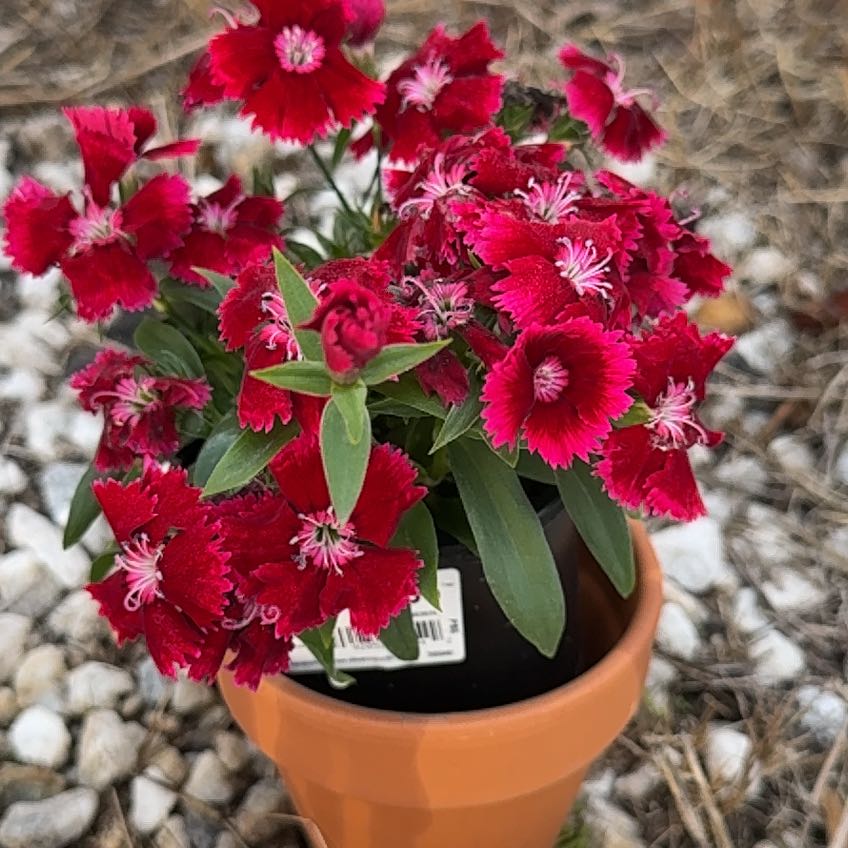
How to Grow Dianthus
Plant Dianthus in full sun with sharp drainage, in slightly alkaline soil with grit worked in. Water only when the top inch is dry, since soggy roots are the main way this plant fails. Deadhead spent flowers through the season to keep new buds coming, and shear back lightly after the heaviest flush.

Where to plant
Dianthus is a clump-forming flower for USDA zones 3 through 9, depending on the species in the genus. Plants reach 6 to 18 inches tall and 12 inches wide in two seasons, and most varieties live three to five years as short-lived perennials.
Sun
Full sun gives the strongest bloom and tightest mound shape. Six or more hours of direct sun is the minimum. In zones 8 and warmer, light afternoon shade through the hottest part of summer keeps the plants going through heat that would otherwise melt the blue-green foliage.
Part shade is workable in cooler zones but produces a looser plant with fewer flowers. Deep shade is not.
Drainage
Sharp drainage is the single most important condition. Dianthus rots fast in wet feet, especially over winter. Dig a one-foot test hole and fill it with water. If it drains within a few hours, the spot is fine. If water sits overnight, build a raised mound or grow in containers with gritty mix.
Soil
Dianthus prefers neutral to slightly alkaline soil, the opposite of acid-loving plants like blueberry or azalea. Heavy clay or strongly acidic ground needs amending with coarse sand and a small handful of dolomitic lime per square foot before planting.
Worked-in compost is fine but rich soil produces leafy plants with fewer flowers. Lean gritty soil is the goal.
Space
Space individual plants 8 to 12 inches apart for ground-cover varieties, 12 to 18 inches apart for taller upright types. Crowded plants develop crown rot faster and bloom less. Good airflow between plants is a real disease-prevention measure.
How to plant
Plant nursery starts in early spring as soon as the soil can be worked, or in early fall at least six weeks before the first hard frost. Spring plantings produce flowers the same year.
-
1Dig a wide shallow hole Twice as wide as the root ball but no deeper than the root ball is tall. Dianthus roots are shallow and spread sideways.
-
2Mix in grit and lime if needed Work coarse sand or fine gravel into the dug-out soil to lighten heavy ground. Add a small handful of dolomitic lime per square foot if the soil tests acidic. Dianthus prefers slightly alkaline conditions.
-
3Set the crown right at the soil surface The crown where stems meet the roots must sit right at the soil line, never buried. A buried crown rots within a season in this plant.
-
4Backfill and firm gently Fill in around the roots with the amended soil and firm it lightly with your hands. Water in as you fill to settle out air pockets.
-
5Water in deeply Soak the root zone until the top six inches feel uniformly damp, then let it dry between waterings.
-
6Top-dress with grit, not bark mulch A thin layer of coarse sand, pea gravel, or crushed oyster shell around the crown keeps moisture off the stems and reduces rot. Avoid bark or wood-chip mulch on Dianthus.
Watering and feeding
Watering
Water only when the top inch of soil is dry. Soak the root zone deeply when you do water, then let it dry between drinks. Dianthus is moderately drought-tolerant once established and prefers a dry side over a wet side.
Water at the base of the plant, not overhead. Wet foliage and crowns invite rot, and the silver-blue leaf coating is washed off by frequent splash. Morning watering gives any wet leaves time to dry before night.
Feeding
Dianthus prefers lean conditions and overfeeding produces leafy plants with weak flowers. Feed lightly in early spring as new growth starts, using a balanced fertilizer at half the labeled rate or a single dose of liquid fertilizer once the buds form.
A second light feeding after the main bloom flush, paired with a shearing-back, helps trigger a rebloom in many varieties. Stop feeding by midsummer in cold zones so new growth hardens off before winter.
Pruning and maintenance
Dianthus needs steady deadheading through the bloom season and a hard shear after the main flush. Both tasks trigger more flowers and keep the plant from putting energy into seed production.
Deadheading
Snap or snip off spent flowers as they fade, cutting back to a leaf node or to the base of the flowering stem. The plant responds by pushing fresh buds rather than going to seed.
A few minutes of deadheading each week through the bloom season often doubles the total flower count over a single big shearing session.
Shearing after the main flush
After the heaviest bloom finishes, shear the whole plant back by a third with hand pruners or grass shears. This triggers a flush of fresh basal growth and often a strong rebloom four to six weeks later in late summer.
Avoid cutting into bare woody stems with no green leaves attached. Dianthus does not reliably regrow from old wood, so leave at least an inch of green growth above the crown.
End of season
Leave the plant standing through winter rather than cutting it back hard in the fall. The old foliage protects the crown from freeze-thaw cycles. Clean up dead growth in early spring just as new shoots push from the crown.
Blooming and color
Dianthus is grown for the fragrant fringed flowers in shades of pink, red, white, and bicolor patterns. The classic spicy clove scent is part of why this plant earned its place in cottage gardens centuries ago.
Bloom timing
The main bloom flush opens in late spring and early summer, with individual flowers lasting about a week and the whole plant in bloom for four to six weeks. A second smaller flush appears in late summer after a midseason shearing.
Annual types bloom continuously from late spring until frost. Perennial types put on the bigger spring show and rebloom lightly afterward.
Fragrance
Many Dianthus varieties carry a sweet spicy clove fragrance, strongest on warm still mornings during peak bloom. Not every variety is fragrant, so check the label or sniff a flower in the nursery if scent matters to you.
Plant near a doorway, path, or seating area where the fragrance can be enjoyed up close.
Cutting for arrangements
The flowers are excellent in small bouquets, lasting five to seven days in a vase. Cut early in the morning, choosing stems where the flower is fully open but not yet fading. Strip the lower leaves and place the stems in cool water right away.
Common problems and pests
Most Dianthus problems trace back to wet roots or buried crowns. The plant is generally pest-resistant once the drainage and crown height are right.
Sudden collapse of whole plants
Crown rot is the number one killer of Dianthus. Heavy soil, mulch piled against the crown, or buried crowns at planting cause the base of the plant to soften and collapse. Pull affected plants and toss them. Replant in better-drained soil with the crown right at the soil surface and a top-dressing of grit instead of bark mulch.
Yellow lower leaves
Usually overwatering on heavy soil. Stop watering until the top inch of soil dries out completely, and check that the bed drains within a few hours after rain. If the lower leaves are yellow but the new growth looks fine, the plant will recover once the soil dries.
Brown spots on leaves
Fungal leaf spot in humid weather. Water at the base of the plant, never overhead, and improve airflow by thinning crowded plantings. Remove and discard affected leaves. A copper or sulfur fungicide applied at first sign slows new infection.
Stunted plants with twisted growth
Aster yellows is a phytoplasma disease spread by leafhoppers, causing yellow-green twisted growth and oddly colored flowers. There is no cure. Pull and bag affected plants and discard, do not compost. Control leafhoppers with insecticidal soap to slow the spread to nearby plants.
Few flowers and lots of leaves
Too much fertilizer or too little sun. Cut back on feeding entirely for a season, and check that the spot really gets six or more hours of direct sun. Move container plants to a brighter location for next year.
Aphids on flower buds
Small green or black insects cluster on developing buds in spring. Knock them off with a strong spray of water. Heavy infestations respond to insecticidal soap. Avoid broad-spectrum insecticides that also kill the pollinators visiting the flowers.
Cabbage looper caterpillars chewing leaves
Green caterpillars with looping movement chew large holes in the leaves in midsummer. Hand-pick small infestations and drop into soapy water. A Bt (Bacillus thuringiensis) spray applied early when caterpillars are small handles larger outbreaks without harming pollinators.
Plant dies after two or three years
Many Dianthus varieties are short-lived perennials that decline naturally after three to five years. Replace the worn-out clumps with fresh nursery starts or root cuttings taken from the original plant in spring. Self-sown seedlings often differ from the parent but extend the planting at no cost.
Powdery white film on leaves
Powdery mildew shows up in humid weather with poor airflow. Improve airflow by thinning crowded plantings and avoiding overhead watering. A potassium bicarbonate or horticultural oil spray at the first sign clears mild outbreaks.
About This Article
