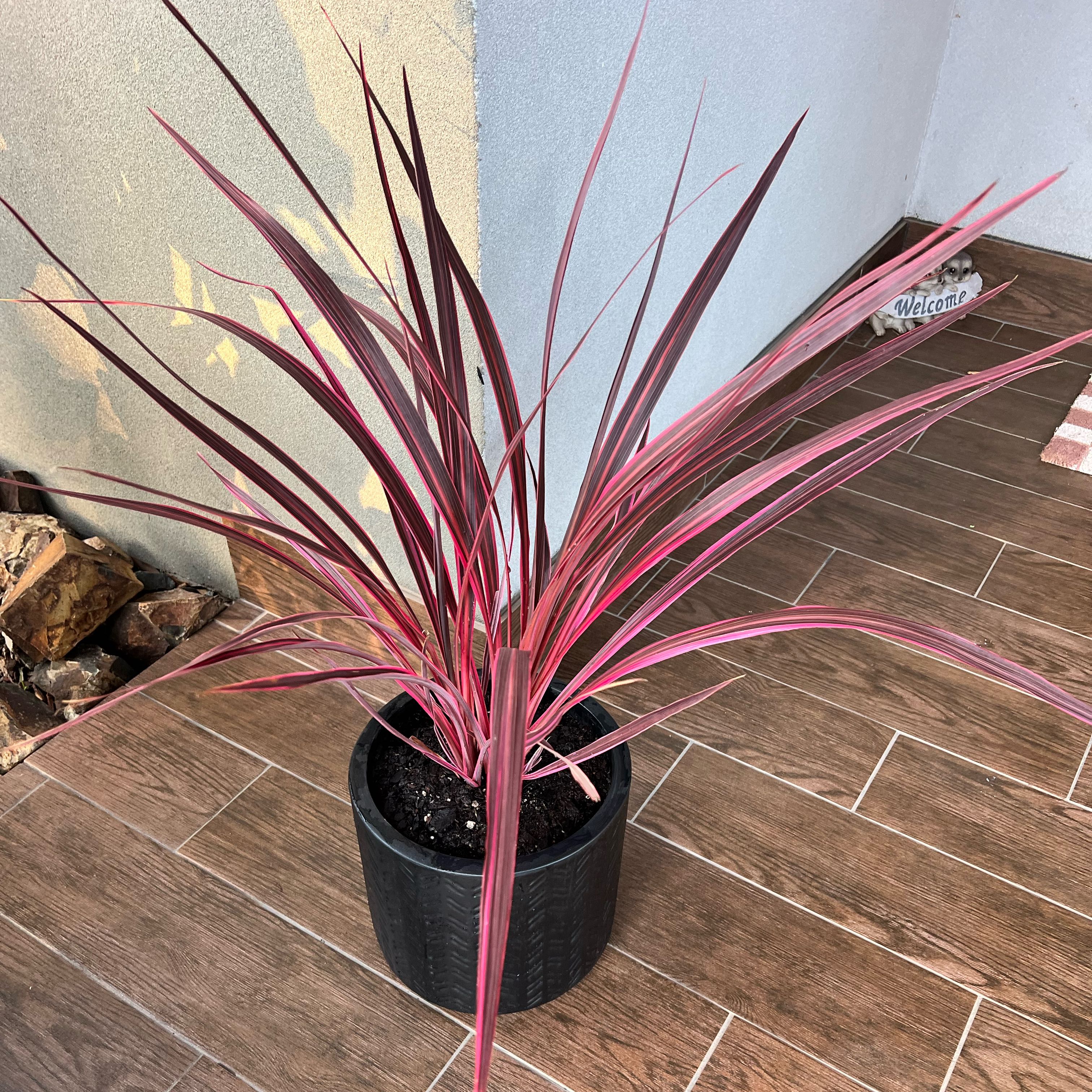
How to Grow a Cordyline 'Electric Pink'
Plant Cordyline 'Electric Pink' in full sun for the brightest pink stripe, in well-drained soil with steady moisture. The plant matures to 3 to 4 feet tall and is hardy outdoors in zones 8 to 11. In colder zones, grow in a container and bring inside before frost.

Where to plant
Cordyline 'Electric Pink' is a tropical evergreen shrub from New Zealand hardy in USDA zones 8 to 11. The plant reaches 3 to 4 feet tall and 2 to 3 feet wide at maturity, with arching sword-shaped leaves striped in deep burgundy and hot pink. In zones 7 and colder, treat as a container plant.
Sun
Full sun is essential for the brightest pink stripe. Six or more hours of direct light keeps the color saturated. Plants in part shade lose much of the pink and read mostly as dark burgundy or olive.
In zone 10 and 11, light afternoon shade through the hottest part of summer prevents leaf scorch on the most exposed leaves.
Drainage
Well-drained soil is essential. The roots rot in soggy conditions. Dig a one-foot test hole and fill it with water. If water drains within a few hours, the spot is fine. If water sits, build a raised mound 6 to 12 inches above grade or plant in a container.
Soil
Loamy soil rich in organic matter is the natural preference. Work a few inches of compost into the planting area before setting the plant. Containers do best in a quality all-purpose potting mix with extra perlite mixed in.
Space
Give the plant 2 to 3 feet of clear space in every direction at maturity. The arching leaves spread wider than the base. Crowded plantings hide the dramatic foliage that is the whole point of growing this plant.
How to plant
Plant in spring after the last frost once nighttime temperatures stay above 50F. The plant is frost-sensitive and goes outside only when warm weather is settled. Container-grown plants can be set anytime during the warm season.
-
1Choose a container or prep the bed For container growing, pick a 12 to 14 inch pot with drainage holes. For in-ground planting in zones 8 and warmer, prep a 2 by 2 foot area with a few inches of compost worked in.
-
2Loosen circling roots If the roots have wound around the inside of the nursery pot, gently tease them apart or score the outside with a knife. Circling roots stay circling unless the pattern is broken at planting.
-
3Set the plant at the same depth The top of the root ball should sit level with the surrounding soil or container rim. Burying the crown rots the base quickly.
-
4Backfill and firm For containers, use a quality potting mix with extra perlite. For in-ground beds, use the dug-out soil amended with a couple inches of compost. Firm the soil gently around the root ball to remove air pockets.
-
5Water deeply Soak until water runs out the bottom of the container or pools briefly on a garden bed. The first watering settles the soil around the roots and is the most important watering of year one.
-
6Place in a sunny warm spot A south or west-facing patio, deck, or sunny border works well. The plant sulks below 50F and only thrives in steady warmth above that.
Watering and feeding
Watering
Water deeply when the top inch of soil or potting mix feels dry. In hot summer weather, that typically lands every 3 to 5 days for in-ground plantings and every 2 to 4 days for containers. Soak fully and let excess drain.
Cut back to once a week or less in cool weather and once the plant is indoors for winter. Overwatering rots the roots faster than any other mistake with this plant.
Feeding
Feed monthly through the growing season with a balanced liquid fertilizer at half strength, or use a slow-release granular labeled for foliage container plants. The plant is a moderate feeder and responds to steady light feeding more than occasional heavy doses.
Stop feeding entirely in fall and skip winter feeding for indoor plants. Heavy feeding produces lush growth that fades to mostly green and loses the pink color.
Pruning
Cordyline 'Electric Pink' needs almost no pruning. The plant grows from a central crown and forms a tidy arching mound on its own. Light maintenance is all most plants ever need.
Removing damaged leaves
Snip off any brown, broken, or yellowed leaves at the base where they emerge from the crown. Use clean sharp scissors or pruners and cut as close to the crown as possible without nicking healthy growth. Removing tired leaves keeps the plant looking fresh year-round.
Refreshing an overgrown plant
If the plant has lost its lower leaves and looks bare at the base, cut the main stem back to 6 to 12 inches above the soil in spring as warm weather returns. New shoots emerge from the cut stem and the base within a few weeks. The plant looks rough for a season but grows back fuller than before.
Dividing offsets
Established plants sometimes produce small offshoot plants at the base. Lift these in spring with a clean cut, transplant into a small pot of well-drained mix, and treat as a new young plant. Removing offsets also keeps the parent plant looking tidy.
Blooming and color
Cordyline 'Electric Pink' is grown for the bold foliage, not for flowers. The hot pink edge against a deep burgundy center gives the plant year-round color that anchors a sunny border or patio container.
Foliage color
The pink stripe is brightest in full sun on a well-fed plant. Color fades to mostly olive-green in shade or in overly rich soil. New leaves emerge intensely pink at the crown and the color deepens to burgundy along the older leaves as they mature.
Container display
The arching form and bright color make this plant a natural for large container plantings. Pair with chartreuse or silver foliage and dark-leaved annuals for a striking contrast. The plant holds its shape well in a container for many seasons.
Overwintering for next year
In zones 7 and colder, bring the container inside before nighttime temperatures dip below 45F. Place in the brightest window available, water sparingly, and skip feeding through winter. The plant looks tired in low light, but resumes vigorous growth and color once it goes back outside in late spring.
Common problems and pests
Most Cordyline 'Electric Pink' complaints trace to cold damage, faded color from low light, or pests on indoor winter plants. The plant is otherwise easy to grow in warm sunny conditions.
Faded pink color
The pink stripe needs full sun to stay saturated. Plants in part shade or overly rich soil fade to mostly green. Move the plant to a sunnier spot, cut back on nitrogen fertilizer, and switch to a feed labeled for foliage plants. Color often returns within a month of better conditions.
Brown leaf tips
Usually low humidity for indoor plants over winter, salt buildup in container soil, or fluoride and chlorine in tap water. Set indoor plants on a humidity tray of pebbles and water. Flush container soil monthly by watering until water runs out the bottom. Use rainwater or distilled water if the tap water is heavily treated.
Yellowing leaves
Most often overwatering. Check the soil with a finger. If the top inch stays wet for days after watering, ease off and improve drainage. A few older leaves yellowing and dropping naturally each year is normal.
Black or mushy crown
Crown rot from overwatering or a buried crown. The plant rarely recovers once the central growing point rots. If caught early, cut away all rotted tissue with clean pruners and let the wound dry before sparingly watering. Prevent by planting at the correct depth and improving drainage.
Mealybugs
Small white cottony masses tucked into leaf joints and the crown. Wipe individual mealybugs off with a cotton swab dipped in rubbing alcohol. Heavier infestations respond to insecticidal soap or horticultural oil sprayed every 7 to 10 days until the population is cleared.
Spider mites
Fine pale stippling on the leaves and faint webbing on the undersides, mostly a problem indoors over winter. Mist the leaves daily and rinse the plant in the shower every few weeks. Heavy infestations respond to insecticidal soap or neem oil sprayed every 5 to 7 days.
Cold damage
Blackened drooping leaves within a day of exposure below 40F. Cut damaged leaves back to the crown and move the plant somewhere warmer. Mild cold damage recovers as new growth pushes in spring. Hard freezes below 28F can kill the plant outright.
Stretched leggy growth
Low light produces a long stretched stem with widely spaced leaves at the top. In late winter, cut the plant back hard and move to brighter light as warm weather returns. New compact growth follows in a season.
Sunburn on newly moved plants
Whitish patches on leaves after a plant is moved suddenly from shade or indoors to full sun. Move the plant gradually over a week or two, increasing direct sun exposure each day. Damaged leaves do not green back up and can be trimmed off once new growth fills in.
About This Article
