How to Grow a Butterfly Pea
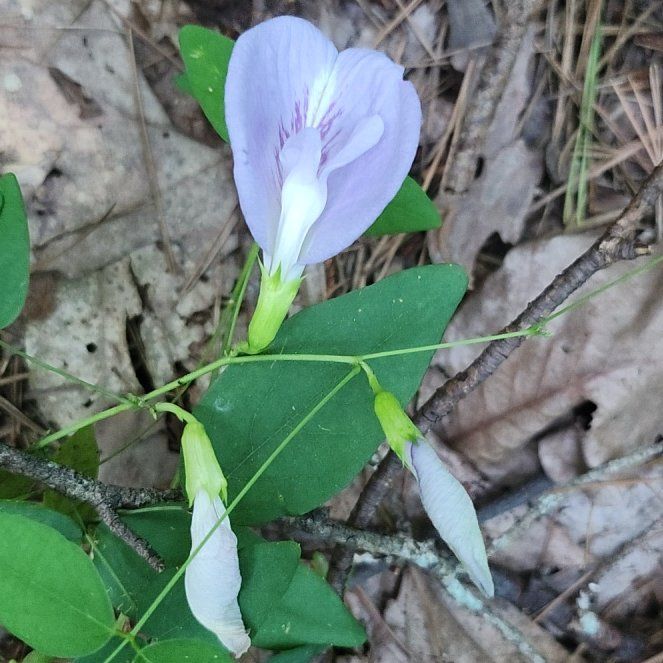
Plant Butterfly Pea in full sun, in lean well-drained soil with sharp drainage, after the last frost. The vine is a native perennial legume that fixes its own nitrogen and rarely needs feeding. Expect lavender-blue pea-shaped flowers from midsummer through early fall, and a return from the roots each spring in zones 6 and warmer.

Where to plant
Butterfly Pea is a native North American perennial vine for USDA zones 6 through 11. Stems reach two to four feet long in a season and scramble across the ground or up a light support. The vine dies back to the roots each winter and returns in late spring.
Sun
Full sun produces the heaviest bloom. Six or more hours of direct sun is the minimum. Part shade plants still bloom but more lightly, and the bloom window is shorter.
In open woodlands at the northern edge of the range, light dappled shade is what the plant gets in the wild, so part shade is workable. Avoid deep shade, which produces a leafy vine with very few flowers.
Drainage
Sharp drainage is the main requirement. Butterfly Pea grows naturally on sandy roadsides and open woodlands, soils that drain freely. Dig a one-foot test hole and fill it with water. If it drains within a few hours, the spot is fine. If water sits overnight, plant on a raised mound or pick a slope.
Soil
Lean sandy or gravelly soil is what this plant wants. Rich garden beds produce leafy vines with fewer flowers. If the bed is naturally rich, work in coarse sand or fine gravel to lighten it. The plant tolerates a wide pH range from slightly acidic to slightly alkaline.
Space and support
Allow each plant two to three feet of clear space. The vine can scramble across the ground as a loose groundcover or up a light trellis, fence, or scrubby shrub. The stems are slender and the plant does not need a heavy structure.
Butterfly Pea looks good naturalized in a meadow planting or native garden, where it weaves through grasses and other prairie species. It is not aggressive and does not run by underground stems.
How to plant
Sow Butterfly Pea seed directly into the garden after the last frost and once soil temperatures stay above 65°F. The plant has a taproot and resents transplanting, so direct seeding produces stronger plants than indoor starts.
-
1Scarify the seed Butterfly Pea seed has a hard coat that delays germination by weeks. Rub each seed lightly with sandpaper or nick the seed coat with a knife before sowing. Soak the scarified seed in water overnight to speed water uptake.
-
2Inoculate if it is new ground If native legumes have not grown in the spot before, dust the soaked seed with a rhizobium inoculant labeled for native or wild legumes. This supports the nitrogen-fixing root nodule relationship and produces a stronger plant in lean soils.
-
3Sow shallow Push the seed half an inch deep into loose soil. Space seeds where you want the plants to grow, since the taproot does not transplant well. Three to four seeds per planting station, thinned to the strongest one, gives the best odds of a healthy plant.
-
4Water in lightly Give just enough water to settle the soil around the seed. Avoid heavy soaking, which can wash the seed deeper than the right depth. Keep the seedbed evenly moist but not wet until germination, which takes one to two weeks for scarified seed.
-
5Install support at planting time If the plant will climb, set a simple trellis or hoop in place now. Working around an established taprooted vine is much harder than installing the structure on bare soil.
-
6Skip heavy mulch A thin layer of pine needles or gravelly mulch is fine, but heavy bark mulch holds too much moisture against the crown of this drought-loving native and can cause rot. Bare gritty soil works much better.
Watering and feeding
Watering
Water deeply once a week through the first six weeks while the seedlings establish a taproot. After the taproot is set, the plant is highly drought-tolerant and gets by on rainfall in most years.
Avoid frequent shallow watering, which keeps the roots near the surface and undoes the plant's drought tolerance. A deep weekly soak during extended summer dry spells is enough.
Feeding
Butterfly Pea fixes its own nitrogen through root nodules and prefers lean soils. No nitrogen feeding is needed and added nitrogen actually shuts down the nodule fixation, producing leafy vines with fewer flowers.
A single light dressing of compost worked into the planting area at sowing is plenty for the season. Skip seasonal feeding entirely for established plants.
Pruning and maintenance
Butterfly Pea is a perennial that needs very little pruning during the season. The main task is cutting back the dead top growth in late winter to make room for fresh shoots from the crown.
During the growing season
Light shaping cuts to keep the vine off paths or out of neighboring plants are fine any time. Pinching the growing tip in early summer encourages branching and a denser display of flowers later.
Deadheading spent flowers is optional. The seedpods that follow the flowers are interesting in their own right and the plant self-seeds gently from them.
End of season cutback
After the first hard frost kills the top growth, the stems turn brown and brittle. Leave the dead stems standing through winter to mark where the plant is and to protect the crown.
In late winter just before new growth would push, cut the dead stems back to two or three inches above the ground. Fresh shoots emerge from the crown in late spring once the soil warms.
Letting it self-seed
Butterfly Pea self-seeds gently in welcoming soil, especially in meadow plantings. The seedlings come up in late spring and establish on their own without transplanting. To increase the colony, scatter ripe seed in fall where you want new plants and lightly rake them in.
Blooming and color
Butterfly Pea is grown for the lavender-blue pea-shaped flowers that open from midsummer into early fall. The blooms are about an inch across and carried singly or in small groups along the vine.
Bloom timing
Flowers open in midsummer, usually July, and continue into September or until the first hard frost. Each individual flower lasts only a day or two, but a healthy plant blooms continuously over the warm months.
First-year plants from seed often bloom lightly in their first summer and reach full bloom in year two as the root system establishes.
Pollinators and wildlife
Bumblebees and other native bees work the flowers heavily through the bloom window. The plant is a host for the long-tailed skipper butterfly, whose caterpillars feed on the leaves without doing meaningful damage. The seedpods feed small birds and rodents in late summer.
As a native legume, Butterfly Pea is a strong contributor to meadow and pollinator plantings beyond the value of the flowers themselves.
Naturalizing in a meadow
The vine looks best naturalized through meadow grasses and other native perennials, where it scrambles among taller species and weaves through the planting. A formal trellis is workable but the plant earns its place most in informal native plantings.
Common problems and pests
Butterfly Pea is a tough native plant with few real problems. Most issues trace back to wet feet, deep shade, or rare pest pressure during the bloom window.
Failure to germinate
The hard seed coat is the most common reason seed does not come up. Scarify each seed with sandpaper or a knife nick before soaking and sowing. Fresh seed germinates more reliably than stored seed older than two years.
Yellowing leaves and weak growth
Usually nitrogen deficiency caused by failed nodulation, often in new ground without inoculant. Treat the current plant with a small dose of compost worked into the root zone. Inoculate fresh seed next time.
Wilting in wet weather
Root rot in soggy soil. There is no cure once root rot has set in. Improve drainage by amending with sand or moving the plant to a drier spot. Butterfly Pea does not tolerate heavy wet ground.
Few flowers and lots of leaves
Too much shade or too much fertility. Move the plant to a sunnier spot if the original location does not get six hours of direct sun. Skip the fertilizer entirely for established plants.
Holes chewed in leaves
Long-tailed skipper caterpillars are the most common culprit and the damage is mostly cosmetic. The plant is a host for this native butterfly, so leave the caterpillars alone unless the plant is being defoliated. A Bt (Bacillus thuringiensis) spray on heavily affected plants is an option but works against the native pollinator value of the plant.
Aphids on new growth
Small green or black insects cluster on tender new shoots in spring. Knock them off with a strong spray of water. Insecticidal soap handles heavier infestations. Established plants usually outgrow light aphid pressure without intervention.
Plant does not return in spring
Common at the cold edge of the zone or in very wet winters. Wait until early summer before giving up, since the plant is slow to emerge each year. If the crown has rotted over winter, improve drainage and replant fresh seed in the same area.
Powdery white film on leaves
Powdery mildew shows up in humid weather with poor airflow. Improve airflow by thinning crowded plantings and avoiding overhead watering. A potassium bicarbonate or horticultural oil spray at first sign clears mild outbreaks.
About This Article
