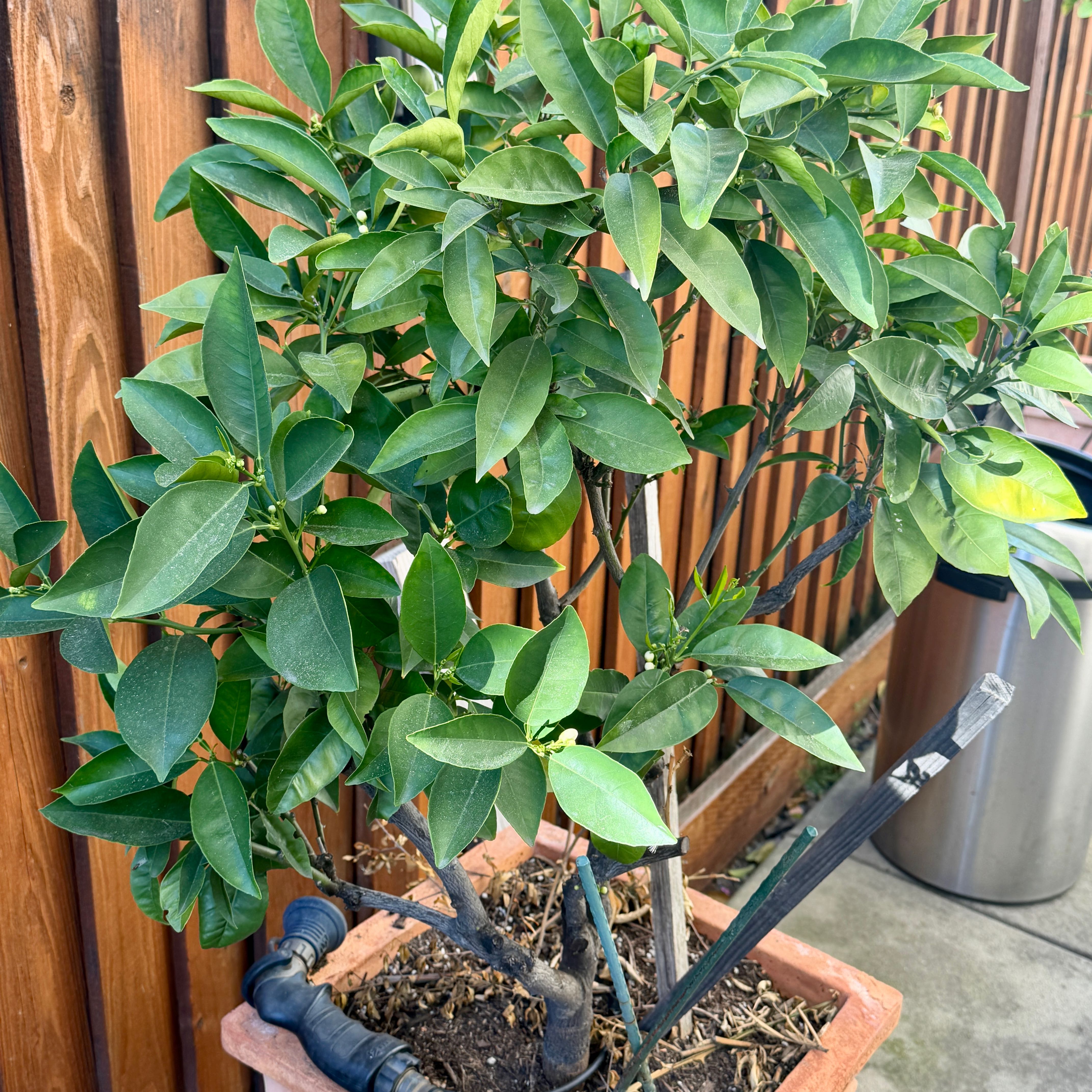
How to Grow a Washington Navel Orange
Plant Washington Navel Orange in full sun with sharp drainage, water deeply when the top 2 inches of soil dry, and feed monthly through the growing season. The tree is self-fruitful, so a single tree sets a full crop, and the seedless fruit ripens from late fall through early spring.

Where to plant
Washington Navel Orange grows outdoors year-round in USDA zones 9 through 11. In cooler zones, grow the tree in a large container that can move to a bright unheated garage or sunroom when frost threatens. A standard tree reaches 12 to 15 feet at maturity, while a dwarf rootstock stays around 6 to 8 feet.
Sun
Eight or more hours of direct sun daily produces the heaviest crop and the sweetest fruit. Six hours is the practical minimum and yields a lighter harvest with thinner-skinned fruit.
Indoors over winter, place the tree at the brightest south-facing window in the house, ideally with a grow light overhead to keep daily light totals up through short days.
Drainage
Sharp drainage is non-negotiable. The roots rot within days in soggy soil. Dig a one-foot test hole and fill it with water. If water sits past a few hours, build a raised mound 12 inches above grade or switch to a large container with a fast-draining citrus mix.
Soil
Sandy loam that drains fast and stays slightly acidic is ideal. Heavy clay holds too much water and starves the roots of oxygen. Amend clay yards with several inches of coarse compost worked into a wide planting area, or plant on a raised mound.
Space and frost protection
Give a standard tree 12 to 15 feet of clear space and a dwarf tree 6 to 8 feet. A south-facing wall or a spot next to a paved patio adds reflected warmth that protects from light frost.
Below 28 F, drape the canopy with frost cloth and run a string of incandescent holiday lights through the inner branches for gentle warmth. Hard freezes below 25 F damage the wood and can kill an unprotected tree.
How to plant
Plant in early spring once nights stay above 50 F. Container-grown trees can also go in during fall in zone 10 and 11. Water the nursery pot the day before planting so the root ball goes in damp, not bone dry.
-
1Dig a wide shallow hole Make the hole twice as wide as the root ball but only as deep. Citrus roots spread sideways close to the surface, so width matters far more than depth for establishment.
-
2Set the graft union 4 to 6 inches above grade Find the angled scar at the base of the trunk where the variety meets the rootstock. That graft must stay well above the soil line, since soil contact rots the graft and the rootstock takes over with sour fruit.
-
3Backfill with native soil Use the soil you dug out, broken up into fine pieces, without amending the hole heavily. Roots that get pampered in a rich hole never push out into the surrounding yard, which leaves the tree weak and dependent on supplemental water.
-
4Build a watering basin Form a low ring of soil about 3 feet across at the dripline. The basin holds a deep soak in place so water sinks straight down into the root zone instead of running off.
-
5Soak the root zone deeply Fill the basin twice and let it drain completely. This first watering settles the soil around the roots and removes air pockets that can desiccate fine root hairs.
-
6Mulch lightly and keep mulch off the trunk A two-inch layer of bark mulch over the basin holds moisture and moderates soil temperature. Pull mulch back at least 6 inches from the trunk so the bark stays dry and rodents do not nest against the wood.
Watering and feeding
Watering
Water deeply when the top 2 inches of soil dry out, soaking the basin until the wetting front reaches a foot down. In the ground, this usually works out to once a week through summer heat and every two to three weeks in cool months. Containers dry faster and may need water two or three times a week in hot weather.
Consistent moisture during fruit set and sizing prevents the fruit from splitting along the rind. Long dry spells followed by a heavy soak cause sudden swelling that cracks the skin. Mulch and a regular schedule are the fix.
Feeding
Feed monthly from late winter through early fall using a fertilizer labeled for citrus. These blends supply the extra nitrogen citrus needs along with iron, zinc, and manganese that prevent the yellow-veined leaves common in container-grown trees.
Stop feeding by early fall so new flushes harden off before cool weather. Skipping the late-summer cutoff produces tender growth that frosts back at the first cold night.
Pruning
Washington Navel Orange needs only light pruning. The tree shapes itself into a rounded canopy and bears fruit on outer growth, so heavy cutting reduces the next harvest. The job is mostly about airflow, suckers, and the occasional crossing branch.
When to prune
Prune in late winter or early spring after the worst frost danger has passed but before the new growth flush begins. Avoid summer cuts that expose inner bark to direct sun and cause sunburn on the wood.
What to cut
Remove any dead, damaged, or crossing branches at the point of origin. Thin the canopy lightly to let sunlight reach the inner branches, which improves fruit set on the inside of the tree.
Cut suckers growing from below the graft union as soon as they appear. These shoots come from the sour rootstock and will overtake the variety if left in place. Rub them off with a thumbnail while they are small.
Thinning fruit
A young tree under three years old often sets more fruit than the branches can support. Thin clusters down to one fruit every 4 to 6 inches in early summer to prevent branch breakage and to size up the remaining fruit. Mature trees regulate themselves and rarely need hand-thinning.
Harvest
Washington Navel Orange ripens from late fall through early spring depending on climate. The fruit is seedless, easy to peel, and holds on the tree for several weeks after ripening, so the harvest stretches across the cool season rather than arriving all at once.
When it's ready
Fruit color is not a reliable ripeness signal for navels. Many fruits color up weeks before the flesh sweetens. The honest test is taste. Pick one fruit from the south-facing side of the tree and try it. If the flesh is sweet and juicy, the rest are ready. If still tart, wait two weeks and try again.
Once ripe, the fruit stores on the tree for a month or more without losing quality. This is the closest thing in the garden to a refrigerator on the tree.
Picking and storing
Cut the stem flush with the fruit using hand pruners. Pulling the fruit off tears the rind and shortens storage life. Wear long sleeves while picking, since the leaves and stems can be lightly thorny.
Stored at cool room temperature, picked navels keep for one to two weeks. The refrigerator extends that to three or four weeks. Wash only right before eating to keep the rind intact and slow mold.
Fruit drop in early summer
Most trees drop a portion of their small green fruit in May or June. This is normal self-thinning and not a sign of stress. The tree keeps what it can ripen and lets the rest go.
Common problems and pests
Most Washington Navel Orange troubles trace back to drainage, frost, or the citrus-specific nutrient blend the tree needs. Pest pressure is usually mild outside the deep south.
Yellow leaves with green veins
Iron or zinc deficiency, which is common on alkaline soils and in containers. Apply a chelated micronutrient spray to the foliage for fast correction and switch to a fertilizer labeled for citrus that includes these minor elements. Re-test soil drainage, since waterlogged roots also produce this look.
Fruit splitting along the rind
Uneven watering during fruit sizing causes a sudden swelling that cracks the skin. Mulch the basin to even out soil moisture and water on a regular schedule rather than waiting until the tree wilts. Split fruit cannot be salvaged but the rest of the crop is fine.
Leaf drop after a cold night
Cool damage causes leaves to drop within a few days of an exposure below 30 F. The tree usually recovers as new growth pushes in spring. Do not prune the bare branches until you see where buds break, since damaged-looking wood often surprises you with new growth.
Aphids curling new shoots
Small green or black insects clustered on new flushes cause the tender leaves to cup and curl. Knock them off with a strong water spray. Heavy infestations respond to insecticidal soap. Healthy ladybug populations usually keep aphid numbers in check on outdoor trees.
Sticky leaves and black sooty mold
Scale insects or whitefly are excreting sugary honeydew, which a black fungus grows on. Wipe individual scales off with a cotton swab dipped in rubbing alcohol. Spray horticultural oil in late winter to smother overwintering scale eggs. The sooty mold washes off with soapy water once the insects are controlled.
Tiny green caterpillars chewing new leaves
Orangedog or citrus leafminer larvae feed on tender new growth. Orangedogs are large and easy to hand-pick. Leafminer trails inside the leaf are cosmetic on a mature tree and the tree shrugs them off. A young tree with heavy leafminer damage benefits from a spinosad spray on the spring flush.
Branch dieback after a wet winter
Root rot from saturated soil. The fungal damage shows up at the top first because the roots can no longer feed the canopy. Check drainage and pull mulch back from the trunk. Cut dieback back to live wood and avoid overwatering until the tree rebuilds.
Sunburn on exposed bark
After heavy pruning or a sudden defoliation, the inner bark scalds in direct sun and cracks open. Paint exposed trunks and major limbs with white latex paint diluted 1 to 1 with water to reflect heat. Going forward, prune lightly and leave a leafy canopy to shade the wood.
Sucker growth from the rootstock
Vigorous shoots from below the graft union have larger, thornier leaves than the variety and will produce sour fruit if allowed to grow. Rub them off as soon as they appear or cut them flush with the trunk if they have hardened off. Letting one go for a year can take over the tree.
Wind-rocked trunk on a young tree
A newly planted tree in a windy spot rocks at the base, opening a gap that fills with water and rots the crown. Stake the tree loosely with a soft tie for the first year, then remove the stake so the trunk thickens. Mulch firmly around the base.
About This Article
