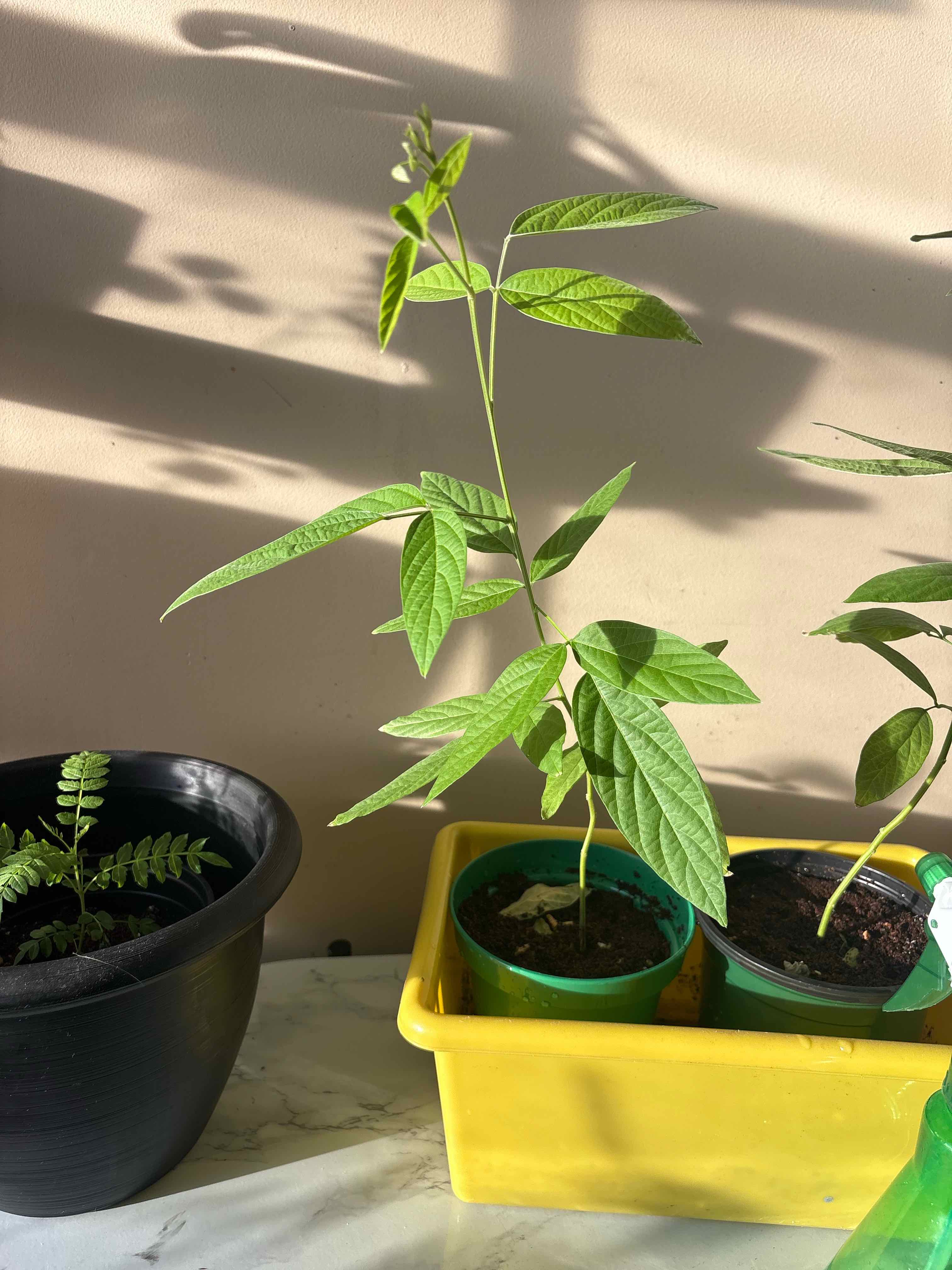
How to Grow a Pigeon Pea
Sow Pigeon Pea seed directly in full sun in well-drained soil after the last frost. The plant doubles as a food crop and a nitrogen-fixing cover crop, so space the rows by use. Expect pods 3 to 5 months from sowing in tropical climates, longer in cool zones where it grows as an annual.

Where to plant
Pigeon Pea is a tropical and subtropical legume shrub that grows as a perennial in USDA zones 9 through 12 and as an annual elsewhere. Plants reach four to ten feet tall in a single season and need a long warm growing window of at least four to five months to set and ripen a meaningful crop.
Sun
Full sun is essential. Eight or more hours of direct sun produces the best pod set and the largest plants. Six hours is the bare minimum, and anything less than that gives a tall leafy plant with very few pods.
Choose a spot with no afternoon shade from trees or buildings. Pigeon Pea is a true sun lover.
Drainage
Pigeon Pea needs well-drained soil and tolerates surprisingly dry ground once established. Wet feet, especially in cool weather, cause root rot quickly. Dig a one-foot test hole and fill it with water. If it drains within a few hours, the spot is fine. If water sits overnight, raise the bed or pick a slope.
Soil
Pigeon Pea is famously tolerant of poor soils, including light sandy ground that other crops refuse. It actually improves the soil through nitrogen fixation, so heavy soil amendments before planting are not needed. A handful of compost worked into the planting area gives young seedlings a boost.
Avoid heavy clay that stays wet, since drainage is more important than fertility for this plant.
Space and rotation
Space plants 18 inches to three feet apart in a row when growing as a food crop, depending on whether the plants will be staked or allowed to bush. Wider spacing produces larger plants with heavier yield per plant.
As a cover crop, sow more densely at six to eight inches apart in rows two feet apart, and chop the plants at flowering for green manure. Pigeon Pea is a useful rotation crop with cereals like corn or sorghum, since it adds nitrogen back into the soil.
How to plant
Sow Pigeon Pea seed directly into the garden after the last frost and once soil temperatures stay above 70°F. The plant transplants poorly, so direct seeding produces healthier plants than starting indoors.
-
1Wait for warm soil Soil temperature at planting depth should be 70°F or warmer. Pigeon Pea sown in cool soil germinates poorly and the seedlings often rot before emerging. In short-season climates this means waiting until at least two weeks after the last frost.
-
2Soak the seed overnight Soak the seed in room-temperature water for 12 to 24 hours before sowing. This softens the seed coat and speeds germination from two weeks down to about a week.
-
3Inoculate the seed if it is new ground If Pigeon Pea or related tropical legumes have not grown in the spot before, dust the soaked seed with a rhizobium inoculant labeled for tropical legumes. This is cheap insurance for the nitrogen-fixing relationship that makes this plant so valuable in poor soils.
-
4Sow at the right depth Push seeds an inch to an inch and a half deep into loose soil. In sandy soil, sow on the deeper side, in heavier soil sow shallower. Space seeds at the final plant spacing rather than thinning later, since Pigeon Pea seedlings do not like being disturbed.
-
5Water in lightly Give just enough water to settle the soil around the seed. Avoid heavy soaking, which can wash the seed deeper than the right depth or cause rot in cool soil. Keep the seedbed evenly moist but not wet until germination.
-
6Mulch once seedlings are established After the seedlings are six inches tall, mulch around them with two inches of straw or grass clippings. Mulch holds soil moisture during the dry summer months and keeps weeds down through the long growing season.
Watering and feeding
Watering
Water deeply once a week through the first six weeks while the seedlings establish. Soak the root zone to a depth of six inches rather than splashing the surface. Drip irrigation works better than overhead spray, which encourages leaf disease in humid weather.
After establishment, Pigeon Pea is highly drought-tolerant and gets by on rainfall in most climates. A deep weekly soak through extended dry spells during flowering and pod fill produces a heavier crop, but the plant rarely needs supplemental watering otherwise.
Feeding
Pigeon Pea fixes its own nitrogen through the rhizobium relationship in the root nodules, so it needs very little fertilizer. A handful of bone meal or rock phosphate worked into the planting area at sowing supports root and pod development.
Avoid nitrogen fertilizer entirely. Added nitrogen actually shuts down the nodule fixation and produces leafy plants with poor pod set. Compost worked in at planting is plenty.
Pruning and maintenance
Pigeon Pea grown as an annual food crop needs almost no pruning. The few maintenance tasks are pinching the tip in early growth to encourage branching, and chopping the plants down at the end of the season for soil benefit.
Pinch the tip early for branching
Once the seedlings reach 18 to 24 inches tall, pinch off the top two inches of the main stem to force lateral branching. A branched plant carries more pods than a single tall stem and tolerates wind better.
Skip this step if growing as a cover crop where the plant will be chopped at flowering and worked into the soil anyway.
Stake or trellis tall plants
Pigeon Pea plants can reach six feet or taller with a heavy pod load and topple in summer storms. A simple stake driven into the ground next to each plant and a loose tie around the main stem is usually enough support. A row of plants can be supported with a fence-style horizontal wire along the row at three feet high.
End of season
Once the pods have been harvested or the first hard frost has killed the tops, chop the plants down to ground level. Leave the roots in the ground to release nitrogen to the next crop and chop the tops into the soil or compost them.
In zones 9 and warmer where the plant survives winter, cut the plant back hard in late winter to encourage fresh productive growth the following year. Older plants become woody and produce smaller pods after three or four years.
Harvest
Pigeon Pea produces protein-rich peas inside flat, hairy green pods. The pods follow yellow pea-shaped flowers and ripen three to five months after sowing in warm climates, longer in cooler zones.
When it's ready
For fresh green peas, pick pods when they are plump and bright green, before any yellowing or drying. The peas inside should be full-sized but still tender. Squeeze the pod and the peas should yield slightly under finger pressure.
For dry peas to store, leave the pods on the plant until they turn brown and dry on the bush. The pods rattle when shaken. Pick before the pods split open and shed the peas.
Picking and storing
Hold the stem with one hand and snap or twist the pod off with the other. Avoid yanking pods off, which can break flower clusters that would have produced more pods.
Fresh green peas keep in the refrigerator for three to five days or freeze well after a quick blanch. Dry peas, once fully dry on the plant or in a warm dry indoor space, store for a year or more in a sealed jar.
Beating the frost
In zones colder than 9, the first hard frost ends the harvest. Pick all remaining mature pods just before the predicted frost and let any green pods finish drying indoors in a paper bag. Plants pulled before frost can be hung upside down in a shed to finish drying.
Common problems and pests
Most Pigeon Pea problems trace back to either pod-feeding insects late in the season or root rot in poorly drained ground. The plant is otherwise tough and rewards neglect.
Pods with holes and damaged peas inside
Pod borers are caterpillars that tunnel into developing pods and eat the peas. Hand-pick affected pods and crush the larvae. A Bt (Bacillus thuringiensis) spray applied early in flowering when small caterpillars first appear handles outbreaks without harming pollinators. Heavier infestations may need a spinosad spray repeated every two weeks during pod set.
Sticky honeydew and ants on the plant
Aphids cluster on new shoots and excrete sticky residue that draws ants. Knock them off with a strong spray of water. Heavy infestations respond to insecticidal soap. Ladybugs eat aphids faster than any spray, so avoid broad-spectrum insecticides.
Yellowing leaves and stunted growth
Most often nitrogen deficiency in newly broken ground where nitrogen-fixing bacteria are not yet established. Inoculate the seed with rhizobium next year. In the meantime, a single side-dressing of compost helps the current crop catch up.
Wilting plants in wet weather
Phytophthora root rot kills plants in soggy soil within days. There is no cure for advanced root rot. Improve drainage by raising the bed or moving to a drier spot, and avoid planting where water collects after rain.
Brown spots on leaves
Cercospora leaf spot in humid weather. Improve airflow by thinning crowded plantings and removing affected lower leaves. Rotate to a non-legume crop in this spot for the next three years. A copper fungicide applied at first sign slows the spread.
Failure to flower
Pigeon Pea is photoperiod-sensitive, meaning the plant only flowers as days shorten in late summer and fall. Short-season cultivars flower earlier and are the right choice for cool climates. Long-season cultivars planted in cool short-season climates simply run out of time before frost and never set a meaningful crop.
Wilting whole plants in dry weather
Fusarium wilt kills plants from the bottom up in hot dry weather. Pull and discard affected plants, do not compost. Do not replant Pigeon Pea or related tropical legumes in the same spot for at least three years. Choose disease-resistant varieties for future plantings if the disease takes hold.
Whiteflies under leaves
Whiteflies cluster on the undersides of leaves and fly up in a cloud when disturbed. They suck sap and transmit viral diseases. Hose them off with a strong spray of water and follow up with insecticidal soap. Yellow sticky traps placed at plant height catch the adults.
Spider mites in hot dry weather
Tiny mites cause yellow stippling and webbing on leaves in hot dry weather. Hose down the foliage with a strong spray of water on the undersides of leaves twice a week. Improve soil moisture with mulch. Insecticidal soap or neem oil handles heavier infestations.
About This Article
