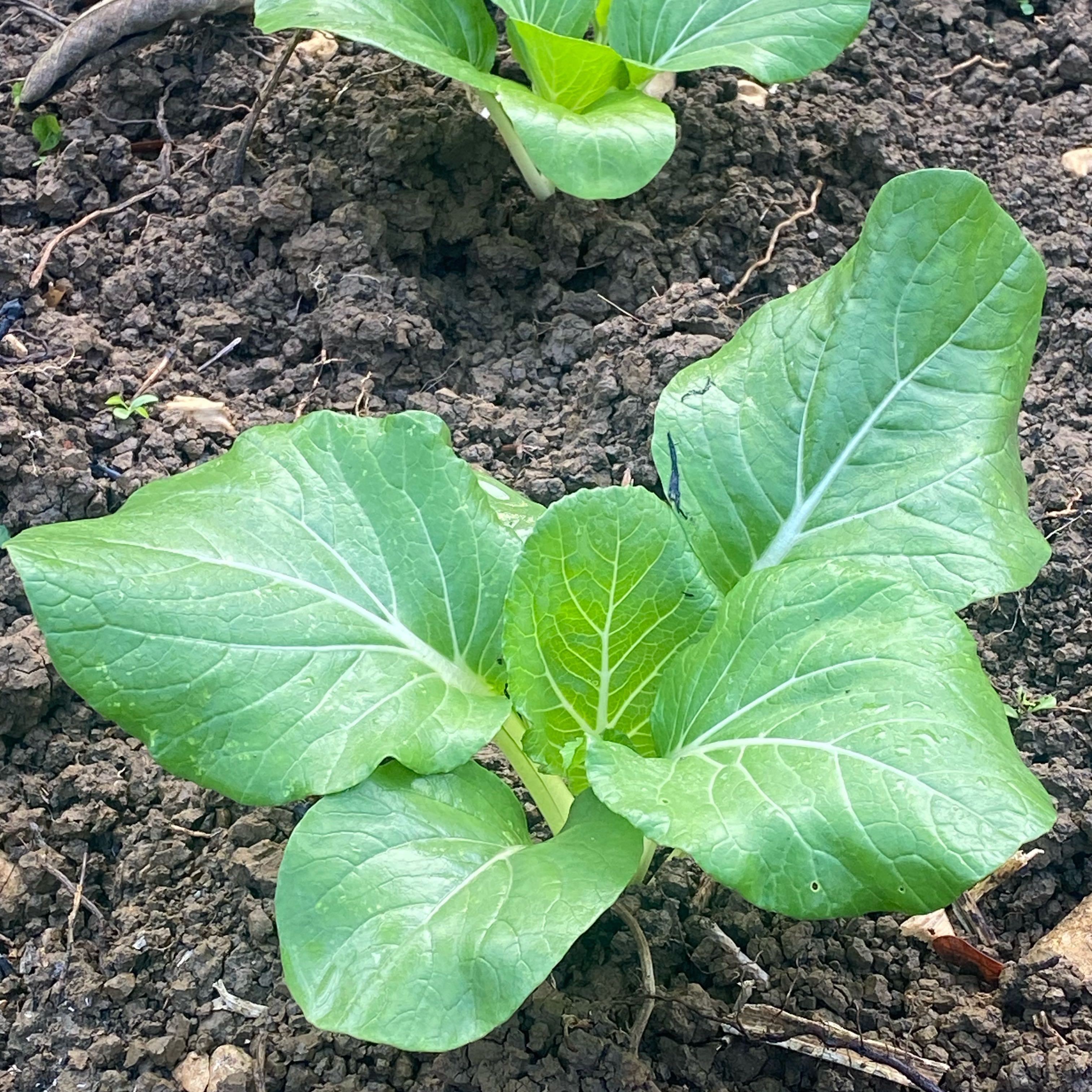
How to Grow a Pak Choi
Sow Pak Choi seed in early spring or late summer, in full sun to part shade, in rich moist soil. Space plants 6 to 12 inches apart and water deeply twice a week. Harvest whole heads in 30 to 50 days. The crop bolts to seed in heat, so cool weather is essential for best quality.

Container vs garden bed
Pak Choi grows well in both garden beds and containers. The decision usually comes down to bed availability, length of cool weather, and how many heads are wanted at once.
Garden bed
The garden bed is the right pick for larger quantities, succession planting through a long cool spring or fall, and growing baby leaves for repeated cuts. A 4 by 4 foot bed produces a steady supply for several weeks. Bed soil holds moisture more evenly than a pot, which suits this thirsty crop.
Pot
A 10 to 12 inch pot holds 1 to 2 full-size heads or 4 to 6 baby plants. Containers are useful for balconies, decks, and small-space growing. Pots dry out faster than beds, so plan to water more frequently in summer. Pick a wide shallow pot rather than a tall narrow one, since the roots run wide rather than deep.
Where to plant
Pak Choi is a cool-season leafy crop grown across all USDA zones as an annual. The crop thrives at 55 to 70F and bolts to seed quickly above 80F. Plan two growing windows each year, early spring and early fall. In zones 9 and warmer, also grow through winter.
Sun
Full sun in spring and fall, with six or more hours of direct light producing the heaviest tightest heads. In late spring or early summer when heat is rising, light afternoon shade extends the harvest window before the plants bolt.
Drainage
Well-drained soil prevents root rot and damping-off in cool wet weather. Pak Choi tolerates moist soil but suffers in standing water. Avoid spots where water sits after rain.
Soil
Rich loamy soil with plenty of organic matter is the natural preference. Work 2 to 3 inches of compost into the planting bed before sowing. Containers do best in a quality all-purpose potting mix with a handful of compost stirred in.
Crop rotation
Do not plant Pak Choi back into a spot that grew any cabbage-family crop in the last 2 to 3 years. Other cabbage-family crops include kale, broccoli, cabbage, kohlrabi, mustard, and turnips. Crop rotation breaks the disease cycle for soil-borne issues like clubroot and reduces pest pressure from cabbage worms.
How to plant
Direct sow seed in the garden bed 4 to 6 weeks before the last spring frost, or about 8 weeks before the first fall frost for the fall crop. Containers can be started anytime cool weather is settled. Pak Choi transplants poorly once past the seedling stage, so direct sowing or careful transplanting at the 2 to 3 leaf stage works best.
-
1Prepare the bed or container Work compost into the top 6 inches of soil. Rake to a fine seedbed and pull weeds. For containers, fill with potting mix to within an inch of the rim.
-
2Sow seed shallow Plant seeds about a quarter inch deep, 1 inch apart, in rows 12 to 18 inches apart. The shallow planting gives quick emergence in 5 to 10 days in cool soil. Cover lightly with fine soil and tamp gently.
-
3Water gently Soak the bed with a fine spray to settle the seed without washing it out. Keep the soil evenly moist until the seedlings emerge.
-
4Thin to final spacing Once seedlings reach the 2 to 3 true leaf stage, thin to 6 inches apart for baby heads or 10 to 12 inches apart for full-size heads. The thinnings are edible and excellent in salads or stir-fries.
-
5Mulch lightly Spread a thin layer of straw or shredded leaves over the bed to hold moisture and keep weeds down. Do not pile mulch against the stems, which invites slug damage and stem rot.
Watering and feeding
Watering
Water deeply twice a week, soaking the root zone rather than splashing the leaves. Pak Choi has shallow roots and wilts quickly in dry soil. Drip irrigation or a soaker hose at the base works best for beds.
Container plants need water more often since pots dry out faster. Check the top inch of mix and water when it feels dry. Uneven watering causes split midribs and bitter flavor.
Feeding
Pak Choi is a moderate feeder. A side-dress of balanced fertilizer or a feeding of fish emulsion 2 to 3 weeks after thinning supports the heaviest leaf growth. Side-dress again at the 4 to 5 leaf stage for full-size heads.
Use a fertilizer with moderate nitrogen rather than a high-bloom formula. Leafy crops benefit from steady nitrogen, but avoid heavy doses that produce overly lush plants prone to disease.
Pruning and maintenance
Pak Choi is harvested before any traditional pruning matters. Ongoing care focuses on keeping the plants tidy, removing any pest-damaged leaves, and watching for bolting.
Removing damaged leaves
Snap off any holed, yellowed, or pest-damaged outer leaves at the base of the plant. Discard rather than compost if cabbage worms or aphids are present. Removing damaged leaves keeps the plant looking clean and reduces hiding spots for pests.
Bolt watch
Once the weather warms above 75F or the days grow longer in late spring, the plants quickly send up a flower stalk. Once a plant has bolted, the leaves turn bitter and the head opens up. Harvest at the first sign of a flower stalk forming. Mulching to keep soil cool and providing afternoon shade slows but does not prevent bolting.
Cut-and-come-again harvest
For baby greens, cut the outer leaves about an inch above the soil and leave the crown intact. The plant regrows a second cut within 2 to 3 weeks. Two cuts is usually the limit before quality drops.
Harvest
Pak Choi is one of the fastest crops in the garden. Baby greens are ready in 30 days, full heads in 45 to 50 days. The flavor is mild, sweet, and slightly peppery, with crunchy thick stems and tender leaves.
When it's ready
Baby leaves are ready when they reach 4 to 6 inches tall. Full heads are ready when the outer leaves stand 8 to 12 inches tall and the plant has formed a tight upright shape. Harvest before any sign of bolting, since flowering plants turn bitter fast.
Pick in the morning when the leaves are at their most crisp.
Picking and storing
Cut the whole head at the base with a sharp knife, leaving the roots in the soil. For baby greens, snip outer leaves with scissors. Wash leaves in cold water just before use to clean off any soil or pests.
Fresh Pak Choi stores in the refrigerator for 5 to 7 days. Wrap loosely in damp paper towels inside a perforated plastic bag for the longest storage. The leaves wilt quickly at room temperature, so refrigerate promptly after picking.
Succession planting
Sow a fresh row every 2 weeks through the cool growing window to keep a steady supply coming. Spring sowings can run from 4 weeks before the last frost up to 2 weeks after. Fall sowings can run from 8 weeks before the first frost up to 4 weeks before.
Common problems and pests
Most Pak Choi complaints come from cabbage-family pests, bolting in hot weather, or split stems from uneven watering. The crop is otherwise quick and forgiving.
Flea beetle holes
Tiny shotgun holes in the leaves from small black jumping beetles. Light damage is cosmetic, but heavy infestations stunt seedlings. Cover young plants with floating row cover from sowing until they fill out. Yellow sticky cards trap adults and dust-bath with diatomaceous earth or kaolin clay deters feeding.
Cabbage worms
Green caterpillars chewing irregular holes in the leaves, often with green frass scattered around. Hand-pick small populations. Heavier infestations respond to Bacillus thuringiensis spray, which kills caterpillars without harming bees. Cover plants with floating row cover from planting through harvest to exclude the white cabbage butterfly that lays the eggs.
Aphids on new growth
Clusters of small green or gray insects on the undersides of new leaves and the crown. Knock them off with a strong water spray every few days. Heavier infestations respond to insecticidal soap. Beneficial insects like ladybugs and lacewings clear most aphid pressure on their own.
Slug damage
Ragged holes in the leaves overnight with silvery slime trails. Hand-pick slugs after dark with a flashlight, or set out shallow saucers of beer at soil level as a trap. Iron phosphate slug bait is a pet-safe option for heavier infestations.
Bolting early
Plants send up a flower stalk and turn bitter. Caused by heat above 75F, long day length, or stress from transplanting and uneven watering. Sow at the right time for the zone, mulch to keep soil cool, and water steadily. Once bolted, harvest immediately for stir-fry use.
Split midribs
Thick stems crack along the length, usually after a heavy watering or rain after a dry stretch. Water evenly through the growing window rather than alternating drought and soaking. Mulch helps even out soil moisture.
Yellowing lower leaves
Most often nitrogen deficiency on lean soils or aging outer leaves on near-mature plants. Side-dress with fish emulsion or a balanced fertilizer if the yellowing affects the whole plant before harvest. Yellow outer leaves on mature plants are normal and can be trimmed off.
Damping-off in seedlings
Young seedlings collapse at the soil line and die. Caused by overly wet soil and poor airflow. Sow on the surface rather than deeply, water lightly, and avoid sowing in cold wet weather. Damping-off-affected seedlings cannot be saved, but the rest of the row usually recovers as the soil dries.
Clubroot
Plants wilt despite damp soil and the roots show grotesque swollen lumps when pulled. A soil-borne disease that persists for years. Rotate out of all cabbage-family crops for at least 3 years where infected. Lime the soil to raise pH toward neutral, which slows the disease.
About This Article
