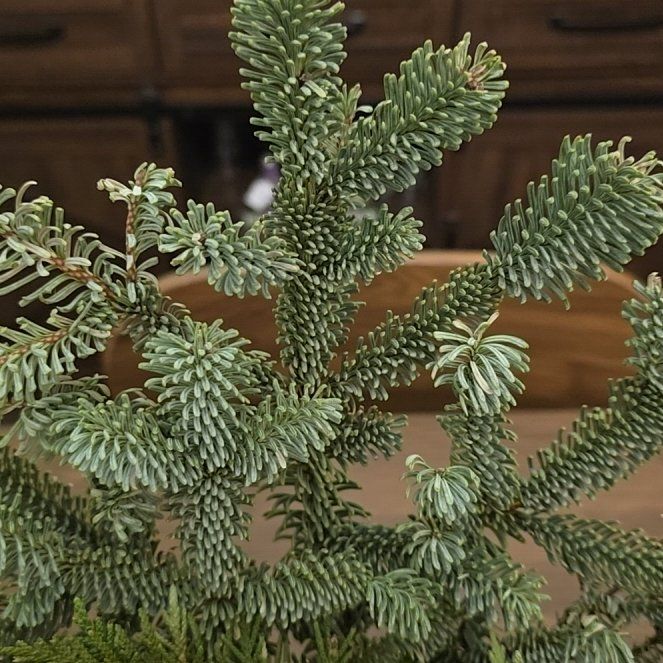
How to Grow a Noble Fir
Plant Noble Fir in full sun, in deep well-drained slightly acidic soil with steady summer moisture. The tree thrives in cool maritime climates in USDA zones 5 to 7. Mature trees reach 50 to 100 feet tall, so give the tree at least 20 to 30 feet of clear space. Almost no pruning required once established.

Where to plant
Noble Fir is a tall evergreen native to the Cascade Mountains of Oregon and Washington. The tree is hardy in USDA zones 5 to 7 and grows best in cool moist maritime climates with mild summers. In hot dry inland zones, the tree struggles regardless of irrigation.
Sun
Full sun produces the strongest growth and tightest pyramid shape. Six or more hours of direct light each day is the target. The tree tolerates light shade as a young plant but needs full sun once established to maintain dense lower branches.
Drainage
Well-drained soil is essential. The roots rot in soggy conditions and tolerate dry summer soil better than wet feet. Dig a one-foot test hole and fill it with water. If water sits longer than a few hours, the spot is too wet. Look for a slope or build a raised mound 8 to 12 inches above grade.
Soil
Slightly acidic loamy soil rich in organic matter is the natural preference. Alkaline soils cause yellow needles and stunted growth. Amend the planting area with compost and refresh with pine bark or pine needle mulch each year to keep the soil acidic and cool.
Space
Mature Noble Fir reaches 50 to 100 feet tall in good conditions, sometimes more in the native range. Give the tree at least 20 to 30 feet of clear space in every direction at planting time. Crowded trees lose lower branches quickly and develop weak shape.
Plant well away from buildings, power lines, and septic systems given the eventual size.
How to plant
Plant in early fall or early spring while the weather stays cool and the soil is workable. Container-grown trees can go in any time the soil is workable, but cool-weather planting helps the roots establish before summer heat. Avoid planting in midsummer.
-
1Dig a wide shallow hole Twice as wide as the root ball but only as deep. The wide hole lets the shallow lateral roots spread quickly through the first season. A deep narrow hole leaves the roots in a column and slows establishment.
-
2Loosen circling roots If the roots have wound around the inside of the nursery container, gently tease them apart or score the outside with a knife. Circling roots stay circling unless the pattern is broken, even decades later.
-
3Set the tree at the same depth The top of the root ball should sit level with or slightly above the surrounding soil. Burying the trunk deeper than it grew at the nursery rots the bark and kills the tree slowly.
-
4Backfill with native soil and compost Mix a few inches of compost into the dug-out soil and use that mix to fill the hole. Avoid rich pure compost or potting mix in the planting hole since roots stay lazy in overly rich soil and never spread into the wider yard.
-
5Water deeply Soak the root zone until the top six inches feel uniformly damp. This is the most important watering of year one. Continue weekly deep watering through the first growing season.
-
6Mulch two to three inches deep Use shredded bark or pine needles, kept 4 inches back from the trunk. The shallow root system benefits from cool moist soil around the trunk.
Watering and feeding
Watering
Water deeply once a week through the first two growing seasons, soaking the root zone rather than the foliage. Soaker hose or drip irrigation at the base works best. A young Noble Fir suffers in drought more than most landscape conifers.
After year two, water during extended dry spells of more than three weeks. Even an established tree benefits from a deep summer soak in hot dry climates. Drought-stressed trees lose lower branches and become susceptible to bark beetles.
Feeding
Feed lightly once in early spring with a fertilizer labeled for acid-loving plants or evergreen trees. Apply at half the labeled rate. The tree grows steadily without much input in good soil and reacts poorly to heavy feeding.
Stop feeding entirely after midsummer so the tree can harden off new growth before winter. Late nitrogen produces soft growth that dies back in cold weather.
Pruning
Noble Fir holds its pyramid shape on its own and almost never needs pruning. The tree's natural form is one of its main features, and heavy cuts ruin the shape permanently. Light maintenance is all most trees ever need.
Removing damaged branches
Cut off any broken, dead, or rubbing branches back to the trunk or to a healthy side branch. Use clean sharp pruners or a small saw and make the cut just outside the branch collar, the slight swelling where the branch meets the trunk. Avoid leaving stubs.
Late winter is the best time for any pruning, before new growth pushes in spring.
Do not top the tree
Never cut the central leader of a Noble Fir. Topping the tree creates multiple weak leaders that grow back as a forked deformed crown, ruins the shape, and shortens the tree's lifespan. If a leader breaks naturally in storm damage, splint a healthy side shoot upright to serve as the new leader.
Limbing up for clearance
Remove lower branches only if needed for path or lawn clearance. Cut at the trunk just outside the branch collar. The tree responds poorly to losing more than 2 or 3 lower whorls of branches at once, so phase any major limbing up over several years.
Blooming and color
Noble Fir is grown for the silver-blue evergreen foliage and the stately pyramid form. The tree also produces large upright cones in the upper canopy of mature trees, which are striking but not the main reason for planting.
Year-round form
The blue-green needles hold color through every season, and the symmetrical pyramid shape gives the landscape a strong vertical anchor. The branches grow in tidy whorls along the trunk with light upturned tips on each branch.
Cones
Mature trees produce large upright cylindrical cones in the upper canopy in late summer. The cones are 4 to 7 inches tall and break apart on the tree to release seeds rather than dropping whole. Cones appear only on trees at least 20 to 30 years old. Young trees rarely produce cones.
Cut greens
The branches are widely used in winter wreaths and arrangements thanks to long needle retention and pleasant fragrance. Cut a few small branches from the lower canopy in late fall for personal use. Cut sparingly and avoid stripping the lower whorls.
Common problems and pests
Most Noble Fir complaints come from planting outside the cool-moist climate the tree wants, drought stress on young trees, or root rot from poor drainage. Pest pressure is generally light in healthy trees.
Browning needles from the inside out
Most often root rot from overwatering or poor drainage. The interior needles brown and drop while the outer growth still looks green. Check soil moisture deep at the root zone. Improve drainage if possible. Severely affected trees rarely recover and may need removal.
Drought-stressed lower branches
Lower branches yellow and drop when the tree suffers extended drought. Water deeply through any dry spell longer than three weeks. Refresh mulch each spring to keep the shallow root zone cool and moist. Branches lost to drought do not grow back.
Yellow needles with green veins
Iron chlorosis from alkaline soil. Apply a chelated iron foliar spray for quick green-up and amend the soil with pine bark mulch and a fertilizer labeled for acid-loving plants. Long-term shift to slightly acidic soil takes a season or two.
Spruce budworm or fir needle midge
Small caterpillars or midges feed on the new growth in early summer, distorting buds and tip growth. Scout the tips of new shoots weekly through May and June. Light damage is cosmetic. Heavy infestations respond to a labeled spray timed to the early summer hatch.
Aphids on new shoots
Clusters of small soft-bodied insects on tender new growth in spring, sometimes with sticky honeydew below. Knock them off with a strong water spray. Beneficial insects clear most aphid pressure on their own without intervention.
Bark beetles
Small holes in the bark with sawdust-like frass and dying upper branches. Bark beetles attack drought-stressed and dying trees more than healthy ones. Water deeply through dry spells and mulch to keep the tree healthy. Severely infested trees often need removal.
Needlecast disease
Yellow or brown bands across older needles followed by needle drop, often after a wet spring. Rake up fallen needles to break the disease cycle. Improve airflow by limbing up lower branches. A fungicide labeled for needle-cast applied in late spring controls heavy outbreaks.
Storm damage
Tall conifers catch high winds and lose branches or even leaders in major storms. Cable bracing for major scaffold branches and timely removal of weak weakly attached branches reduces damage risk. After storm damage, prune broken branches cleanly and splint a healthy side shoot upright if the central leader is lost.
Slow growth or stunted shape
Usually heat stress or wrong climate. Noble Fir grows best in cool maritime climates and struggles in hot dry inland zones regardless of irrigation. If the tree limps along for years without good growth, the site may simply be wrong for the species.
About This Article
