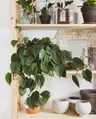
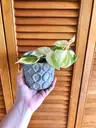
Hosta 'Orphan Annie'
Taxonomy

Hosta 'Orphan Annie'
Hosta
Asparagaceae
Asparagales

How to care for Hosta 'Orphan Annie'
How often to water your Hosta 'Orphan Annie'

every 9
Hosta 'Orphan Annie' needs 0.5 cups of water every 9 when it doesn’t get direct sunlight and is potted in a 5" pot.
Use our water calculator to personalize watering recommendations to your environment or download Greg for more advanced recommendations for all of your plants.
Water 0.5 cups every
9
Finding light for Hosta 'Orphan Annie' in your home

a window
Hosta 'Orphan Annie' love being close to bright, sunny windows 😎.
Place it less than 1ft from a south-facing window to maximize the potential for growth.
Hosta 'Orphan Annie' does not tolerate low-light 🚫.
Select your region to see how the current weather in your area affects the placement of Hosta 'Orphan Annie' in your home 🏡.
How to fertilize Hosta 'Orphan Annie'

Most potting soils come with ample nutrients which plants use to produce new growth.
By the time your plant has depleted the nutrients in its soil it’s likely grown enough to need a larger pot anyway.
To replenish this plant's nutrients, repot your Hosta 'Orphan Annie' after it doubles in size or once a year—whichever comes first.
-
I have a hosta a friend gave me some of the leaves are dead or Brown can I cut them off will it still grow #Hosta
-
what is wrong with my hosta
-
When does my plant turn blue?
-
What is the best fertilizer for her?
-
#PlantsMakePeopleHappy #PlantAddict @Superbraspfern: Look what i found at Home Depot!! Ok so we were picking out flooring, bathroom vanities etc. But c’mon, i cant leave without a plant!!! Only $10.98!!!
-
Should I have not planted in the frown and what should I do now th a t I did #Hosta
-
Well I planted it in the grown not in a pot #Hosta
-
Burned yellowing Leaves I've never had a Hosta before. Bought it at Costco where they had it outside. I bought it for my front porch but after a couple days I could tell the leaves were burning in this after 3pm Texas sun so l brought her in. For the first time I truly can't figure out a plant. I tried to prune and clip then water but I just don't know how she needs to be loved.
-
Rookie here. I’ve had this Plantain Lily for probably a year now and there hasn’t been any new growth or growth at all that I’ve noticed! Repotted in this pot maybe 6 months ago and I feel like it’s too big? Added the grow light a couple months ago but my plant still just looks sad. Any tips are gladly welcomed!!!! #PlantainLily
-
I have two leafs discolored . It’s not outside I have it under a grow light but in the shade . It has never gave me any issues . Please someone help ! #Hosta


Care Summary for Hosta 'Orphan Annie'
Hosta 'Orphan Annie'
 Greg recommends:
 Water
Water
0.5 cups every 9 days
 Placement
< 1ft from a window
 Nutrients
Repot after 2x growth
Based on the 4” pot your plant is in, and that it doesn’t get direct sunlight.