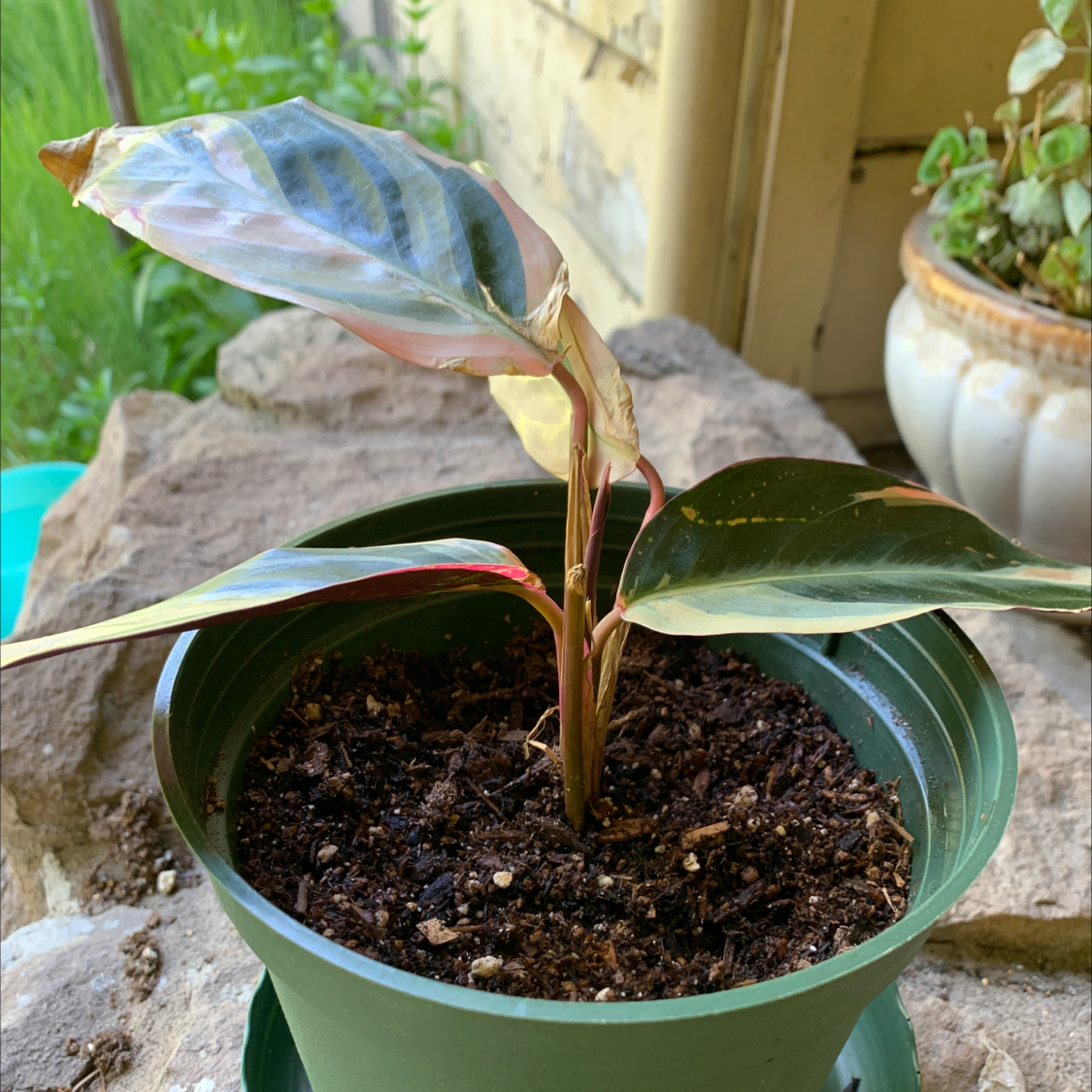
Triostar Stromanthe

How to Fertilize Triostar Stromanthe

Stromanthe thalia
Reviewed by Kiersten Rankel M.S.
Quick Answer
Use a balanced liquid fertilizer (10-10-10 or similar) diluted to half strength. Feed every 2-4 weeks during spring and summer. Stop fertilizing entirely in fall and winter when the plant's growth slows.

When Should I Start Feeding My Triostar Stromanthe?

Triostar Stromanthe is a tropical plant (zones 10a–11b) grown indoors in most climates, so start feeding when you see new leaves emerging in spring as daylight hours increase.

US feeding regions map
Pacific Mar–Sep
Mountain May–Aug
Midwest Apr–Sep
Northeast Apr–Sep
Southeast Mar–Oct
Stay on top of plant care
Get seasonal reminders for watering and fertilizing — personalized for your plants.
Try Greg Free

How Often Should I Fertilize My Triostar Stromanthe?

Feed every 2-4 weeks during the growing season from spring through late summer. If your plant is putting out new leaves regularly, lean toward every two weeks. If growth is slow, once a month is enough.

Stop feeding entirely from October through February. Stromanthe goes semi-dormant in winter, and fertilizer that sits unused in the soil causes the salt damage that leads to brown leaf margins.

Brown, crispy leaf edges are the most common sign of trouble with this plant, and excess fertilizer is one of the top causes alongside low humidity. If you see browning, rule out fertilizer burn by flushing the soil before adjusting humidity.

Feeding Calendar
Spring & Summer
Half-strength liquid fertilizer every 2–4 weeks
Early Fall
One final half-strength feeding in September, then stop
Late Fall & Winter
No feeding

What Is the Best Fertilizer for Triostar Stromanthe?

A balanced liquid fertilizer with an NPK ratio around 10-10-10 is the best choice for Triostar Stromanthe. This member of the prayer plant family needs even nutrition to maintain its striking pink, white, and green variegation without being pushed into weak, leggy growth.

Always dilute to half the label strength. Stromanthe roots are sensitive to salt buildup, which causes the brown, crispy leaf edges this plant is already prone to. A gentler dose applied regularly is far safer than a strong one.

Liquid fertilizer works best because it distributes evenly through the moist soil this plant requires. Avoid slow-release granules, which can create concentrated salt pockets that damage the fine root system.

Synthetic
Balanced water-soluble powder. Mix at half the label rate for gentle, even feeding. Dissolves cleanly without leaving residue in the soil.
Affordable liquid concentrate. Use 3-4 drops per quart (half the recommended dose) for regular feeding during the growing season.
Organic
Gentle organic option with mycorrhizae that supports the sensitive root system. Use half a scoop per gallon for consistent, mild feeding.
The gentlest option for salt-sensitive plants. Sprinkle a thin layer on the soil surface every 2-3 months. Impossible to over-apply.
Low-concentration organic liquid designed for houseplants. Gentle enough for sensitive prayer plant family members at full or half strength.

How Do I Fertilize My Triostar Stromanthe?

1
Water thoroughly first
Give your Stromanthe a full watering with filtered or distilled water and let it drain. This plant is sensitive to minerals in tap water, and fertilizing dry soil concentrates salts at the roots.
2
Dilute to half strength
Mix your balanced liquid fertilizer at half the label rate. For most concentrates, that's roughly 1/4 teaspoon per gallon of water.
3
Apply to the soil only
Pour the diluted solution slowly onto the soil surface, avoiding the leaves. Fertilizer residue on Stromanthe leaves can cause spotting on the variegated sections.
4
Let all excess drain out
Never let the pot sit in fertilizer runoff. Stromanthe needs consistently moist soil, but standing water with dissolved fertilizer damages the fine roots quickly.
5
Flush the soil every 4-6 weeks
Run plain filtered water through the pot until it flows freely. This removes accumulated mineral and fertilizer salts, which is especially important for this salt-sensitive plant.

Got More Questions?

Can I use coffee grounds on my Triostar Stromanthe?
It's not a good idea. Coffee grounds add acidity and can compact the soil over time. Stromanthe needs loose, well-draining soil, and the extra mineral salts from grounds can worsen the brown leaf edges this plant is already prone to.
What happens if I over-fertilize my Triostar Stromanthe?
The leaf edges and tips turn brown and crispy, starting with the older leaves. In severe cases, leaves may curl or droop. Flush the soil thoroughly with filtered water several times and skip feeding for at least a month.
Should I use filtered water when mixing fertilizer?
Yes, if possible. Stromanthe is sensitive to fluoride, chlorine, and mineral salts in tap water. Using filtered or distilled water for both watering and fertilizer mixing reduces the total salt load on the roots and helps prevent brown leaf tips.
Why are my Stromanthe's leaves losing their pink color?
Fading variegation is usually a light issue. Bright indirect light brings out the strongest pink and white tones. Proper fertilizing supports overall plant health, but light is the primary driver of color intensity.
Can I fertilize my Stromanthe year-round if I use grow lights?
Even under grow lights, reduce feeding in winter. The plant's metabolism still slows as day length changes, and the lower ambient humidity of heated homes in winter means the roots are more vulnerable to salt damage from unused fertilizer.
Stay on top of plant care
Get seasonal reminders for watering and fertilizing — personalized for your plants.
Try Greg Free

About This Article

Kiersten Rankel M.S.
Botanical Data Lead at Greg · Plant Scientist
About the Author
Kiersten Rankel holds an M.S. in Ecology & Evolutionary Biology from Tulane University. A certified Louisiana Master Naturalist, she has over a decade of experience in science communication, with research spanning corals, cypress trees, marsh grasses, and more. At Greg, she curates species data and verifies care recommendations against botanical research.
See Kiersten Rankel's full background on LinkedIn.
Editorial Process
Fertilizer recommendations verified against Stromanthe thalia growth data from Greg's botanical database, cross-referenced with USDA hardiness zone data and published horticultural research.
1,836+ Greg users growing this plant
USDA hardiness zones 10a–11b