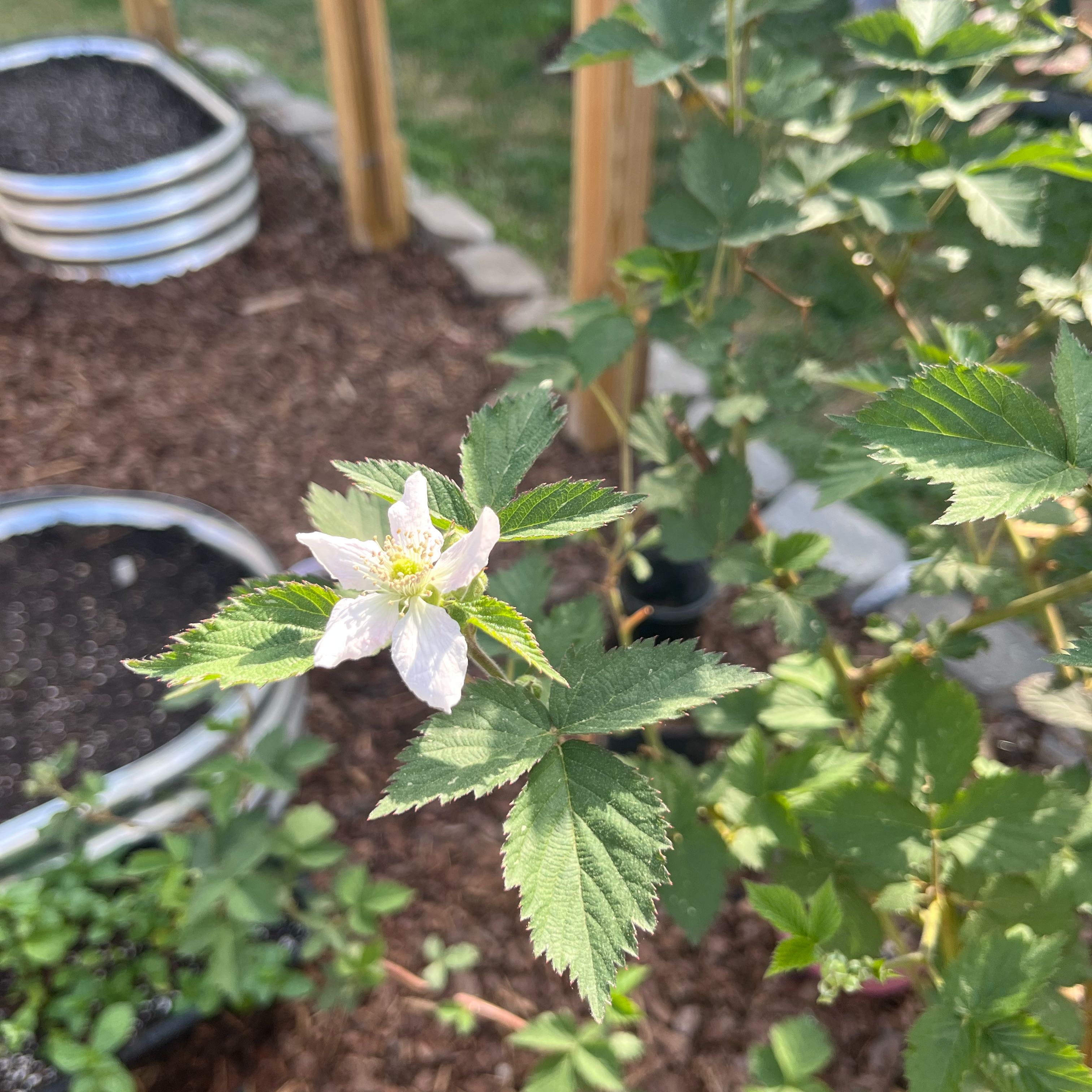
Allegheny Blackberry

How to Fertilize Allegheny Blackberry

Rubus allegheniensis
Reviewed by Kiersten Rankel M.S.
Quick Answer
Apply a balanced granular fertilizer like 10-10-10 in early spring just as new growth begins. Feed once more after the first harvest flush if your soil is lean. Avoid fertilizing after midsummer so canes can harden before winter.

When Should I Start Feeding My Allegheny Blackberry?

Begin fertilizing when new cane growth starts in spring, which ranges from March in warmer parts of its zone 4a through 8b range to May in colder areas.

US feeding regions map
Pacific Mar–Jul
Mountain May–Jul
Midwest Apr–Jul
Northeast Apr–Jul
Southeast Mar–Jul
Stay on top of plant care
Get seasonal reminders for watering and fertilizing — personalized for your plants.
Try Greg Free

How Often Should I Fertilize My Allegheny Blackberry?

One application in early spring is the most important feeding of the year. Apply it when you see the first green buds swelling on the canes, before flowering begins.

A second, lighter application after the first fruit harvest can boost later berry production if your soil is sandy or nutrient-poor. Use half the spring rate for this mid-season feeding.

Stop all fertilizer by mid-July. Late feeding delays cane dormancy and increases the risk of winter damage. If your plants look vigorous and fruit well with just the spring application, skip the second feeding entirely.

Feeding Calendar
Early Spring
Full application of balanced 10-10-10 granules as buds swell
Late Spring & Summer
Optional half-rate feeding after first harvest if soil is lean
Fall & Winter
No feeding, let canes harden for winter

What Is the Best Fertilizer for Allegheny Blackberry?

Allegheny Blackberry is a vigorous fruiting bramble that benefits from a balanced fertilizer with roughly equal parts nitrogen, phosphorus, and potassium. A 10-10-10 or 10-20-10 granular formula works well. The potassium supports fruit quality, and phosphorus strengthens the root system.

Granular fertilizer is the practical choice for outdoor brambles. Scatter it along the row or around the base of individual plants and let rain or irrigation carry it to the roots. A soil test every 2 to 3 years helps you fine-tune the ratio.

Avoid heavy nitrogen alone. Too much nitrogen pushes soft, leafy cane growth that is more vulnerable to disease and produces fewer berries.

Synthetic
Balanced granular fertilizer at an affordable price. Apply 5 lbs per 100 feet of bramble row in early spring.
Granular blend safe for fruiting plants. The higher potassium supports fruit set and sweetness.
Organic
Granular organic fertilizer made for berries and small fruits. Contains beneficial microbes that improve soil health. Apply 1 cup per plant in spring.
Organic blend with feather meal, bone meal, and kelp. Scratch into the soil surface around the base of each plant.
A 2-inch layer of well-aged composted manure around the base each spring provides slow-release nutrition and improves soil structure.

How Do I Fertilize My Allegheny Blackberry?

1
Water the root zone first
Soak the ground around your blackberry plants the day before fertilizing. Moist soil helps granules dissolve and reach the roots without burning.
2
Measure the granular fertilizer
Apply about 5 pounds of 10-10-10 per 100 feet of row, or roughly 1/4 cup per individual plant. Adjust based on your soil test results if available.
3
Scatter along the drip line
Spread the granules in a band 6 to 12 inches from the base of the canes. Avoid piling fertilizer directly against the stems.
4
Scratch lightly into the soil
Use a rake to work the granules into the top inch of soil. Be careful not to disturb the shallow roots or damage new cane growth.
5
Water in thoroughly
Give the area a deep soaking to dissolve the granules and move nutrients into the root zone. This also prevents surface salt buildup.

Got More Questions?

Can I use coffee grounds on my Allegheny Blackberry?
Blackberries tolerate slightly acidic soil, so a thin layer of used coffee grounds under the mulch will not hurt. But they provide very little nutrition on their own. Use them as a soil amendment alongside a proper fertilizer.
What happens if I over-fertilize my blackberry?
Excess nitrogen produces long, vigorous canes with lush foliage but fewer berries. The soft growth is also more susceptible to fungal diseases. If you notice very thick cane growth and poor fruiting, skip the next feeding.
Should I fertilize in the year I plant my Allegheny Blackberry?
Wait 4 to 6 weeks after planting, then apply fertilizer at half the normal rate. Young plants need to establish roots first, and too much fertilizer early on can burn tender new roots.
Do blackberries need extra potassium for fruiting?
Potassium improves fruit size and sweetness. If a soil test shows potassium is low, use a fertilizer with a higher third number (like 10-10-20) or supplement with sulfate of potash.
Can I use the same fertilizer for blackberries and blueberries?
Blueberries need strongly acidic soil (pH 4.5 to 5.5), so they require acid-forming fertilizer. Blackberries grow well in a broader pH range (5.5 to 7.0). A general berry fertilizer works for blackberries, but blueberries need a specialized acid formula.
Stay on top of plant care
Get seasonal reminders for watering and fertilizing — personalized for your plants.
Try Greg Free

About This Article

Kiersten Rankel M.S.
Botanical Data Lead at Greg · Plant Scientist
About the Author
Kiersten Rankel holds an M.S. in Ecology & Evolutionary Biology from Tulane University. A certified Louisiana Master Naturalist, she has over a decade of experience in science communication, with research spanning corals, cypress trees, marsh grasses, and more. At Greg, she curates species data and verifies care recommendations against botanical research.
See Kiersten Rankel's full background on LinkedIn.
Editorial Process
Fertilizer recommendations verified against Rubus allegheniensis growth data from Greg's botanical database, cross-referenced with USDA hardiness zone data and published horticultural research.
353+ Greg users growing this plant
USDA hardiness zones 4a–8b