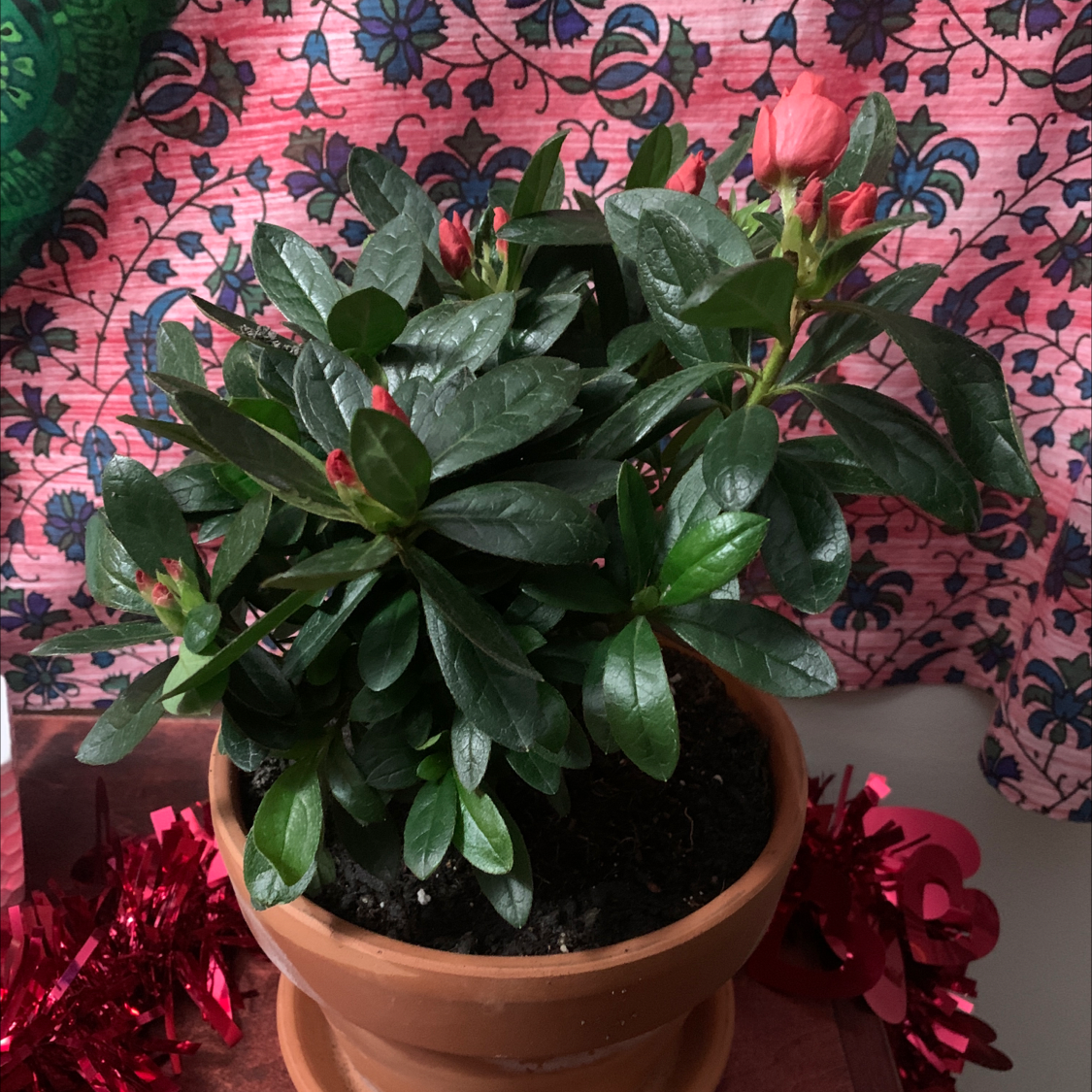
Rhododendron

How to Fertilize Rhododendron

Rhododendron simsii
Reviewed by Kiersten Rankel M.S.
Quick Answer
Use an acid-forming fertilizer with a ratio near 4-3-4 or one labeled for azaleas and rhododendrons. Feed once in early spring after blooms fade and again in late spring. Stop feeding by midsummer so new growth can harden off before winter.

When Should I Start Feeding My Rhododendron?

Feeding timing depends on your last frost date, since rhododendrons should only be fertilized during active spring growth in zones 7a through 9b.

US feeding regions map
Pacific Feb–Jun
Mountain May–Jul
Midwest Apr–Jul
Northeast Apr–Jul
Southeast Mar–Jun
Stay on top of plant care
Get seasonal reminders for watering and fertilizing — personalized for your plants.
Try Greg Free

How Often Should I Fertilize My Rhododendron?

Feed once in early spring as flower buds begin to swell, and a second time about six weeks later. Two applications per year is enough for most rhododendrons.

Stop all feeding by early July. Late-season fertilizer pushes soft new growth that cannot harden off before frost, which can kill branch tips. If your plant looks pale or stunted in midsummer, check soil pH before adding more fertilizer.

Signs of overfeeding include brown leaf edges and wilting even when the soil is moist. Rhododendrons are light feeders, so less is safer than more.

Feeding Calendar
Early Spring
First application of slow-release acid-forming granules at half the label rate
Late Spring
Second application of slow-release granules or one diluted liquid feed
Summer
No feeding after early July
Fall & Winter
No feeding

What Is the Best Fertilizer for Rhododendron?

Rhododendrons need an acid-forming fertilizer because they grow in acidic soil (pH 4.5 to 6.0). Look for products labeled "for azaleas, camellias, and rhododendrons" with an NPK ratio near 4-3-4 or 10-8-6. These formulas lower soil pH while delivering balanced nutrition.

A granular slow-release fertilizer is the easiest option for outdoor plants. Scatter it around the drip line in spring and let rain work it in. For potted rhododendrons, a diluted liquid feed at half strength gives you more control over how much the plant receives.

Avoid fertilizers with nitrate nitrogen. Rhododendrons prefer ammonium-based nitrogen, which also helps keep the soil acidic.

Synthetic
Water-soluble acid-forming formula. Mix 1 tablespoon per gallon of water. The high ammonium nitrogen helps lower soil pH over time.
Slow-release granules that feed for up to 4 months. Use at half the label rate for rhododendrons to avoid salt buildup.
Organic
Granular organic fertilizer formulated for acid-loving plants. Apply 1 cup per foot of branch spread in early spring.
Blended from cottonseed meal, fish bone meal, and langbeinite. Feeds slowly over several weeks while acidifying the soil.
A gentle, naturally acidic nitrogen source. Work a thin layer into the mulch around the drip line each spring.

How Do I Fertilize My Rhododendron?

1
Water the root zone first
Soak the soil around the base of your rhododendron before applying any fertilizer. Moist roots absorb nutrients more evenly and resist chemical burn.
2
Measure the slow-release granules
Use half the rate listed on the label. Rhododendrons have shallow, fibrous roots that are easily damaged by too much fertilizer at once.
3
Scatter around the drip line
Spread the granules in a ring starting a few inches from the trunk out to where the branches end. Avoid piling fertilizer against the stem.
4
Rake lightly into the mulch
Gently work the granules into the top layer of mulch or soil. Do not dig deep, because rhododendron roots sit close to the surface.
5
Water again to activate
Give the area a thorough watering so the granules begin dissolving. For liquid fertilizer, mix at half strength and pour it slowly around the drip line.

Got More Questions?

Can I use coffee grounds on my Rhododendron?
Used coffee grounds are mildly acidic and can be scattered thinly under the mulch. They add a small amount of nitrogen but are not a substitute for a complete fertilizer. Too thick a layer can form a water-repellent mat.
What happens if I over-fertilize my Rhododendron?
The leaf edges turn brown and crispy, and the plant may wilt even in moist soil. Heavy salt buildup damages the shallow root system. Flush the soil with deep watering and skip the next feeding.
Why are my Rhododendron leaves turning yellow between the veins?
This is usually iron chlorosis caused by soil pH that is too high, not a lack of fertilizer. Test your soil pH first. If it is above 6.0, apply sulfur or an acid-forming fertilizer to bring it down.
Should I fertilize my Rhododendron right after it blooms?
Yes, the period right after flowering is the best time to feed. The plant is putting energy into new leaf growth and next year's flower buds. Apply a half-strength acid-forming fertilizer at this stage.
Can I use the same fertilizer for my Rhododendron and my roses?
No. Roses prefer a more neutral to slightly acidic soil, while rhododendrons need strongly acidic conditions. A rose fertilizer will not lower pH, and the salt levels may be too high for rhododendron roots.
Stay on top of plant care
Get seasonal reminders for watering and fertilizing — personalized for your plants.
Try Greg Free

About This Article

Kiersten Rankel M.S.
Botanical Data Lead at Greg · Plant Scientist
About the Author
Kiersten Rankel holds an M.S. in Ecology & Evolutionary Biology from Tulane University. A certified Louisiana Master Naturalist, she has over a decade of experience in science communication, with research spanning corals, cypress trees, marsh grasses, and more. At Greg, she curates species data and verifies care recommendations against botanical research.
See Kiersten Rankel's full background on LinkedIn.
Editorial Process
Fertilizer recommendations verified against Rhododendron simsii growth data from Greg's botanical database, cross-referenced with USDA hardiness zone data and published horticultural research.
834+ Greg users growing this plant
USDA hardiness zones 7a–9b