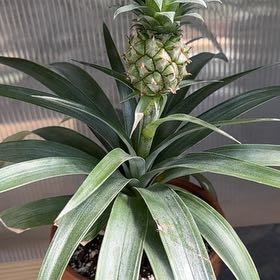
Pineapple

How to Fertilize Pineapple

Ananas comosus
Reviewed by Kiersten Rankel M.S.
Quick Answer
Use a balanced 10-10-10 liquid fertilizer at half strength every 2-4 weeks in spring and summer. Taper to monthly in fall and reduce further in winter.

When Should I Start Feeding My Pineapple?

Pineapple is a tropical perennial (zones 10a-12b) that grows year-round in warm climates but slows in cooler conditions and lower winter light.

US feeding regions map
Pacific Feb–Nov
Mountain May–Sep
Midwest May–Sep
Northeast May–Sep
Southeast Mar–Nov
Stay on top of plant care
Get seasonal reminders for watering and fertilizing — personalized for your plants.
Try Greg Free

How Often Should I Fertilize My Pineapple?

Feed your Pineapple every 2-4 weeks during spring and summer when it is actively growing. Outdoor plants in warm climates can handle biweekly feeding.

In fall, drop back to once a month. Indoor Pineapple plants can continue monthly through winter if they are in a bright, warm spot, but cut the dose to quarter strength.

Watch for pale or yellowish leaves, which usually means the plant needs more nitrogen. Reddish or purplish leaf tints can signal phosphorus deficiency, which is less common but worth noting.

Feeding Calendar
Spring & Summer
Half-strength balanced liquid every 2-4 weeks
Early Fall
Monthly at half strength, tapering off
Late Fall & Winter
Monthly at quarter strength indoors, or no feeding if dormant outdoors

What Is the Best Fertilizer for Pineapple?

Pineapple responds well to a balanced 10-10-10 or a citrus fertilizer. A slightly higher nitrogen ratio (like 6-6-6 or 10-5-5) supports the thick rosette of leaves that the plant needs before it can fruit.

As a bromeliad, Pineapple can absorb nutrients through its leaves as well as its roots. A diluted liquid fertilizer poured into the central cup and over the soil gives the best results.

Avoid heavy doses. Pineapple has a relatively small root system for its size, and salt buildup in the pot can damage roots quickly. Half-strength applications work better than full doses.

Synthetic
Complete liquid formula with all 16 nutrients, including the trace elements that bromeliads need. Mix 1/4 tsp per gallon.
Micronutrient foliar spray with iron, manganese, and zinc. Spray on Pineapple leaves every 4-6 weeks to prevent deficiencies.
Organic
Good nitrogen source for building up the Pineapple rosette. Dilute per label and apply to soil every 2-3 weeks. Has a strong smell but works well.
All-in-one organic liquid with mycorrhizae. Gentle enough to pour into the bromeliad cup without risk of burn.
Top-dress the soil with a thin layer every 2-3 months. Adds gentle, slow-release nutrition and improves soil structure.

How Do I Fertilize My Pineapple?

1
Water the soil first
Give the plant a good watering before fertilizing. Moist soil helps distribute nutrients evenly and protects the roots from burn.
2
Dilute to half strength
Mix your liquid fertilizer at half the label rate. For a 10-10-10 concentrate, that is usually about 1/4 teaspoon per gallon.
3
Pour into the central cup
Pineapple, like other bromeliads, absorbs nutrients through its leaf bases. Pour some of the diluted solution into the rosette cup, then water the rest over the soil.
4
Drain the cup after a day
Tip the plant gently to empty any fertilizer water sitting in the cup after 24 hours. Stagnant fertilizer water in the cup can cause the center to rot.
5
Apply a foliar spray monthly
Mist the leaves with a very dilute fertilizer solution (quarter strength) once a month. Pineapple's leaf surfaces absorb nutrients directly, giving the plant an extra boost.

Got More Questions?

Can I use coffee grounds on my Pineapple plant?
In small amounts, yes. Pineapple prefers slightly acidic soil, so a light top-dressing of coffee grounds can help. Just do not pile them on thickly, as they can compact and block water from reaching the roots.
What happens if I over-fertilize my Pineapple?
The leaf tips turn brown and dry, and you may notice white salt deposits on the soil. Flush the pot with plenty of plain water and skip feeding for a month.
Should I fertilize through the leaf cup or the soil?
Both. Pineapple absorbs nutrients through its leaf bases like other bromeliads. Pour diluted fertilizer into the central cup and over the soil for the best results, but drain the cup after a day to prevent rot.
Will fertilizer help my Pineapple fruit faster?
Consistent feeding supports healthy growth, which is a prerequisite for fruiting. However, most Pineapple plants need 2-3 years of growth before they flower, regardless of fertilizer. Patience matters more than extra nutrients.
Can I use banana peels for my Pineapple?
Composted banana peels are fine mixed into the soil, but fresh peels sitting on the surface attract fruit flies and break down too slowly to help. A liquid fertilizer delivers nutrients immediately and more reliably.
Stay on top of plant care
Get seasonal reminders for watering and fertilizing — personalized for your plants.
Try Greg Free

About This Article

Kiersten Rankel M.S.
Botanical Data Lead at Greg · Plant Scientist
About the Author
Kiersten Rankel holds an M.S. in Ecology & Evolutionary Biology from Tulane University. A certified Louisiana Master Naturalist, she has over a decade of experience in science communication, with research spanning corals, cypress trees, marsh grasses, and more. At Greg, she curates species data and verifies care recommendations against botanical research.
See Kiersten Rankel's full background on LinkedIn.
Editorial Process
Fertilizer recommendations verified against Ananas comosus growth data from Greg's botanical database, cross-referenced with USDA hardiness zone data and published horticultural research.
7,061+ Greg users growing this plant
USDA hardiness zones 10a–12b