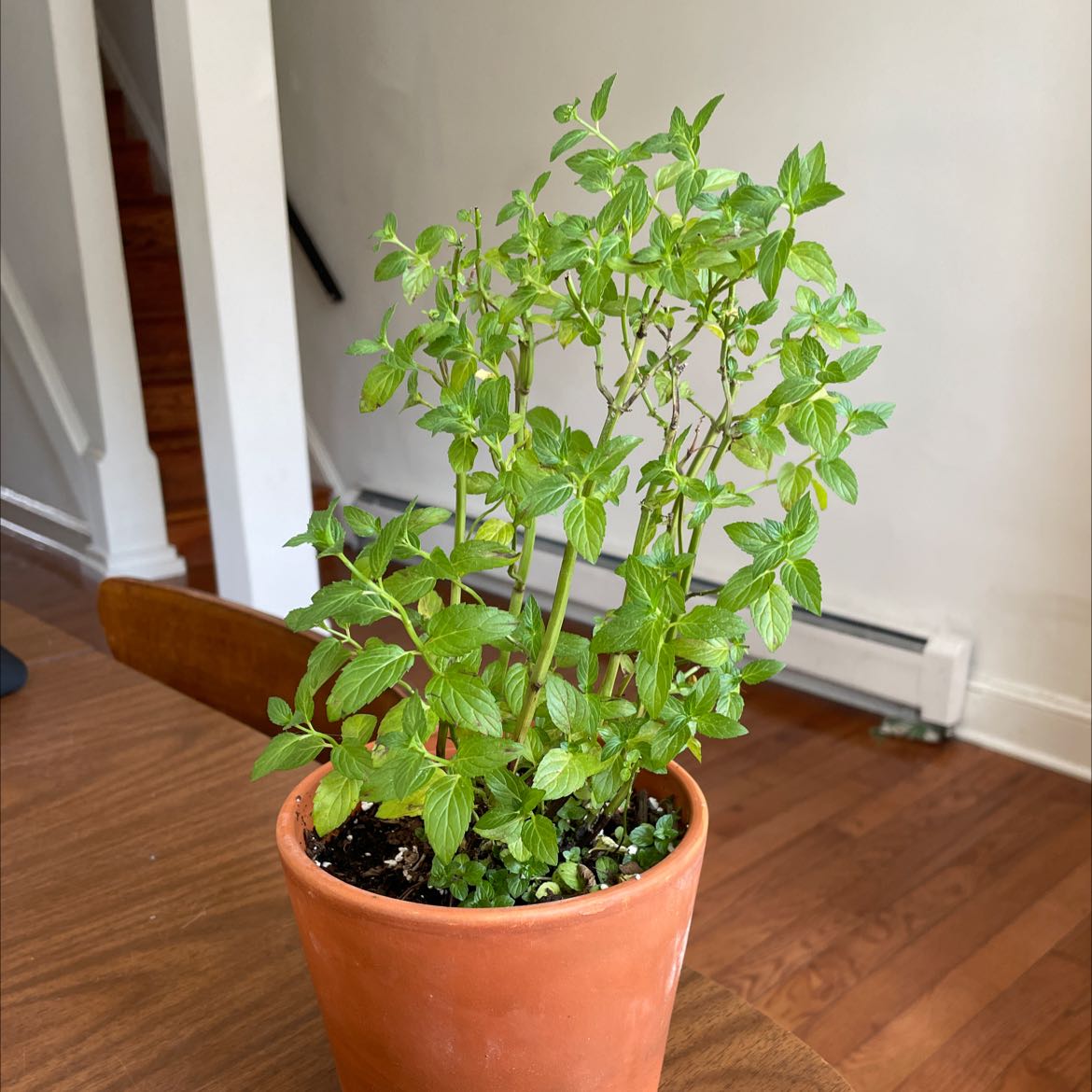
Mint

How to Fertilize Mint

Mentha arvensis
Reviewed by Kiersten Rankel M.S.
Quick Answer
Feed mint with a balanced 10-10-10 liquid fertilizer once a month during spring and summer. Dilute to half strength to keep flavor oils concentrated. Stop in fall.

When Should I Start Feeding My Mint?

Start feeding mint when new growth emerges in spring, which varies by region from late February in mild climates to May in colder zones.

US feeding regions map
Pacific Feb–Oct
Mountain May–Aug
Midwest Apr–Sep
Northeast Apr–Sep
Southeast Mar–Oct
Stay on top of plant care
Get seasonal reminders for watering and fertilizing — personalized for your plants.
Try Greg Free

How Often Should I Fertilize My Mint?

Once a month during the growing season is plenty. Mint is a fast spreader that does not need much encouragement. Overfeeding leads to leggy growth with less flavor.

If your mint is in a container, it may benefit from feeding every 3 to 4 weeks since nutrients wash out faster with regular watering. In-ground mint rarely needs more than a spring application and one midsummer boost.

Stop feeding in early fall as growth slows. Mint is a cold-hardy perennial (zones 3 through 8), so it goes dormant in winter and does not need nutrients during that time.

Feeding Calendar
Spring & Summer
Half-strength balanced liquid fertilizer once a month
Early Fall
One final light feeding as growth slows, then stop
Late Fall & Winter
No feeding (dormant period)

What Is the Best Fertilizer for Mint?

Mint does well with a balanced fertilizer like a 10-10-10 or 5-5-5 formula. It does not need heavy feeding because too much nitrogen actually dilutes the essential oils that give mint its flavor and aroma.

A liquid fertilizer diluted to half strength works best. It delivers nutrients quickly without overwhelming this already vigorous grower.

Avoid high-nitrogen fertilizers marketed for leafy greens. While mint is a foliage plant, pushing excessive leaf growth makes the leaves taste bland. Light, consistent feeding produces the best results.

Synthetic
Affordable liquid concentrate that works well at half strength for herbs. Just 3 to 4 drops per quart of water.
Widely available granular concentrate. Use at one-quarter the label rate for mint to keep feeding gentle.
Organic
Gentle organic liquid that feeds without pushing excessive growth. Mix 1 tablespoon per gallon.
A mild, slow-release amendment perfect for herbs. Sprinkle a thin layer on the soil surface every couple of months.
Organic granular herb and vegetable fertilizer. Apply once in spring and once in midsummer for in-ground mint.

How Do I Fertilize My Mint?

1
Water your mint first
Give the plant a thorough watering before applying fertilizer. Mint has shallow roots that burn easily, so moist soil provides a protective buffer.
2
Dilute to half strength
Mix your balanced liquid fertilizer at half the label rate. Mint is a light feeder and too much fertilizer will produce bland, leggy growth.
3
Pour around the base
Apply the diluted solution evenly around the root zone. Avoid splashing the leaves, since fertilizer residue on mint leaves can affect the taste if you harvest soon after.
4
Harvest regularly to encourage growth
Pinching or cutting stems regularly is just as important as feeding for keeping mint bushy. Harvest from the top to promote branching rather than tall, spindly growth.
5
Watch for signs of overfeeding
If your mint grows tall and floppy with pale, flavorless leaves, you are likely feeding too much. Cut back to feeding every 6 weeks or skip a cycle entirely.

Got More Questions?

Can I use coffee grounds on my mint?
A light sprinkling of used coffee grounds is fine as a soil amendment. They add a small amount of nitrogen and attract earthworms. Do not pile them on thick, though, as they can compact and mold on the soil surface.
What happens if I over-fertilize mint?
The plant will grow tall and leggy with larger but thinner leaves that have much less flavor. In severe cases, the leaf edges may turn brown from salt buildup. Flush the soil with water and skip feeding for at least a month.
Does mint in a pot need more fertilizer than mint in the ground?
Yes, slightly. Container mint loses nutrients with every watering since they drain out the bottom. Feed potted mint once a month during the growing season. In-ground mint usually only needs one or two applications per year.
Should I fertilize mint right after harvesting?
A light feeding after a big harvest can help the plant recover and push new growth. Wait a day or two after cutting, water first, then apply a half-strength dose.
Will fertilizer make my mint spread faster?
Mint spreads aggressively regardless of feeding. Fertilizer mainly affects leaf quality and size, not how quickly the runners extend. If anything, overfeeding produces floppy growth that is less useful for cooking.
Stay on top of plant care
Get seasonal reminders for watering and fertilizing — personalized for your plants.
Try Greg Free

About This Article

Kiersten Rankel M.S.
Botanical Data Lead at Greg · Plant Scientist
About the Author
Kiersten Rankel holds an M.S. in Ecology & Evolutionary Biology from Tulane University. A certified Louisiana Master Naturalist, she has over a decade of experience in science communication, with research spanning corals, cypress trees, marsh grasses, and more. At Greg, she curates species data and verifies care recommendations against botanical research.
See Kiersten Rankel's full background on LinkedIn.
Editorial Process
Fertilizer recommendations verified against Mentha arvensis growth data from Greg's botanical database, cross-referenced with USDA hardiness zone data and published horticultural research.
767+ Greg users growing this plant
USDA hardiness zones 3a–8b