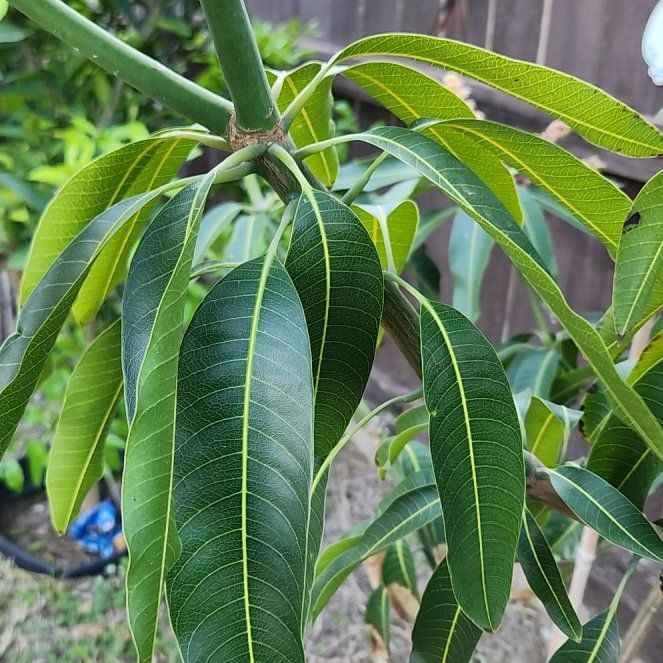
Mango

How to Fertilize Mango

Mangifera indica
Reviewed by Kiersten Rankel M.S.
Quick Answer
Feed young Mango trees with a balanced fertilizer (10-10-10 or 6-6-6) every month during the growing season. For mature fruiting trees, switch to a low-nitrogen, high-potassium blend (0-0-50 or 0-10-10) in late fall to promote flowering. Stop nitrogen feeding before bloom to avoid pushing leaves at the expense of fruit.

When Should I Start Feeding My Mango Tree?

Mango trees flower in response to cool, dry conditions, so fertilizer timing must shift from vegetative support in summer to bloom preparation in late fall.

US feeding regions map
Pacific Feb–Nov
Mountain N/A (indoor only)
Midwest N/A (indoor only)
Northeast N/A (indoor only)
Southeast Mar–Nov
Stay on top of plant care
Get seasonal reminders for watering and fertilizing β€” personalized for your plants.
Try Greg Free

How Often Should I Fertilize My Mango Tree?

Feed monthly from spring through early fall during the active growing season. Young trees can handle monthly feeding year-round in frost-free climates, while mature trees should pause in late fall as they prepare to flower.

After the tree sets fruit, resume light feeding with a balanced formula to support the energy demands of fruit development. Stop feeding again once fruit begins to ripen.

Over-fertilizing with nitrogen during the bloom window is the most common mistake. It pushes a flush of new leaves instead of flowers, costing you an entire season of fruit.

Feeding Calendar
Spring & Summer
Balanced fertilizer (6-6-6 or 10-10-10) monthly
Early Fall
Switch to low-nitrogen/high-potassium formula, tapering nitrogen
Late Fall & Winter
No nitrogen; potassium-only if pre-bloom (in-ground trees only)

What Is the Best Fertilizer for Mango Trees?

The best fertilizer depends on the tree's age. Young, non-fruiting Mango trees need a balanced formula like 6-6-6 or 10-10-10 to build strong roots and canopy. Nitrogen drives the vegetative growth that young trees need to establish themselves.

Once a Mango tree is old enough to fruit (typically three to five years), switch to a low-nitrogen or zero-nitrogen formula in the months before bloom. A potassium-heavy blend like 0-0-50 (muriate of potash) or a fruit tree formula with a 2-1-3 ratio encourages flower set and fruit development.

Granular slow-release fertilizers work best for in-ground Mango trees because they feed steadily over weeks. For container Mangoes, liquid fertilizer at half strength gives you more control over the dose.

Synthetic
Affordable balanced granular for young Mango trees. Apply 1 cup per year of tree age, spread under the canopy.
Easy-to-use spikes for container Mango trees. The higher phosphorus and potassium support fruiting. Push 2-3 spikes into the soil.
Organic
Organic granular with added calcium and magnesium. Well-suited for Mango trees since they have similar nutrient needs to citrus. Apply per label directions.
Organic blend with beneficial microbes. Provides steady nitrogen for young trees and adequate potassium for fruiting trees.
Good supplemental nitrogen source during the vegetative growth phase. Mix 2 tablespoons per gallon and drench the root zone monthly.

How Do I Fertilize My Mango Tree?

1
Water the root zone first
Soak the soil around the tree's drip line a day before fertilizing. Mango roots spread wide and shallow, and moist soil distributes the nutrients more evenly.
2
Measure by canopy size
For in-ground trees, use 1 pound of 6-6-6 per year of tree age, up to about 5 pounds for a mature tree. Spread the granules evenly under the canopy, starting about a foot from the trunk.
3
Keep fertilizer off the trunk
Apply in a ring from 1 foot away from the trunk out to the drip line. Granules touching the bark can cause chemical burns and invite disease.
4
Water in after application
Give the area a thorough soaking to dissolve the granules into the root zone. Leaving dry fertilizer on the soil surface wastes nutrients and can burn surface roots.
5
Switch formulas before bloom
About two months before your tree typically flowers, stop nitrogen and apply a potassium-only product. This signals the tree to redirect energy from leaf growth into flower and fruit production.

Got More Questions?

Why is my Mango tree growing lots of leaves but not fruiting?
Too much nitrogen during the pre-bloom period is the most common cause. Excess nitrogen pushes vegetative flushes instead of flowers. Stop nitrogen fertilizer at least two months before your expected bloom window and switch to a potassium-only supplement.
What happens if I over-fertilize my Mango tree?
Leaf tip burn, excessive soft growth that attracts pests, and salt buildup in the soil are the main symptoms. For in-ground trees, flood the root zone with water to leach out excess salts. For potted trees, flush the pot several times and skip the next two feedings.
Can I use coffee grounds on my Mango tree?
Used coffee grounds are mildly acidic and provide small amounts of nitrogen. They are fine as a light mulch addition for in-ground trees, but they are not a substitute for a balanced fertilizer program. Do not use them on container Mangoes where they can compact the soil.
Should I fertilize a newly planted Mango tree?
Wait at least four to six weeks after planting before the first feeding. The transplant shock period requires water and root establishment, not nutrients. Starting fertilizer too soon can burn tender new roots.
Can I use banana peels for my Mango tree?
Burying banana peels around an in-ground tree will not hurt, but they decompose too slowly to provide meaningful potassium. A proper fruit tree fertilizer delivers the right nutrients in the right amounts at the right time.
Stay on top of plant care
Get seasonal reminders for watering and fertilizing β€” personalized for your plants.
Try Greg Free

About This Article

Kiersten Rankel M.S.
Botanical Data Lead at Greg Β· Plant Scientist
About the Author
Kiersten Rankel holds an M.S. in Ecology & Evolutionary Biology from Tulane University. A certified Louisiana Master Naturalist, she has over a decade of experience in science communication, with research spanning corals, cypress trees, marsh grasses, and more. At Greg, she curates species data and verifies care recommendations against botanical research.
See Kiersten Rankel's full background on LinkedIn.
Editorial Process
Fertilizer recommendations verified against Mangifera indica growth data from Greg's botanical database, cross-referenced with USDA hardiness zone data and published horticultural research.
2,199+ Greg users growing this plant
USDA hardiness zones 10a–11b