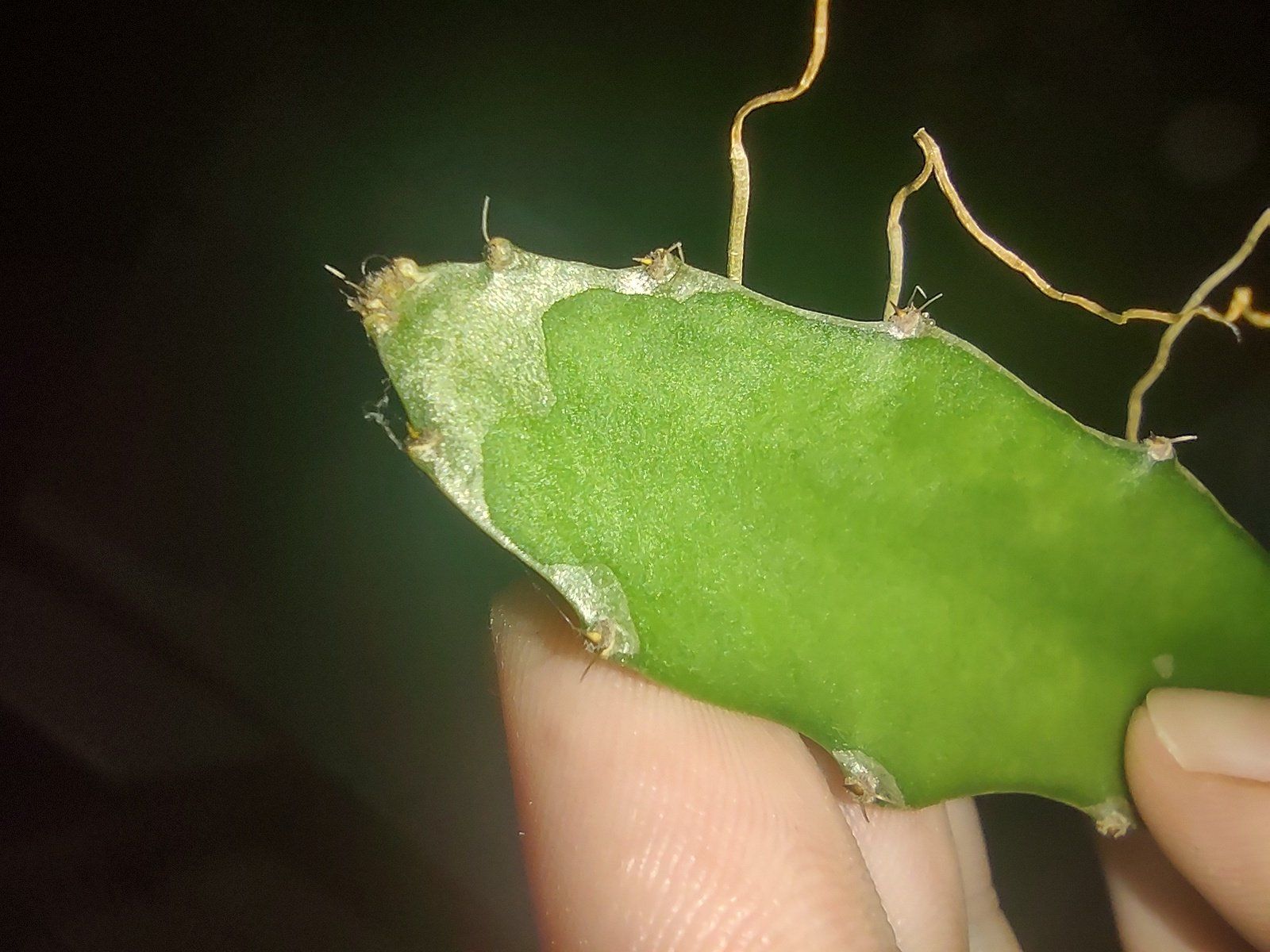
Dragon Fruit

How to Fertilize Dragon Fruit

Selenicereus monacanthus
Reviewed by Kiersten Rankel M.S.
Quick Answer
Use a balanced to potassium-heavy fertilizer like 6-6-6 or 8-4-12, depending on whether your plant is young or fruiting. Feed every two weeks from spring through early fall. Stop in winter when growth slows.

When Should I Start Feeding My Dragon Fruit?

Dragon Fruit is a tropical cactus that grows in zones 10a through 12b, so your feeding window depends on whether you grow it outdoors year-round or bring it inside for winter.

US feeding regions map
Pacific Mar–Oct
Mountain May–Aug
Midwest May–Sep
Northeast May–Sep
Southeast Mar–Oct
Stay on top of plant care
Get seasonal reminders for watering and fertilizing — personalized for your plants.
Try Greg Free

How Often Should I Fertilize My Dragon Fruit?

Feed every two weeks during the active growing season from spring through early fall. Dragon Fruit puts on rapid stem growth and can set multiple rounds of fruit during this window, so it is hungrier than most cacti.

Taper to once a month in early fall as the plant slows down. Stop fertilizing entirely in winter. Even in warm climates, shorter daylight hours signal the plant to rest.

If you notice leggy, pale green stems, you may be feeding too much nitrogen. If the plant flowers but drops the buds, it may need more potassium.

Feeding Calendar
Spring & Summer
Balanced or high-K fertilizer every 2 weeks
Early Fall
Monthly feeding at half strength, then taper off
Late Fall & Winter
No feeding

What Is the Best Fertilizer for Dragon Fruit?

Young Dragon Fruit plants that are still putting on stem growth do well with a balanced 6-6-6 fertilizer. Once the plant is mature enough to flower and fruit, switch to a formula higher in potassium and phosphorus, like 8-4-12, to support blooms and fruit development.

Granular slow-release fertilizer is a practical choice for Dragon Fruit grown in the ground. Scatter it around the base of the plant every six to eight weeks during the growing season. For container-grown plants, a water-soluble liquid applied every two weeks gives you more control over the dose.

Dragon Fruit is a cactus, so it is sensitive to too much nitrogen. High-nitrogen formulas push leggy stem growth at the expense of flowers and fruit. Keep nitrogen moderate and let the other nutrients do the heavy lifting.

Synthetic
Simple balanced granular for young Dragon Fruit. Apply 1 tablespoon around the base every 4 to 6 weeks.
Low-nitrogen liquid designed for cacti and succulents. Good for mature Dragon Fruit at the fruiting stage.
Organic
Organic granular with mycorrhizae, designed for tropical and subtropical plants. Feed once a month during the growing season.
A gentle, slow-release soil amendment. Mix a thin layer into the top inch of your growing medium every few months.
Excellent phosphorus source that encourages flowering and fruiting. Work a tablespoon into the soil surface once in early spring.

How Do I Fertilize My Dragon Fruit?

1
Water your plant first
Soak the soil or growing medium thoroughly before fertilizing. Dragon Fruit has shallow roots that burn easily from concentrated fertilizer salts.
2
Choose the right formula
For young plants, use a balanced 6-6-6. For mature, fruiting plants, switch to a higher-potassium blend like 8-4-12 to encourage flowers and fruit.
3
Measure carefully
For liquid fertilizer, dilute to half the label rate. For granular, scatter 1 to 2 tablespoons around the base of the plant, keeping it a few inches from the stem.
4
Apply and water in
Pour the diluted liquid directly onto the soil or water in the granules thoroughly. Avoid getting fertilizer on the stems, as it can cause superficial burns.
5
Watch for fruiting cues
When flower buds appear, make sure your fertilizer is higher in potassium and phosphorus. This supports fruit set and helps the plant carry fruit to maturity.

Got More Questions?

Can I use coffee grounds on my Dragon Fruit?
Dragon Fruit prefers slightly acidic to neutral soil, so a very small amount of coffee grounds mixed into the soil will not hurt. However, coffee grounds break down slowly and provide mostly nitrogen, which is the nutrient you want to keep moderate. A proper fertilizer is more reliable.
What happens if I over-fertilize my Dragon Fruit?
Over-fertilizing causes yellowing stems, soft growth, and salt buildup in the soil. In severe cases the shallow roots can burn and the plant may drop its flower buds. Flush the soil with plenty of water and skip the next two or three feedings.
My Dragon Fruit flowers but never sets fruit. Is it a fertilizer problem?
It might be. If you are using a high-nitrogen formula, the plant puts energy into stems instead of fruit. Switch to a low-nitrogen, high-potassium blend. Also check whether your variety needs cross-pollination, which is a common cause of fruit drop that fertilizer cannot fix.
Should I fertilize my Dragon Fruit in winter?
No. Even in warm climates, Dragon Fruit slows down when daylight hours shorten. Fertilizing during dormancy pushes weak growth and wastes nutrients. Resume feeding when you see new stem tips emerging in spring.
Can I use banana peels to fertilize Dragon Fruit?
Banana peels decompose too slowly in potting mix to deliver meaningful nutrients. You are better off using a proper fertilizer with a known NPK ratio so you can control what the plant receives.
Stay on top of plant care
Get seasonal reminders for watering and fertilizing — personalized for your plants.
Try Greg Free

About This Article

Kiersten Rankel M.S.
Botanical Data Lead at Greg · Plant Scientist
About the Author
Kiersten Rankel holds an M.S. in Ecology & Evolutionary Biology from Tulane University. A certified Louisiana Master Naturalist, she has over a decade of experience in science communication, with research spanning corals, cypress trees, marsh grasses, and more. At Greg, she curates species data and verifies care recommendations against botanical research.
See Kiersten Rankel's full background on LinkedIn.
Editorial Process
Fertilizer recommendations verified against Selenicereus monacanthus growth data from Greg's botanical database, cross-referenced with USDA hardiness zone data and published horticultural research.
104+ Greg users growing this plant
USDA hardiness zones 10a–12b