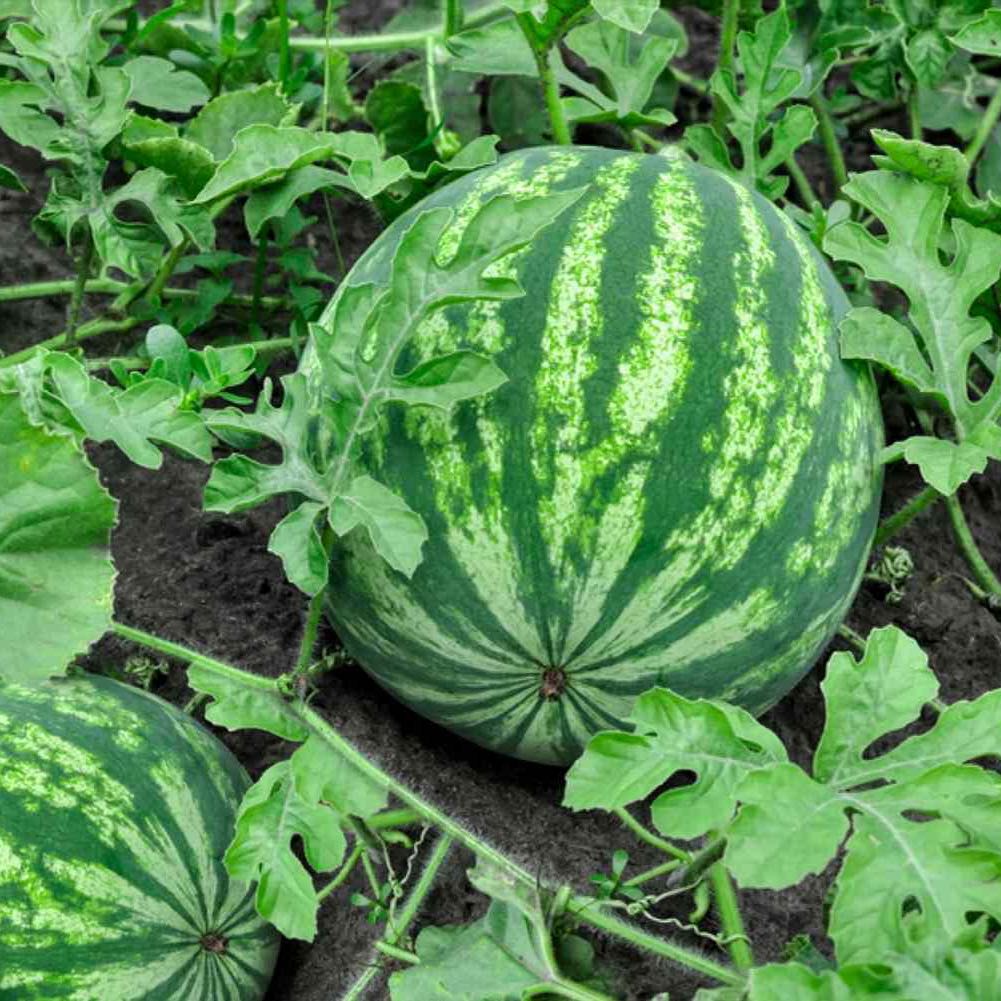
How to Fertilize Watermelon
When Should I Start Feeding My Watermelon?
Begin feeding at transplant time after the last frost, since Watermelon (zones 3a-11b) is a warm-season annual that only grows during summer heat.


How Often Should I Fertilize My Watermelon?
Feed every 2-3 weeks from transplant until fruits are about the size of a softball. Watermelon is an annual that grows fast and heavy, so it burns through nutrients quickly during its single growing season.
Once melons start sizing up, stop fertilizing. Extra nutrients at this stage don't improve the fruit and can actually delay ripening or cause bland flavor.
If leaves turn pale green or yellow during the vine growth phase, the plant is hungry. Apply a side-dressing of compost or a nitrogen boost. If vines are lush but flowers are dropping without setting fruit, back off the nitrogen and switch to a potassium-heavy formula.
What Is the Best Fertilizer for Watermelon?
Watermelon's fertilizer needs shift as the plant grows. Early on, young vines need plenty of nitrogen to build strong foliage. A formula around 10-5-5 or a high-nitrogen granular works well at this stage.
Once flowers appear, switch to a formula with more phosphorus and potassium, like 5-10-10 or a tomato/vegetable fertilizer. Potassium is especially important for melon sweetness and size. Too much nitrogen at this point pushes vine growth instead of fruit.
Granular fertilizer worked into the soil at planting gives a solid baseline. Follow up with liquid feeds every 2-3 weeks to keep the heavy-feeding vines supplied through the season.
How Do I Fertilize My Watermelon?
Got More Questions?
About This Article
