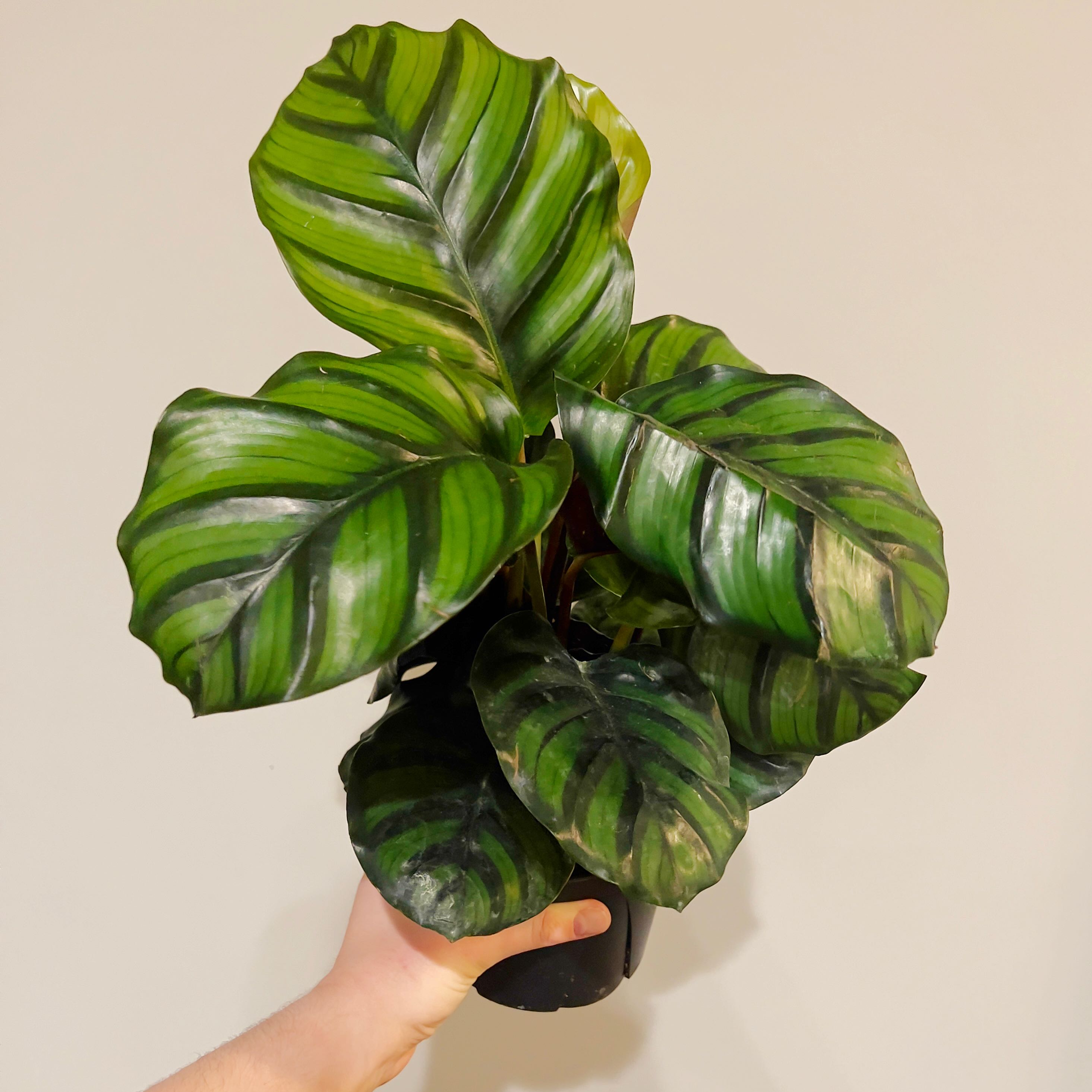
How to Fertilize Calathea fasciata
When Should I Start Feeding My Calathea fasciata?
Start fertilizing your Calathea fasciata in mid-spring once new leaves are actively unfurling, as this plant responds to increasing daylight hours rather than outdoor temperatures.


How Often Should I Fertilize My Calathea fasciata?
Once a month at quarter strength during spring and summer is the right cadence for Calathea fasciata. Feeding more often than this almost always causes more harm than good with this genus.
Taper to every 6-8 weeks in early fall, then stop completely through winter. Calatheas slow down significantly when light levels drop, and any unused nutrients just build up as salts in the soil.
Brown, crispy leaf margins are the classic sign of overfertilizing (or tap water minerals). If you see this pattern, flush the soil thoroughly and skip the next couple of feedings. Consider switching to distilled or filtered water as well, since Calatheas are sensitive to fluoride and chlorine.
What Is the Best Fertilizer for Calathea fasciata?
A balanced liquid fertilizer (10-10-10 or 20-20-20) diluted to one-quarter of the label strength is the safest option for Calathea fasciata. This plant is notoriously sensitive to fertilizer salts, and even moderate doses can trigger the brown, crispy leaf edges that Calathea owners dread.
Liquid fertilizer is the only recommended type. Slow-release granules and fertilizer spikes create concentrated zones of nutrients in the soil that Calathea roots react to poorly.
Avoid any fertilizer that lists urea as the primary nitrogen source. Calatheas process urea inefficiently, and the byproducts can cause root damage. Look for formulas with nitrate or ammoniacal nitrogen instead.
How Do I Fertilize My Calathea fasciata?
Got More Questions?
About This Article
