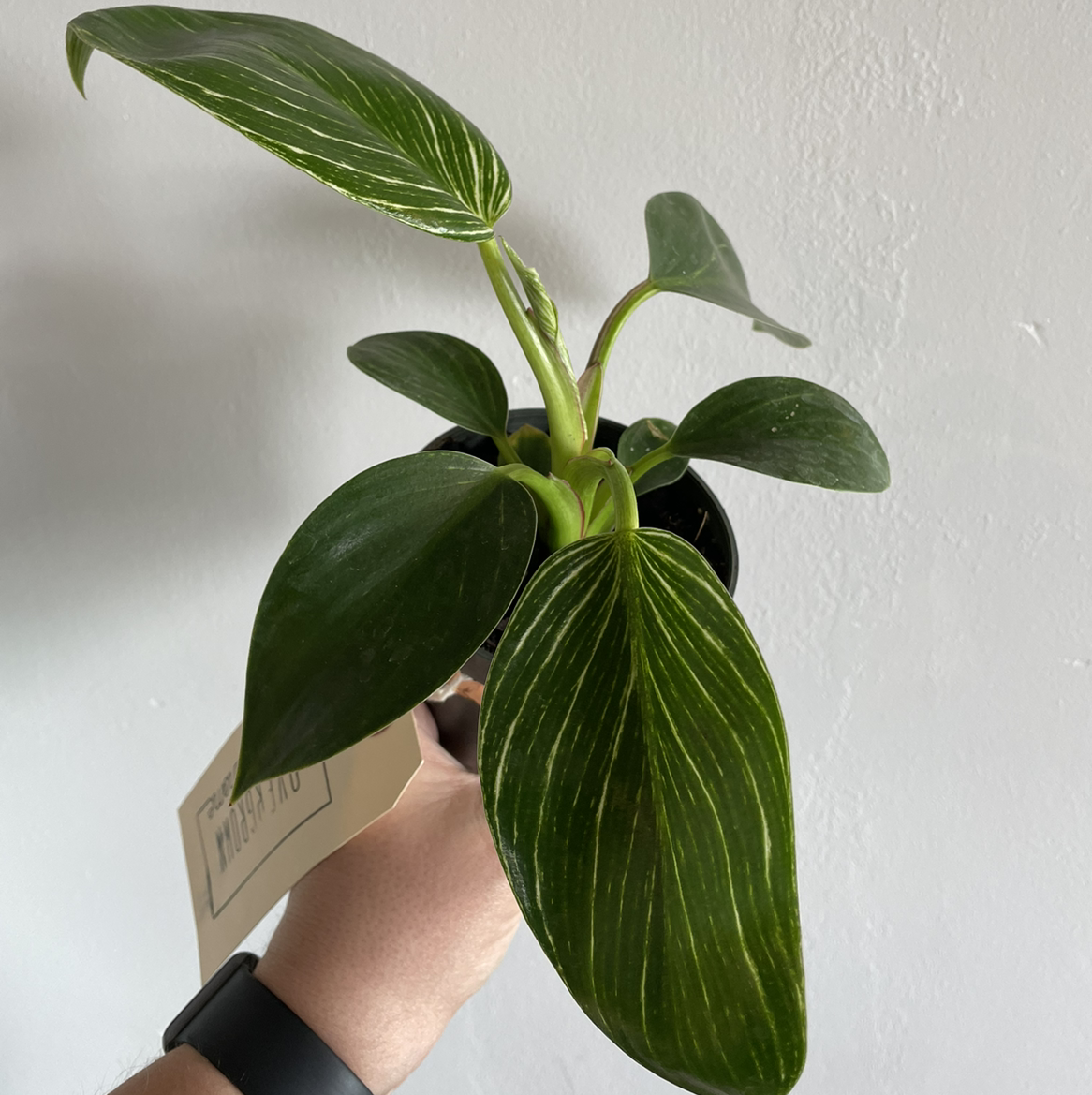
What's Wrong with My Philodendron Birkin?

Common Philodendron Birkin Problems
Yellow leaves
Birkin is a self-heading philodendron with compact, upright roots that prefer to dry out slightly between waterings. Sitting in soggy soil cuts off oxygen and the roots rot. When roots fail, the plant pulls nutrients from its oldest leaves first, so yellowing starts at the lowest leaves and works upward.
As Birkin produces new leaves from its central growing point, it sheds the oldest outermost leaves to redirect energy upward. One or two yellowing leaves at the base on an otherwise upright, active plant with fresh growth at the center is normal and not a sign of trouble.
Fading stripes
Birkin's cream-white pinstripes are chlorophyll-deficient zones that appear only when the plant has enough light for its green leaf tissue to carry the full photosynthetic load. In dim conditions, the plant produces more chlorophyll and new leaves come in mostly or entirely green. Existing green leaves will not regain their stripes, but the pattern returns on new growth once the plant gets more light.
Brown tips
Birkin's wide, glossy leaves lose moisture through their tips and edges when indoor air is dry. The plant is from tropical forests and wants humidity above 50%. Heating vents and air conditioning pull moisture fast, and the leaf tips are the first to show the damage.
Philodendron Birkin is sensitive to fluoride and other minerals that build up in tap water. The fluoride accumulates in leaf tissue over time and causes the tips to brown and die, starting at the very tip and creeping inward. The damage looks like low humidity but worsens even when humidity is fine.
Drooping leaves
Birkin's upright, self-heading growth habit makes drooping very obvious. When the soil dries out too long, the plant loses turgor and its leaves hang downward rather than standing upright and outward. Recovery is usually fast once it gets water.
Birkin is a tropical cultivar that goes limp quickly when exposed to cold drafts or temperatures below 55 degrees. Cold stress can come from being too close to a window in winter or sitting near an AC vent in summer. The drooping can look like underwatering even when the soil is fine.
Pests
Fine webbing on leaf undersides and pale stippling across the surface are the signs. Dry indoor air invites them, and spider mites can hide in the dense pinstripe pattern on Birkin's leaves until the infestation is already well established. Check the undersides closely at the leaf midrib.
White cottony clumps tucked into the tight crease where each leaf petiole meets the stem. Birkin's compact, self-heading growth packs the petiole bases close together, giving mealybugs dense cover where they can build up unnoticed for weeks before becoming obvious.
Preventing Philodendron Birkin Problems
About This Article
