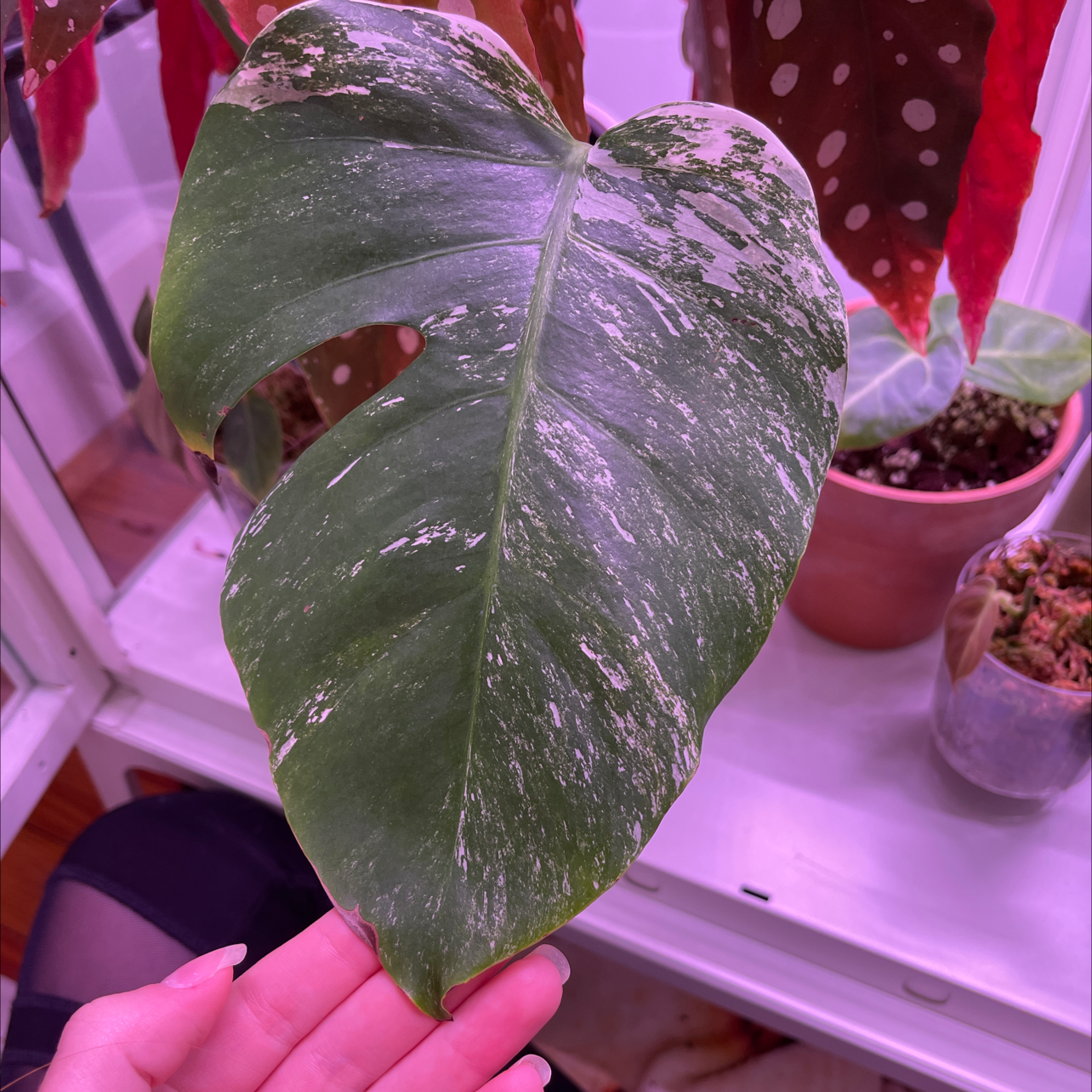
Best Soil for Monstera 'Albo'
Monstera deliciosa 'Albo'
By the Greg Editorial Team
Jun 15, 2024•10 min read
This article was created with the help of AI so we can cover more plants for you. May contain errors. See one? Report it here.
Discover the secret to a thriving Monstera 'Albo' ๐ฟ with the ultimate soil mix guide.
- Airy, well-draining soil with peat moss, perlite, and pine bark is ideal.
- Monitor for mold, odor, or moisture to catch unhealthy soil early.
- Balance watering and maintenance to prevent overwatering and soil issues.
Understanding Monstera 'Albo' Soil Requirements
Monstera 'Albo' thrives in soil that mimics its natural habitatโairy, well-draining, and rich in organic matter.
๐จ Aeration
Aeration is crucial. Roots need to breathe, and compacted soil is like a stuffy room with no windows. Think of airy soil as the plant's personal oxygen bar.
๐ฐ Drainage
Drainage is non-negotiable. Water should flow through the soil like a good conversationโsmoothly and without pooling. Soggy soil is a party foul; it invites root rot, which is as welcome as a bull in a china shop.
๐ฝ๏ธ Nutrient Retention
Nutrient retention is the balancing act. Soil should be the plant's pantry, stocked with nutrients but not clumped together like last week's takeout. It's about holding enough to feed but not so much that it becomes a breeding ground for mold.
๐ฑ The Perfect Mix
A mix of peat moss, perlite, and pine bark can be the Monstera 'Albo's' best friend. It's like a custom-tailored suitโfits just right. Perlite keeps the mix light and breathable, while peat moss holds onto moisture without being clingy.
๐ pH Levels
Keep an eye on pH levels; aim for a slightly acidic to neutral range, between 5.5 and 7.0. It's like the plant's comfort foodโit just does better with it.
Remember, the right soil is like a good foundationโit's everything. Without it, you're building castles on sand.
Identifying Unhealthy Soil for Monstera 'Albo'
๐ง๏ธ Recognizing the Symptoms
Persistent moisture in the soil can spell trouble for Monstera 'Albo'. If the soil feels like a wrung-out sponge, it's a red flag. A foul odor is another telltale sign; it shouldn't smell like a forgotten gym locker. Mold presence, especially a white, fuzzy villain, indicates excess dampness and poor aeration.
๐ ๏ธ Taking Action
To prevent the detrimental effects on your plant's health, be proactive. Yellow leaves? Could be soggy soil. Brown spots? Hello, root rot. Droopy leaves often scream for water, but check the soil firstโit might be crying out for better drainage instead. A soil that clings to water like a koala to a tree isn't doing your Monstera any favors.
๐ฑ Strategies for Healthy Soil
If the soil fails the sniff test, it's time to play doctor. Unpot the plant, and if the roots look like they've seen better daysโdark, slimy, or smellyโit's time for surgery. Sterilize your tools, folks; we're not spreading pathogens today. And keep an eye on your plant's environment; too much shadow play can invite unwanted fungal guests.
๐ก Pro Tips
A moisture meter isn't just a gadgetโit's your plant's best friend. Aim for a reading of 3-4 before watering. And remember, a Monstera that's not basking in enough light might as well be sending a VIP invite to every fungus in the vicinity. Keep infected plants isolated like they're in a plant quarantine. Regular inspections are not just care; they're an act of love.
Choosing the Best Commercial Soil Mix for Monstera 'Albo'
Monstera 'Albo' thrives in aerated and well-draining soil. For those not keen on playing mad scientist with soil components, a commercial mix can save the day.
๐ง Key Ingredients to Look For
Perlite or vermiculite should be non-negotiables on the ingredient list. These minerals promote drainage and prevent your Monstera from drowning in its own pot.
๐ก๏ธ pH Matters
Aim for a soil pH between 5.5 and 7.0. This is the sweet spot for nutrient uptake. Use a pH meter or at-home test kit to avoid turning your Monstera's home into an acidic or alkaline nightmare.
๐ฟ Commercial Mix Recommendations
Look for mixes that boast a balance of peat moss, coco coir, and bark. These ingredients ensure moisture retention without waterlogging. Brands like Good Dirtโs potting mix have been praised by plant shop owners for their breathability and water retention.
๐ The Environmental Angle
For the eco-conscious, opt for peat-free mixes. These blends often substitute peat with sustainable alternatives like coco coir, which still provide that moisture control without the environmental baggage.
Final Thought
While pre-made mixes are convenient, always double-check the composition. Your Monstera 'Albo' will thank you with vigorous growth and that sought-after variegation.
Creating an Ideal Homemade Soil Mix for Monstera 'Albo'
Crafting the perfect soil mix for your Monstera 'Albo' is like becoming a master chef for your plant. You're not just throwing dirt into a pot; you're carefully balancing ingredients for the ultimate growth medium.
๐ฑ The Ingredients
- Peat Moss: This is your moisture manager. Aim for about 50% of your mix.
- Perlite: Think of this as the aeration champion. Sprinkle in around 30%.
- Pine Bark: This is your drainage buddy, keeping things loose. Add about 10%.
- Coconut Coir: The sustainability star, it's an alternative to peat moss. Use around 10% if you're swapping.
๐ฟ The Mixology
- Sterilize: Before you start, ensure all components are pest-free. Bake or microwave them if you're not sure.
- Blend: Mix all ingredients in a large container. Get your hands dirtyโliterally.
- pH Check: Aim for a pH between 5.5 and 7.0. Adjust with lime or sulfur if needed.
๐ฑ The Secret Sauce
- Worm Castings: For a nutrient boost, sprinkle in a handful of this gold.
- Charcoal: A smidge for odor control and to keep things fresh.
- Mycorrhizal Inoculant: Not mandatory, but it's like probiotics for your plant's roots.
Remember, your Monstera 'Albo' doesn't want to swim. Over-moisture is the enemy. This mix ensures your green buddy's roots breathe easy and stay quenched without waterlogging.
Proper Watering Practices for Maintaining Healthy Soil
Watering frequency is the heartbeat of Monstera 'Albo' care. Wait until the top inch of soil feels like a dry martini before giving it a drink. Overwatering is the plant's nemesis, leading to a horror show of root rot.
๐ฆ Watering Techniques
Use a soil probe or your trusty finger to check for moisture. If it feels like a wrung-out sponge, hold off on the H2O. When you do water, go for a thorough soaking until it drains out the bottom, but don't let your Monstera get "wet feet." Empty the saucer to avoid a soggy situation.
๐ฑ Avoiding Waterlogging
Keep an eye out for the telltale signs of overindulgence: yellow leaves waving a caution flag. A well-draining soil mix is your best defense, a blend of peat moss, perlite, and pine bark fines that lets water flow through like a sieve.
๐ง Moisture Levels
Monstera 'Albo' likes its soil like a good cake โ moist but not drenched. In winter, it's more of a camel, needing less water as it hibernates. Remember, the top 2 inches of soil are your cue; if they're dry, it's time to water.
๐ฆ๏ธ Seasonal Adjustments
As seasons change, so do your plant's thirst levels. Summer might call for a weekly watering rendezvous, while in winter, it's more of a casual catch-up. Stay flexible, and your Monstera will thank you with a flourish of green.
Troubleshooting Soil Mix Issues
Even the best of us can get it wrong sometimes, and that includes mixing soil for our beloved Monstera 'Albo'. Compacted soil, excessive moisture, or nutrient deficiencies can turn your green haven into a plant ICU. But don't fret; we've got the fixes.
๐ฑ Compacted Soil
If your Monstera's soil is harder than a week-old bagel, it's time to take action. Aerate the soil by gently loosening it with a fork, being careful not to damage the roots. Consider adding perlite or pumice to the mix to improve drainage and prevent future compaction.
๐ง Excessive Moisture
Soggy soil is a no-go. If your Monstera's feet are wetter than a rainforest floor, mix in some orchid bark or coco coir to enhance moisture control. Remember, your tropical friend prefers its soil to be like a moist sponge, not a drowned rat.
๐ฟ Nutrient Deficiencies
Yellow leaves? Slow growth? Sounds like a classic case of nutrient deficiency. Get your hands on some worm compost or a balanced liquid fertilizer to give your Monstera the boost it needs. And don't forget to check the pH level; aim for that sweet spot between 5.5 and 7.0.
๐ The Wrong pH
Speaking of pH, if your Monstera's leaves are looking sadder than a forgotten birthday, it might be time for a soil test. Adjust your soil's pH with sulfur or lime, depending on whether you need to go up or down the scale.
๐ Pest Infestations
If you spot creepy crawlies in the soil, it's time to evict those uninvited guests. A dose of horticultural oil or neem oil should send them packing. Keep an eye out for repeat offenders and treat as necessary.
๐ Fungal Foes
Mold or fungus in the soil is as welcome as a skunk at a garden party. If you see any, remove the affected soil, and replace it with a sterile mix. Consider adding a layer of charcoal to keep the root zone fresh.
Remember, Monstera 'Albo' is a resilient plant. With a little TLC and some soil savvy, you'll have it back to its luscious, leafy self in no time.
Resolving Unhealthy Soil Conditions
๐ฆ Step-by-Step Guide to Addressing Moldy Soil
- Spot the mold: Look for a white or greenish fuzzy layer on the soil surface.
- Remove the topsoil: Scoop out the moldy top inch of soil.
- Apply a fungicide: Consider a neem oil soil soak, but don't overdo it.
- Evaluate watering: Ensure you're not overwateringโthink damp sponge, not swamp.
- Repot if necessary: Use well-draining soil and a pot with proper drainage holes.
- Sterilize: Heat-treat new soil at 140ยฐF for 30 minutes to kill pathogens.
๐ก Tips to Prevent Future Soil-Related Issues
- Check drainage: Ensure pots have drainage holes covered with gauze.
- Water wisely: Only water when the top inch of soil is dry.
- Airflow is key: Turn the soil occasionally to expose it to air and prevent compaction.
- Refresh mulch: Replace old mulch to protect roots and maintain soil health.
- Feed the soil: Add compost or worm castings to nourish soil microbes.
Remember, healthy soil equals a thriving Monstera 'Albo'. Keep it well-aerated, well-drained, and well-loved.
Regular Soil Maintenance
Regular checks of your Monstera 'Albo' soil are crucial to its well-being. Look out for signs like compacted soil, poor drainage, or a change in soil color, which could indicate it's time for a refresh.
๐ฑ Soil Checks and Rejuvenation
Inspect your soil monthly for density and moisture consistency. If it's too dense, consider aerating. When the soil looks exhausted or roots peek out, it's rejuvenation time. Mix in fresh, nutrient-rich components like peat or compost to give your plant a boost.
๐จ Signs for Soil Replacement
Yellowing leaves or a musty smell? These are distress signals. Your Monstera might be pleading for new soil. Don't ignore roots that circle the pot's base or poke through drainage holes; they're screaming for space.
๐ Soil Maintenance Guidelines
To maintain soil health, prune regularly. This encourages growth and prevents diseases. Rotate your plant to ensure even exposure to light, and dust the leaves to keep them photosynthesizing efficiently. Remember, a happy Monstera is a well-fed Monsteraโreplenish nutrients periodically with a balanced fertilizer.
๐ก๏ธ Proactive Soil Care
Prevention beats cure. Avoid overwateringโlet the topsoil dry out between waterings. If you're unsure, a moisture meter can be your best friend. And, if you're feeling adventurous, create your own soil mix tailored to your Monstera's needs. It's like cooking a gourmet meal for your green buddy.
โ ๏ธ Safety First
This content is for general information and may contain errors, omissions, or outdated details. It is not medical, veterinary advice, or an endorsement of therapeutic claims.
Always consult a qualified healthcare professional before using any plant as food, medicine, or supplement.
Never eat any plant (or feed one to pets) without confirming its identity with at least two trusted sources.
If you suspect poisoning, call Poison Control (800) 222-1222, the Pet Poison Helpline (800) 213-6680, or your local emergency service immediately.
Spotted an error? Please report it here.