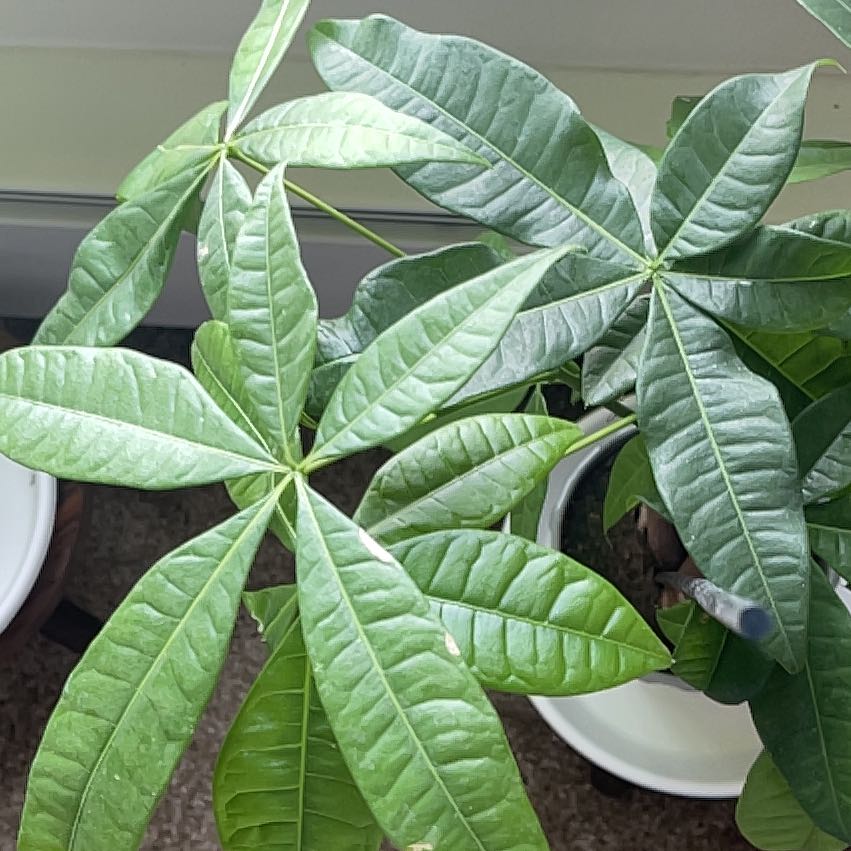
Best Soil for Money Tree
What Kind of Soil Does a Money Tree Need?
Money trees (Pachira aquatica) are native to tropical swamps in Central and South America, so they can tolerate occasional wet conditions better than many houseplants. That said, in a pot indoors, consistent soggy soil leads to root rot. They need a mix that drains freely but retains enough moisture to stay evenly damp between waterings.
Pachira aquatica has a fibrous, branching root system that likes consistent moisture with good air circulation. In the wild, it grows in flood-prone riverbanks and wetlands, but those soils also drain quickly once floodwaters recede. Indoors, you want a mix that mimics that rhythm: it can hold some moisture, but it should drain freely and not stay saturated.
A standard potting mix is a reasonable base, but most commercial mixes are too compact on their own for a money tree in a typical indoor pot. Adding perlite loosens the texture and speeds drainage. Some growers also include coarse sand or a small amount of orchid bark to increase air pockets around the roots.
Avoid dense, peat-heavy mixes that stay soggy for days. Because money trees are moderately drought tolerant compared to true bog plants, letting the top inch or two dry out before watering again is perfectly fine. The soil should support that drying cycle, not fight it.
What Soil Mix Should I Use for My Money Tree?

What pH Does a Money Tree Need?
Money trees prefer a slightly acidic to neutral pH between 6.0 and 7.5. Within that range, nutrients like iron, magnesium, and phosphorus are readily available to the plant. A basic pH meter or garden center test strips will tell you where your mix stands.
If pH drops below 5.5, nutrient availability drops and the leaves may start to yellow. Above 7.5, you may notice interveinal chlorosis, where the tissue between leaf veins turns pale while veins stay green. Either condition is usually fixable by amending the soil or switching to a more neutral potting mix.
When Should I Replace My Money Tree's Soil?
Money trees are moderate to fast growers, so they exhaust the nutrients in their mix relatively quickly. Plan to refresh or replace the soil every 1 to 2 years, or whenever you repot. Spring is the ideal time since the plant is heading into active growth and will recover quickly.
Over time, potting mix breaks down, organic particles compress, and the mix drains less effectively. A mix that once drained in seconds may start holding moisture for much longer. Refreshing the soil restores both drainage and nutrition.
How Do I Prepare Garden Soil for a Money Tree?
Money Trees grow naturally along riverbanks and swamps in Central and South America, so their roots are adapted to moist, rich soil. They can handle wet feet better than most tropical houseplants, but standing water for extended periods still causes problems.
Amend clay soil with compost and bark to improve drainage while keeping the moisture these trees enjoy. Sandy soil needs plenty of compost and organic matter mixed in to prevent it from drying out too quickly. A spot with bright filtered light and some protection from harsh afternoon sun is ideal.
Got More Questions?
About This Article
