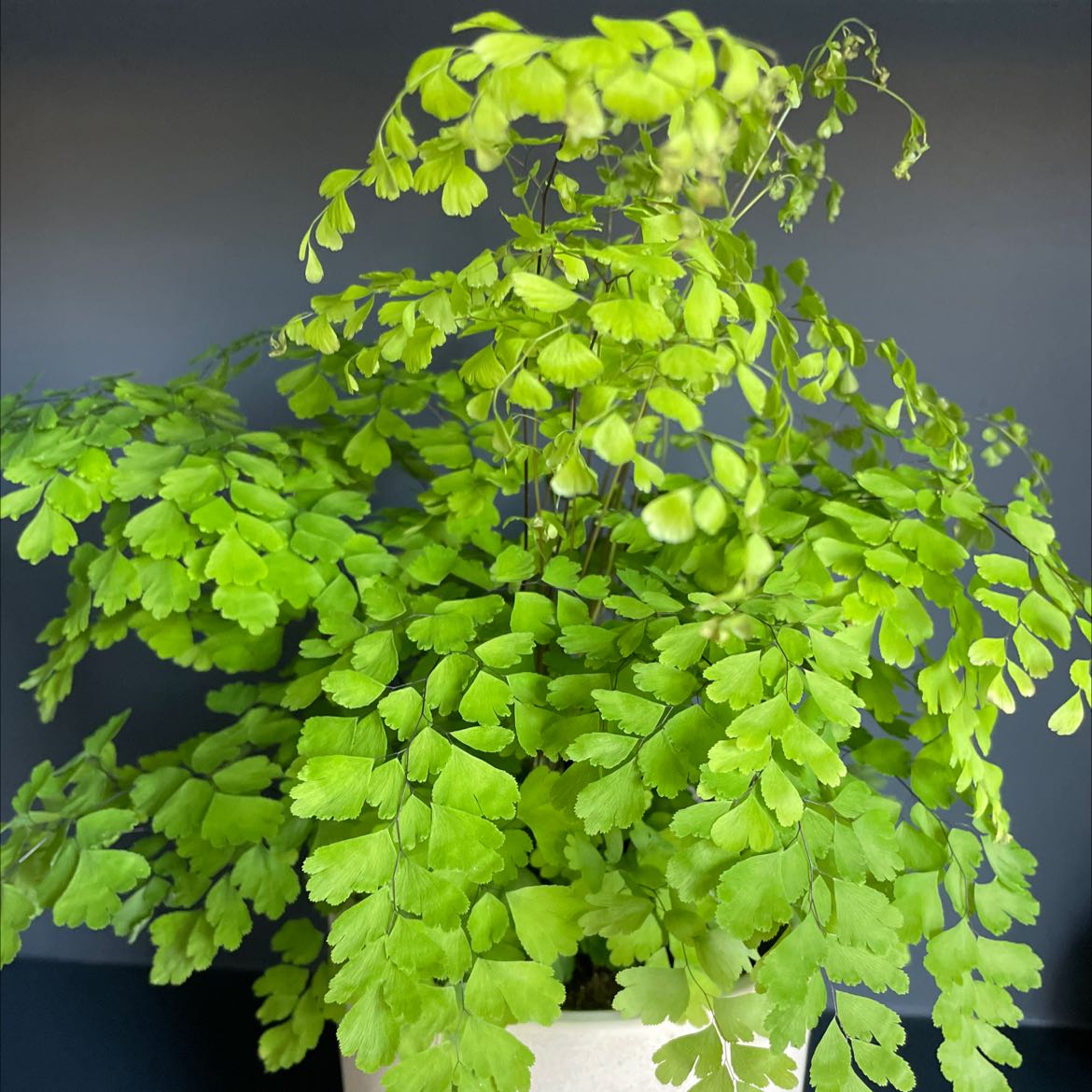
Maidenhair Fern

What's Wrong with My Maidenhair Fern?

Adiantum capillus-veneris
Reviewed by Kiersten Rankel M.S.
Quick Answer
1.
Low humidity is the number one killer.
Maidenhair Fern needs 60% humidity or higher to survive indoors. Below that, the delicate fan-shaped leaflets dry and crumble within days. If the room feels dry, that is your answer.
2.
Check soil moisture if humidity looks fine.
This fern wants soil that stays consistently moist, never soggy and never dry. Both extremes cause rapid frond dieback. The soil should feel like a wrung-out sponge.
3.
Fiddleheads from the crown mean hope remains.
Even a fern that has lost every single frond can send up fresh fiddleheads from the rhizome at soil level if the roots stayed moist. Tiny coiled green shoots at the base mean the plant is still alive and fighting.
Stay on top of plant care
Get seasonal reminders for watering and fertilizing โ€” personalized for your plants.
Try Greg Free

Common Maidenhair Fern Problems

Crispy, dried fronds

Low humidity

Maidenhair Fern evolved in the spray zones of waterfalls and along stream banks, where humidity rarely drops below 70%. Its papery fan-shaped leaflets have no waxy coating to hold moisture in, so they desiccate in minutes when indoor air is dry. Unlike most houseplants that show slow decline, this fern can go from healthy to entirely crispy within two or three days of a humidity drop.

1. Move the plant away from heating vents, radiators, and air conditioning units immediately
2. Run a humidifier nearby targeting 60% or higher, not just 50% like most ferns need
3. Place the pot on a tray of wet pebbles and cluster it with other plants to raise local humidity
4. Remove the crispy fronds at the base. They will not recover, and fresh fiddleheads will replace them

Brown tips and edges

Tap water fluoride

Maidenhair Fern is highly sensitive to fluoride and dissolved minerals in tap water. The tiny, thin leaflets absorb these salts and develop brown, scorched tips and edges that look exactly like humidity damage but persist even after you fix the humidity. The damage shows up on the outermost tips of the fan-shaped leaflets first.

1. Switch to filtered, distilled, or collected rainwater
2. Water directly into the soil, not onto the fronds
3. Flush the soil with filtered water monthly to wash accumulated salts through the drainage hole
Low humidity

Moisture loss through the thin, uncoated leaflets causes the edges to dry and die back from the tips inward. When both fluoride damage and low humidity are present, the browning is faster and more widespread than either cause alone.

1. Run a humidifier nearby targeting 60% or higher
2. Move the plant away from heat sources and drafts
3. Existing brown tips will not green up, but new fronds will come in undamaged once conditions improve

Yellow fronds

Overwatering

Maidenhair Fern likes moist soil but its fine root system rots quickly in waterlogged conditions. Saturated soil starves the roots of oxygen, and as they break down, the plant pulls nutrients back from the oldest outer fronds first. The yellowing starts at the frond base and moves outward, and the soil usually smells sour.

1. Check the soil. If it is wet and has been wet for days, stop watering
2. Make sure the pot has a drainage hole and is not sitting in a saucer of water
3. Let the top inch of soil dry slightly before watering again, but do not let it dry out fully
Too much light

In the wild, Maidenhair Fern grows under dense forest canopy and along shaded stream banks where direct sun rarely penetrates. Direct indoor light bleaches the delicate leaflets from deep green to pale yellow-green and can scorch translucent patches into them within an afternoon. The fronds on the side closest to the light source go first.

1. Move the plant away from any direct sun immediately
2. Place it in bright but fully indirect light, such as a few feet back from a north or east window
3. Remove fronds that have already yellowed. They will not recover

Whole plant collapse

Complete dryout

Maidenhair Fern has no water storage tissue anywhere in its fronds or stems. When the soil dries out completely, all fronds die back to the thin black wiry stems within days and the plant looks dead. This is dramatic but not necessarily fatal. The rhizome buried in the soil can survive if it is still firm and moist, and new fiddleheads can emerge from the crown to regrow the plant from scratch.

1. Water the soil thoroughly until it drains from the bottom
2. Cut all dead fronds back to soil level with clean scissors
3. Keep the soil consistently moist and humidity above 60%
4. Watch for tiny coiled green fiddleheads emerging from the soil over the next two to four weeks. If they appear, the plant is recovering

Pests

Scale

Small brown or tan waxy bumps along the thin black wiry stems and along the underside of frond stalks. Scale insects are the most common pest on Maidenhair Fern, drawn to the sheltered surfaces of those slender stems. They suck sap and cause fronds to yellow and weaken.

1. Scrape bumps off the stems gently with a soft toothbrush or the edge of a card
2. Wipe affected stems with a cloth dampened in 70% isopropyl alcohol
3. Check every week for a month and repeat if new bumps appear

Preventing Maidenhair Fern Problems

A few consistent habits prevent most of what goes wrong with Maidenhair Fern.
Weekly Check
1
Keep humidity at 60% or higher.
Maidenhair Fern is more humidity-dependent than almost any other common houseplant. A dedicated humidifier running nearby is the single most important thing you can do. Low humidity causes crispy fronds, brown edges, and whole-plant collapse faster than any other factor.
2
Keep soil consistently moist, never soggy or dry.
Check soil moisture every two to three days. This fern has no water reserves in its fronds and will collapse within days if the soil dries out completely. A pot with good drainage keeps it moist without sitting in water.
3
Use filtered or distilled water.
Tap water fluoride and mineral salts accumulate in the delicate leaflets and cause brown tips that persist even after humidity is improved. Filtered, distilled, or collected rainwater prevents this entirely.
4
Place in bright, indirect light away from any direct sun.
Direct sunlight scorches and yellows the thin leaflets quickly. A shaded spot near a window or under bright artificial light matches the forest floor and stream-bank conditions this fern needs.
5
Keep well away from heating vents, radiators, and air conditioning.
Forced hot or cold air is the fastest way to kill Maidenhair Fern. Even a few hours near a vent can crisp the fronds. Position the plant in a stable, draft-free spot and the fronds will stay healthy.
Stay on top of plant care
Get seasonal reminders for watering and fertilizing โ€” personalized for your plants.
Try Greg Free

About This Article

Kiersten Rankel M.S.
Botanical Data Lead at Greg ยท Plant Scientist
About the Author
Kiersten Rankel holds an M.S. in Ecology & Evolutionary Biology from Tulane University. A certified Louisiana Master Naturalist, she has over a decade of experience in science communication, with research spanning corals, cypress trees, marsh grasses, and more. At Greg, she curates species data and verifies care recommendations against botanical research.
See Kiersten Rankel's full background on LinkedIn.
Editorial Process
Every problem and fix in this article was verified against Greg's botanical database, cross-referenced with USDA hardiness zone data and published horticultural research from the Missouri Botanical Garden, university extension programs, and species-specific literature. The Adiantum capillus-veneris care profile reflects documented species behavior combined with years of community grower feedback in Greg.
4,467+ Greg users growing this plant
USDA hardiness zones 9aโ€“11b