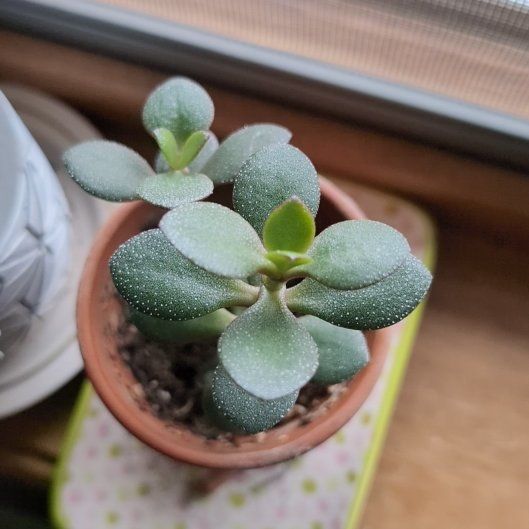
Fertilize Your Jade And ๐ Double Its Growth
Crassula ovata
By the Greg Editorial Team
Jun 15, 2024•12 min read
This article was created with the help of AI so we can cover more plants for you. May contain errors. See one? Report it here.
Double your Jade's growth and blooms ๐ธ by unlocking the secrets of perfect fertilization! ๐ฑ๐ช
- ๐ฑ Balanced, water-soluble fertilizers with an NPK ratio of 10-10-10 promote Jade blooming.
- ๐ Proper light, watering, and environment are crucial for Jade's growth and blooming.
- โ๏ธ Avoid over-fertilization - it can inhibit blooming and cause leaf discoloration.
Nutritional Needs of Jade Plants for Blooming
Let's dive into the nitty-gritty of jade plant nutrition. Jade plants, those thick-leafed, glossy show-offs, are not just about the looks. They have a secret life, one that involves blooming. But coaxing them into this floral spectacle is a bit like tricking a cat into a bath. It requires strategy.
๐ช The Nutrient Trio
Jade plants have a hankering for a balanced diet. They're not picky eaters, but they do have a preference for a well-balanced fertilizer with an NPK ratio of 10-10-10. That's nitrogen (N), phosphorus (P), and potassium (K) in equal parts.
Nitrogen is the life of the party, promoting vibrant, green leaf growth. Phosphorus, the romantic, encourages flowering and root development. And potassium, the reliable friend, aids in overall plant health and disease resistance.
๐ธ The Blooming Secret
Blooming is not an everyday affair for jade plants. They're a bit like century plants, storing energy for that one spectacular show. To encourage blooming, you need to mimic their native growing conditions. This means a dry environment, cool nights, bright days, and a rest period where fertilization is reduced.
๐ The Right Environment
Jade plants are like Goldilocks - they need everything just right. They crave 4 to 5 hours of sunlight daily to absorb all the necessary minerals. Too much light, and they'll show you their displeasure with red edges and brown spots on their leaves. Too little, and they'll sulk, refusing to grow.
๐ต The Soil Mix
Jade plants are not just about the food; they're also about the plate it's served on. They prefer a good cactus mix for indoor living, but if they're summering outdoors, a bit of humus-rich soil added to the mix will make them happy.
๐ฆ The Watering Routine
Watering is a delicate dance with jade plants. They like their soil surface dry before the next watering. Overwatering is a no-no, and under-watering is a yes-yes. This is especially true when you're trying to encourage blooming.
๐ถ The Age Factor
Finally, remember that age matters. Young jades are like teenagers, not quite ready for the responsibilities of blooming. So, if your jade plant is not flowering, it might just be that it's not old enough yet. Patience, my friend, is a virtue.
So, there you have it. The nutritional needs of jade plants for blooming, laid bare. Now, let's move on to the best fertilizers to make this blooming miracle happen.
Best Fertilizers for Blooming
Alright, let's dive into the nitty-gritty of fertilizers.
๐ฟ Balanced, Water-Soluble Fertilizers
First up, we have the balanced, water-soluble fertilizers. These are the go-to for many jade enthusiasts. Why? They offer a well-rounded nutrient profile, typically with an NPK ratio of 10-10-10. That's Nitrogen, Phosphorus, and Potassium, if you're not up on your periodic table.
Remember, jade plants aren't picky eaters, but they do have a preference for a balanced diet. And these fertilizers deliver just that.
๐ฑ Organic Fertilizers
Next on our list are organic fertilizers. These are the superheroes of the fertilizer world. They not only promote blooming but also contribute to long-term soil health.
Organic fertilizers like worm castings, well-rotted compost, or even aquarium water (yes, you read that right) can do wonders for your jade plant. They're packed with nutrients and beneficial bacteria that help your jade plant bloom like it's in a botanical beauty pageant.
๐ธ Specialized Fertilizers
But wait, there's more. Some fertilizers are specifically designed to encourage blooming. These often have a higher Phosphorus content, which is like rocket fuel for flower formation.
Brands like Fox Farm Big Bloom and Espoma Organic Flower-tone are excellent choices. They're like personal trainers for your jade plant, pushing it to bloom to its full potential.
๐ซ Fertilizers to Avoid
Now, let's talk about what not to use. Avoid fertilizers with high Nitrogen content. They're like the junk food of the plant world. Sure, they might make your jade plant grow lush and green, but they can inhibit blooming.
And remember, we're here for the flowers, not just the foliage.
Final Thoughts
So, there you have it. A quick and dirty guide to the best fertilizers for blooming jade plants. Whether you go for a balanced, water-soluble fertilizer, an organic option, or a specialized blooming formula, remember to feed your jade plant well.
After all, a well-fed jade plant is a happy jade plant. And a happy jade plant is one that will reward you with stunning blooms.
Now, let's move on to the next topic: Fertilizing Frequency for Blooming.
Fertilizing Frequency for Blooming
Timing is everything when it comes to fertilizing your Jade plant. You can't just go willy-nilly, tossing fertilizer around like confetti at a parade. No, you've got to be strategic, like a chess player planning their next move.
๐ฑ Growing Season Fertilization
During the growing season, which typically spans spring and summer, your Jade plant is in full-on growth mode. It's like a teenager with an insatiable appetite, gobbling up nutrients to fuel its growth and blooming.
During this time, fertilize once a month. This is the sweet spot, providing your plant with the nutrients it needs without overwhelming it. Remember, more isn't always better. Overdoing it with the fertilizer can lead to nutrient burn, which is as unpleasant as it sounds.
โ๏ธ Dormant Season Fertilization
When winter rolls around, your Jade plant enters a dormant period. It's like the plant version of hibernation. During this time, hold off on the fertilizer.
Why? Well, your plant isn't actively growing during this period, so it doesn't need as many nutrients. It's like how you wouldn't eat a five-course meal before a long nap.
๐ Adjusting Fertilization
But here's the kicker: you need to adjust your fertilization based on your plant's needs. If you notice new leaves sprouting, that's your cue to fertilize, even if it's not technically the growing season.
On the flip side, if your plant seems to be struggling, dial back on the fertilizer. Remember, it's a balancing act.
๐ง Fertilizing Technique
When it comes to applying the fertilizer, dilute it to half the recommended strength. This prevents nutrient burn and ensures your plant gets just the right amount of nutrients.
Pour the diluted fertilizer slowly over the soil, right after you've watered your plant. This helps distribute the nutrients evenly and prevents them from concentrating in one spot.
๐ฟ The Bottom Line
In the end, fertilizing your Jade plant is all about reading its signals and responding accordingly. It's not a one-size-fits-all situation.
So, pay attention to your plant, adjust your fertilization as needed, and remember: when it comes to fertilizer, less is often more.
Signs of Over-Fertilization and Blooming Impact
๐จ The Unwanted Side-Effects of Overdoing It
Let's face it, we all get a bit overzealous sometimes. But when it comes to fertilizing your jade plant, too much of a good thing can lead to some not-so-good outcomes.
Over-fertilization can cause a range of symptoms, from leaf discoloration to wilting, and even stunted growth. It's like feeding your jade plant a five-course meal when all it wanted was a light snack.
๐ต๏ธ The Telltale Signs
So, how do you know if you've crossed the line? Well, your jade plant will start to show signs of discomfort.
Yellowing leaves are often the first red flag. It's like your jade plant is waving a tiny yellow flag at you, begging you to ease up on the nutrients.
Burned or scorched leaves are another sign. This is your jade plant's equivalent of a bad sunburn, caused by an overload of nutrients.
Decreased growth or wilting might also occur. It's as if your jade plant is so overwhelmed by the excess of nutrients that it can't focus on growing anymore.
๐ฅ The Blooming Impact
Over-fertilization doesn't just affect the overall health of your jade plant, it also impacts its ability to bloom.
Excessive plant growth that's unsustainable can lead to fewer buds, flowers, and fruits. It's like your jade plant is so busy growing that it forgets to bloom.
Insufficient root systems to support the plant can also occur. It's like your jade plant is trying to build a skyscraper on a weak foundation.
๐ ๏ธ Remedial Actions
But don't worry, all is not lost. If you've over-fertilized your jade plant, there are steps you can take to get it back on track.
Rinsing the fertilizer can help to flush out the excess nutrients. It's like giving your jade plant a detox.
Cutting down on the recommended amount of fertilizer can also help. It's like putting your jade plant on a diet, helping it to regain its balance.
Remember, moderation is key. Your jade plant doesn't need a feast of nutrients, just a balanced diet.
Best Practices for Fertilizing Jade Plants to Promote Blooming
๐ก Timing is Everything
Spring and summer are the golden seasons for jade plant fertilization. Why? Because these are the active growing seasons for your jade plant. It's like feeding a teenager during a growth spurt - they need all the nutrients they can get.
๐ฑ Choosing the Right Fertilizer
When it comes to fertilizers, not all are created equal. Look for a balanced, water-soluble fertilizer with an N-P-K ratio of 10-10-10 or 20-20-20. Think of it as the perfect diet plan for your jade plant - just the right mix of nutrients to keep it healthy and promote blooming.
๐ฐ Diluting the Fertilizer
Now, you wouldn't want to overfeed your jade plant, would you? That's why it's crucial to dilute the fertilizer according to the instructions on the package. It's like adding water to concentrated juice - you want the perfect balance of flavor without it being too overpowering.
๐ง Watering Before Fertilizing
Before you start the fertilization process, give your jade plant a good drink. Watering before applying fertilizer helps prevent fertilizer burn on the roots. It's like prepping your skin before applying sunscreen - it helps the product work better and protects your skin from damage.
๐ฟ Applying the Fertilizer
When it's time to apply the fertilizer, be careful not to get any on the leaves or stem. Pour the diluted fertilizer solution into the soil around the base of the plant. It's like giving your jade plant a spa treatment - you want the nutrients to soak into the roots, not sit on the surface.
๐ฆ Watering After Fertilizing
Once the soil has absorbed the fertilizer solution, water the plant again with plain water. This helps flush out any excess fertilizer and prevents salt buildup in the soil. It's like rinsing off after a mud bath - you want to wash away any residue that could potentially harm your skin.
๐ Fertilizing Frequency
During the active growing season, repeat fertilization every four to six weeks. But remember, when fall and winter roll around, your jade plant goes into dormancy. This is the time to reduce or stop fertilizing. It's like switching from a high-intensity workout routine to a more relaxed one during your rest days - your body needs time to recover and prepare for the next active phase.
๐ซ Avoiding Over-Fertilization
Lastly, always remember that less is more. Over-fertilization can harm your jade plant, so start with a smaller amount and gradually increase it if needed. It's like adding salt to your food - you can always add more, but you can't take it out once it's in there.
Troubleshooting and Avoiding Common Fertilization Mistakes for Blooming
๐ฑ The Fertilizer Faux Pas
Let's face it, we've all been there. You're nurturing your jade plant, dreaming of those gorgeous blooms, and then - bam! - you've overdone it with the fertilizer. It's a common mistake, but one that can have dire consequences for your plant's blooming potential.
Over-fertilization can lead to a buildup of salts in the soil, making it harder for your jade plant to absorb water. This can result in wilting, stunted growth, and a lack of blooms. But don't despair, there's a solution!
๐ง The Salt Solution
To combat the effects of over-fertilization, simply give your jade plant a good flush with water. Place it in the sink and thoroughly rinse the soil, repeating this process three to four times. Be sure to let the plant drain well between each rinse. This will help to remove excess salts and restore your plant's blooming potential.
๐ฟ The Fertilizer Finesse
When it comes to fertilizing your jade plant, less is often more. Cutting the recommended dosage on the fertilizer label can help to prevent over-fertilization. Remember, your jade plant is a bit of a diva when it comes to light - plants in low light will require less fertilizing than those basking in brighter conditions.
โฐ The Timing Trick
Timing is everything when it comes to fertilizing your jade plant. Start at the beginning of the growing season, and then every couple of months until fall. This will provide your plant with the nutrients it needs to produce those coveted blooms.
๐ซ The Fertilizer Fumble
Choosing the wrong type of fertilizer is another common mistake. Not all fertilizers are created equal, and using the wrong one can hinder your jade plant's blooming potential. Avoid fertilizers high in ammonium, as these can damage soil structure and lead to compaction, preventing your plant's roots from getting sufficient water and air.
๐ฆ The Salt Strategy
Finally, to prevent salt buildup in the soil, ensure you're watering your jade plant thoroughly. This allows a sufficient amount of water to drain or drip through the medium at each watering, preventing a buildup of fertilizer salts that can stunt your plant's growth and blooming potential.
So there you have it - a few common fertilization mistakes to avoid, and some handy strategies to keep your jade plant blooming beautifully. Now, go forth and fertilize with confidence!
โ ๏ธ Safety First
This content is for general information and may contain errors, omissions, or outdated details. It is not medical, veterinary advice, or an endorsement of therapeutic claims.
Always consult a qualified healthcare professional before using any plant as food, medicine, or supplement.
Never eat any plant (or feed one to pets) without confirming its identity with at least two trusted sources.
If you suspect poisoning, call Poison Control (800) 222-1222, the Pet Poison Helpline (800) 213-6680, or your local emergency service immediately.
Spotted an error? Please report it here.